Author: admin

  • [Heat Map Results] Where Are Buyers and Sellers Clicking On Your Real Estate Website

    Imagine you build a marketing site to pull in buyers, sellers, or investors. Is your website really amazing? Or is it coming up short when the time comes for closing deals and moving people from browsing to clicking to filling out a contact form?

    Ever heard of a heat map? We’ll show you how motivated sellers and buyers interact with your website and how to make sure that more visitors are converted into leads while they’re browsing around.

    There are two main problems that we often see on real estate websites:

    1)   The website is a ghost town…getting no visitors, and

    2)   The website’s visitors aren’t submitting their information.

    The first problem is usually solved with SEO content when:

    1)   The website doesn’t have good, user-friendly content,

    2)   The content is not optimized to reach the search terms that people in the local market are actually using, or

    3)   The site’s competitors are ranking higher in a search.

    We have many articles and resources that focus on increasing your site traffic by using SEO, social media, and paid ads. But today is all about the second main problem we see.

    What are people doing on your real estate website?

    You only get one shot to make a first impression, and your website is that opportunity. In fact, it takes about 50 milliseconds (that’s 0.05 seconds) for searchers to form an opinion about your website that determines whether they’ll stay or leave.

    Conversions are often overlooked when average people create their websites. Too often they hire designers who focus more on aesthetics than results… those folks need to quit calling themselves marketing experts because they’re artists (most art doesn’t sell).

    The following key points can help optimize conversions by positioning your services in clear view so buyers and sellers know what’s available… including credibility that builds trust with potential buyers and sellers… and the rest of the content that can help eliminate fears or uncertainty.

    Are you trying to create art or are you trying to get leads?

    When you’re setting up your real estate site, it’s not how it looks… but how productive and successful the design is.

    Listen, I get in this argument with designers a lot – so please don’t send me a bunch of angry emails about how design matters…I know it’s really important. But honestly? It doesn’t matter if something is “pretty” it doesn’t convert visitors into leads.

    One of the many tools that Carrot uses to test out its theories about web design is heat maps. Heatmaps are useful because they allow us at Carrot, and more importantly you as a business owner who has entrusted your hard-earned cash with our system, to measure how successful something on the page will be before we commit any resources towards it. We want to know for sure whether or not what works in theory also translates into reality!

    So what’s a heat map anyway, and how can agents and investors use it to generate more leads online? 

    Back to the point, thanks… in this context, a heat map is a generated picture of where visitors to the website move their mouse and where they click on the page.

    Below I’m gonna put a few examples of a heat map that we generated for a user’s site, and give you a few key points on what works so well on this design.

    Brittany (the owner of http://sellmybaltimorehousefast.com) sent us a quick email after watching one of our webinars, asking for help getting more leads… we were able to increase the conversion rate by 80+% with just a couple of simple changes.

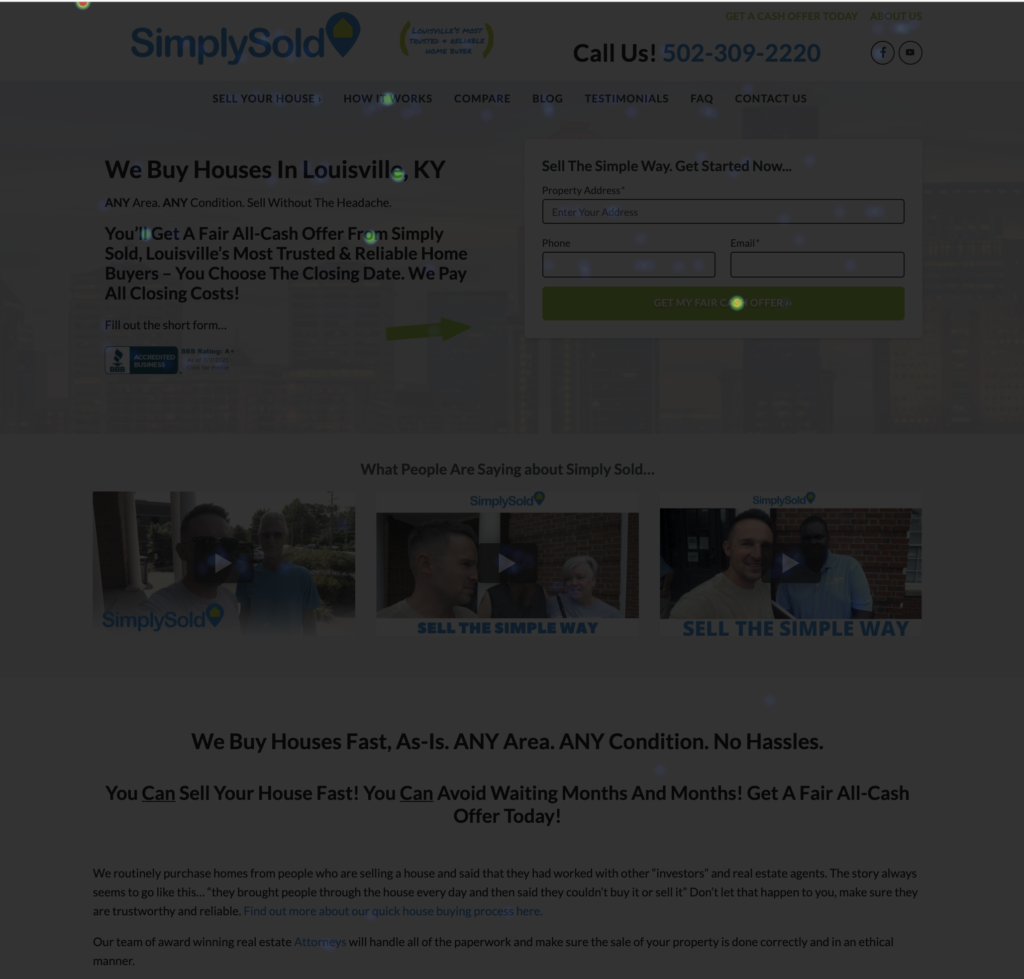
    Check out these heat maps (the site is greyed out, with little points of light showing where people have lingered with their mouse or clicked – the “hotter” the click spot, the more often it’s clicked).
    What did you notice on that heatmap?

    See all of the bright spots? The green and blue spots are where a lot of people click… indicating things that the motivated sellers felt were really important.

    First off, 94% of clicks happen on the top of the page.  The vast majority of web visitors to any given site don’t bother to scroll down.

    Side note: That statistic is valid across websites in general – on our investment sites, we tend to get about 8 seconds per page on average – 4 times more engagement than average, but still a lightning-fast choice to stay or go. You only have microseconds to reach your target audience – just another reason that your content and design matter so much.

    There are a few great lessons to learn right away from this click map…. 

    1)   People are clicking in many spots across the homepage. The clicks aren’t just happening in one spot, and visitors to this real estate investing website are finding what they need when they click through for more information. This site is designed specifically with sellers of properties as its audience, so it’s a relief that different types of people – those looking for answers about how they can sell their home, found exactly what they’re looking for on the site!

    2)   Titles matter. The title of a menu is designed to appeal directly to people who need to sell their house, and this top one has some great ones: “We Buy Houses in Louisville, KY”, “How It Works” and a contact form right on the front page that asks people to put in their address, phone, and email first thing.

    3)   Visitors want to know about your home buying process before they submit their info. Having a solid “how it works” page can be an integral part of your lead generation strategy.

    Have a truly excellent “how it works” page that includes:

    • A breakdown of your service in a series of simple bullet point steps
    • Include an informative, personal video
    • Include testimonials to build credibility and trust
    • Communicate the benefits they gain by working with you
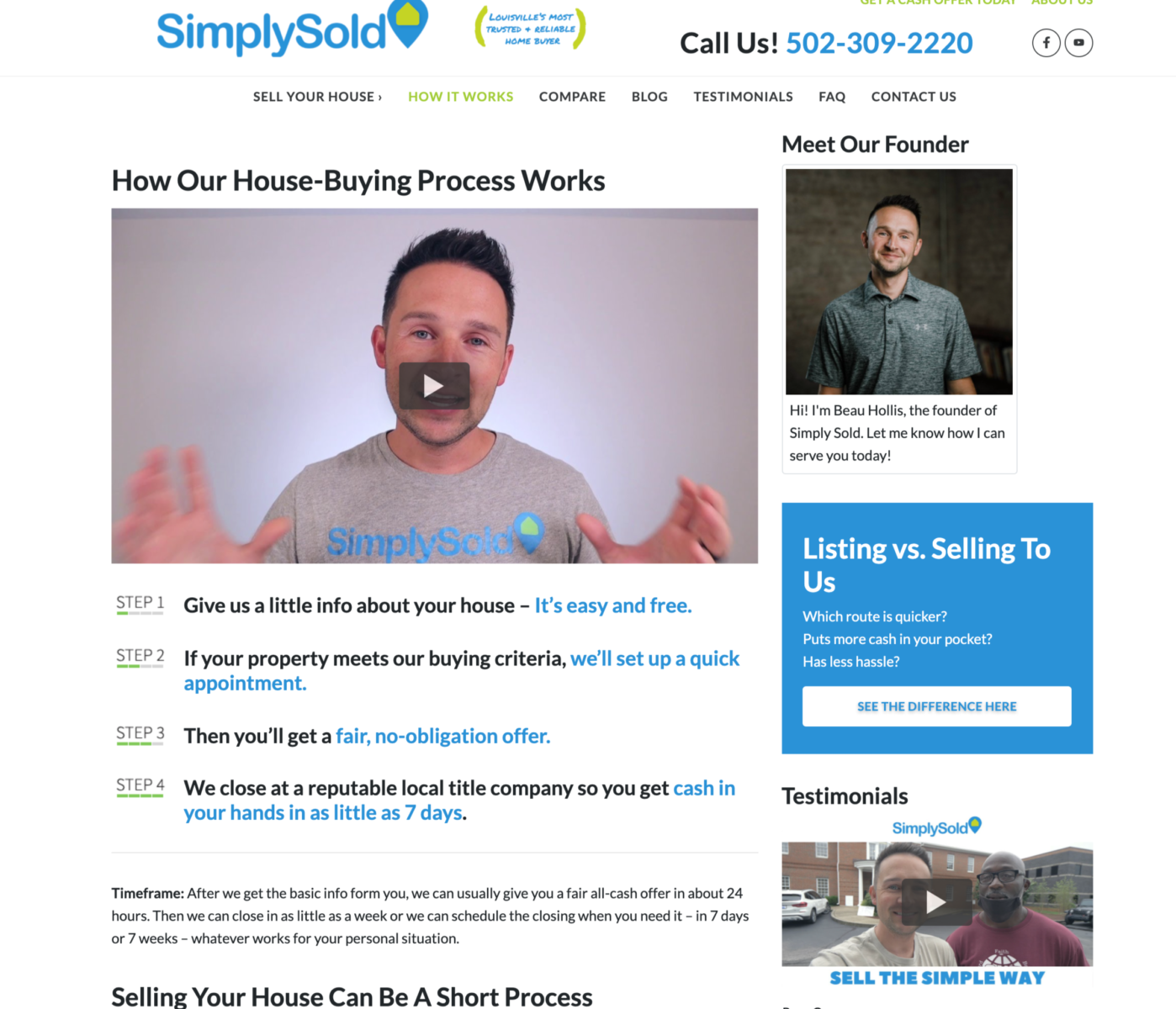
    real estate website how it works page

    Here’s an example of a well-thought-out “how it works” page

    Where is your credibility on your own real estate websites?

    It’s a really common problem that hurts a ton of great real estate agents and investors… when people get to the site they need to have a compelling reason to give over their personal information. Think about it… real estate is the largest investment most people ever make in their lives. There’s no piece of real estate more intimate than someone’s home.

    And yet…

    So many real estate sites don’t build trust or credibility.

    In fact, there are 3 key factors that I wanna mention that are critical to successfully designing a site that converts – and I’ll tell you how we’ve used them to design the Carrot sites like this example that are generating great leads.

    Credibility, Content, and Contact
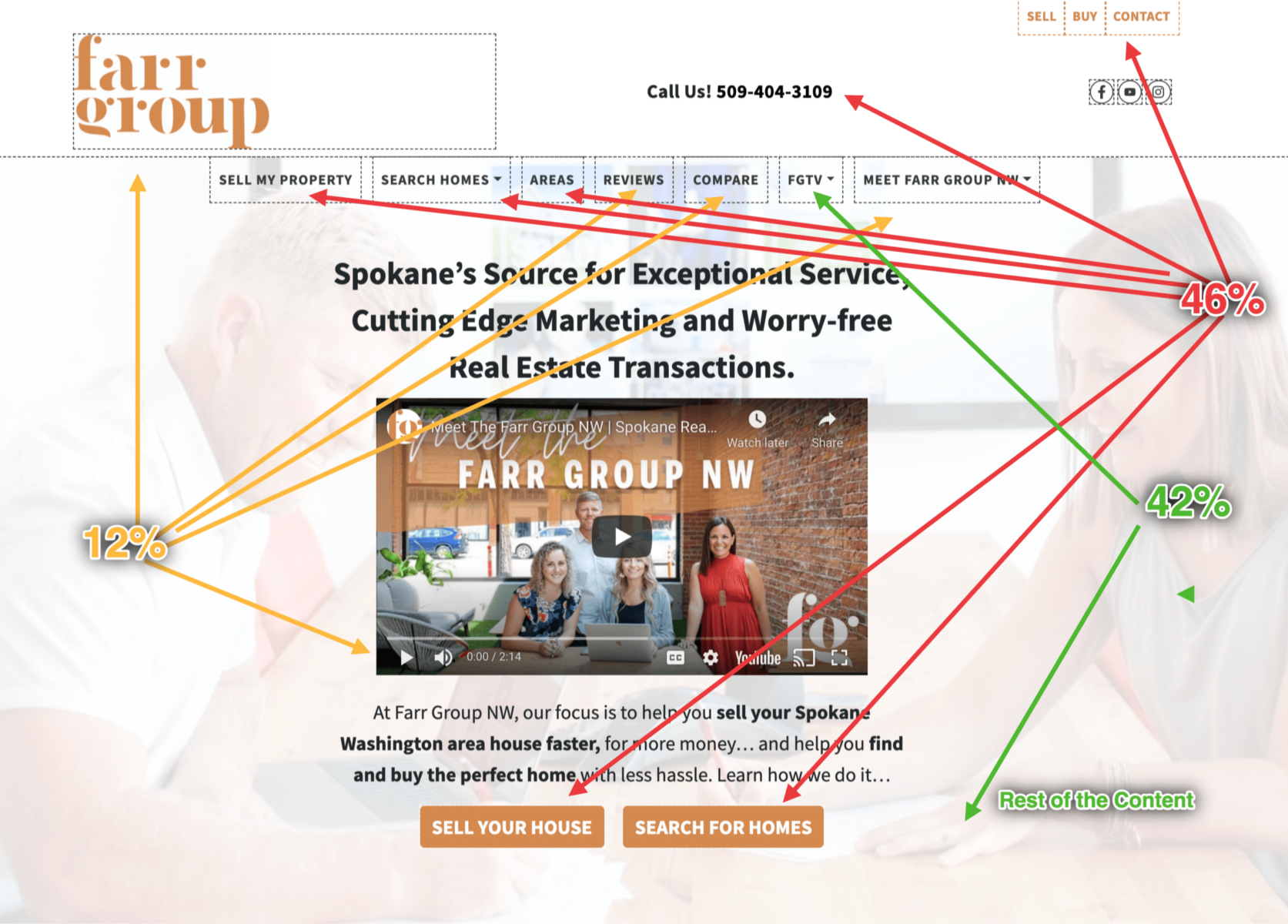
    Check out this graphic – I’ve broken down the links on the page into numbers so you can see the percentage of page visitors that clicked on each link type.

    Even more great lessons for real estate here… 

    As you can see, 12% of the clicks are for Credibility, 42% is on the Content (which is written to develop trust and credibility while reducing the fear and anxiety that most people buying or selling a home are feeling), and 46% of the clicks on the home page are actually converting – they’re contacting members using the forms.

    Keep in mind that the percentages are recording just clicks on the home page – a lot of other conversions happen on the lead pages that we’ve optimized for the local market.  That means that people are most often giving their information over to get a free report, such as a home valuation report, or another valuable tool. 46% of the clicks on the home page aren’t always the main source of leads. It just depends on how the site is being promoted, and where the majority of traffic is directed.

    The mix of these 3 factors is critical to a successful lead generation site.

    Content is a powerful tool to get your message out, but it needs credibility once people arrive or they won’t contact you.

    Content has long been seen as the lifeblood of search engine traffic and so much more for businesses looking to stand out online. However, even though content is king, you must know what happens when someone arrives at their site. What can be done after visitors land on your site in order to make them want to work with you?

    BONUS: One Tweak That Could Double Your Conversion Rate

    One more thing… this one simple tweak that we did on hero sections doubled conversions… it’s so crazy simple that we were totally surprised that it worked so well.

    We actually removed content from the hero sections to move the form up on mobile devices.

    Yup, that’s it.

    Even after doing this stuff for many years, it’s crazy to see what a big difference such a small change can make.

    That’s why we’re constantly testing different sites.

    We create websites that give your business the edge with a no-nonsense approach.

    We’re all about giving clients an advantage, so we design effective and user-friendly sites to stand out from the competition. We want our work to be as engaging for visitors on desktop or mobile devices alike; you never know what device they may use in order to find your site! In fact, over 60% of Carrot member leads come from mobile.

    This Is All Built Into Your Carrot Websites Already!

    The best thing about using Carrot is that you don’t have to worry about managing any of the technical aspects. We’re constantly running tests with our members and making tweaks in order to make sure your experience on this platform goes smoothly.

    We believe in results over anything else and are continually improving our system to help you get better results.

    We’re constantly posting tips, tricks, and techniques we use to improve SEO, conversions and get great results for Carrot members. So if you’re not already getting our weekly blog emails, make sure you sign up now! And if you want a website that truly generates leads for your business, go check out our plans to join Carrot and leverage our marketing knowledge and testing to generate more leads for your own real estate company. 
    Not An Carrot Member? Take A Tour Of Our System

  • [Behind the Data] 50% Increase in Motivated Seller Leads from One Simple Test

    The hero section… that all-important sliver of real estate at the very top of your website. 

    It’s a visitor’s first impression of your site and your company, but it plays a different – more important – role as well: it’s your first opportunity to convert those visitors into leads.  As more and more web traffic is taking place on mobile devices, that sliver of website real estate in the hero section is shrinking, and you have to approach it with those (often) competing needs in mind.

    How much content is too much?  Is it more important to highlight the form that’s actually generating leads?  How does this change based on whether a visitor is on desktop or mobile?

    At Carrot, our Innovation Lab is constantly pondering questions like these – AND launching tests to answer them. 

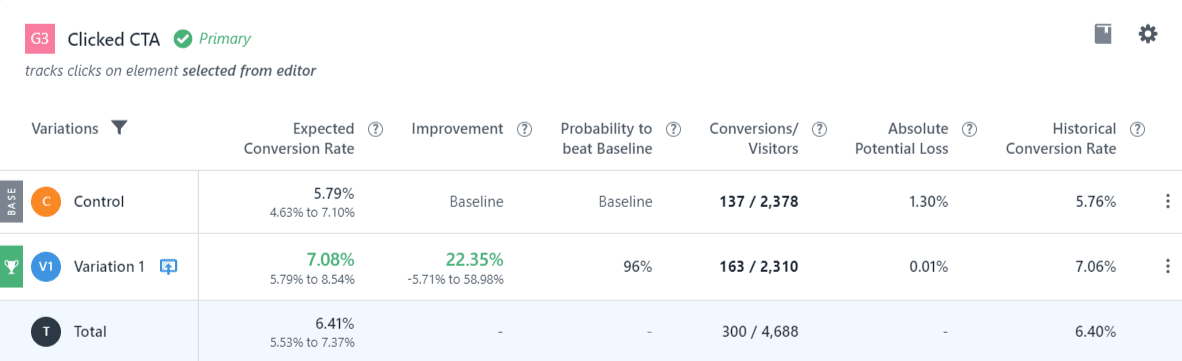
    In this post, we’ll outline a series of tests we ran on hero sections that increased conversion rates by anywhere from 25 to 55%, plus we’ll point you in the right direction when it comes to how you should approach the prime real estate (the hero section) on your own site.

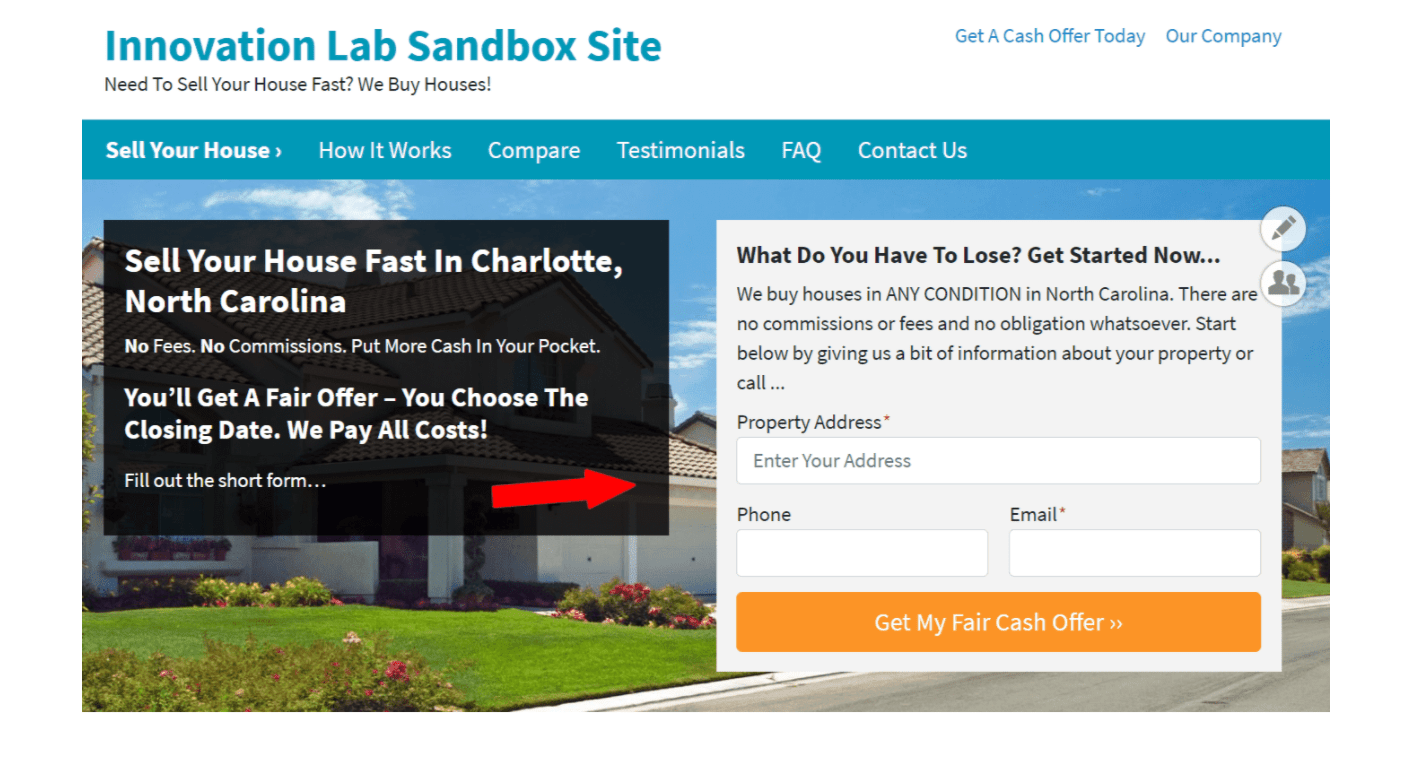
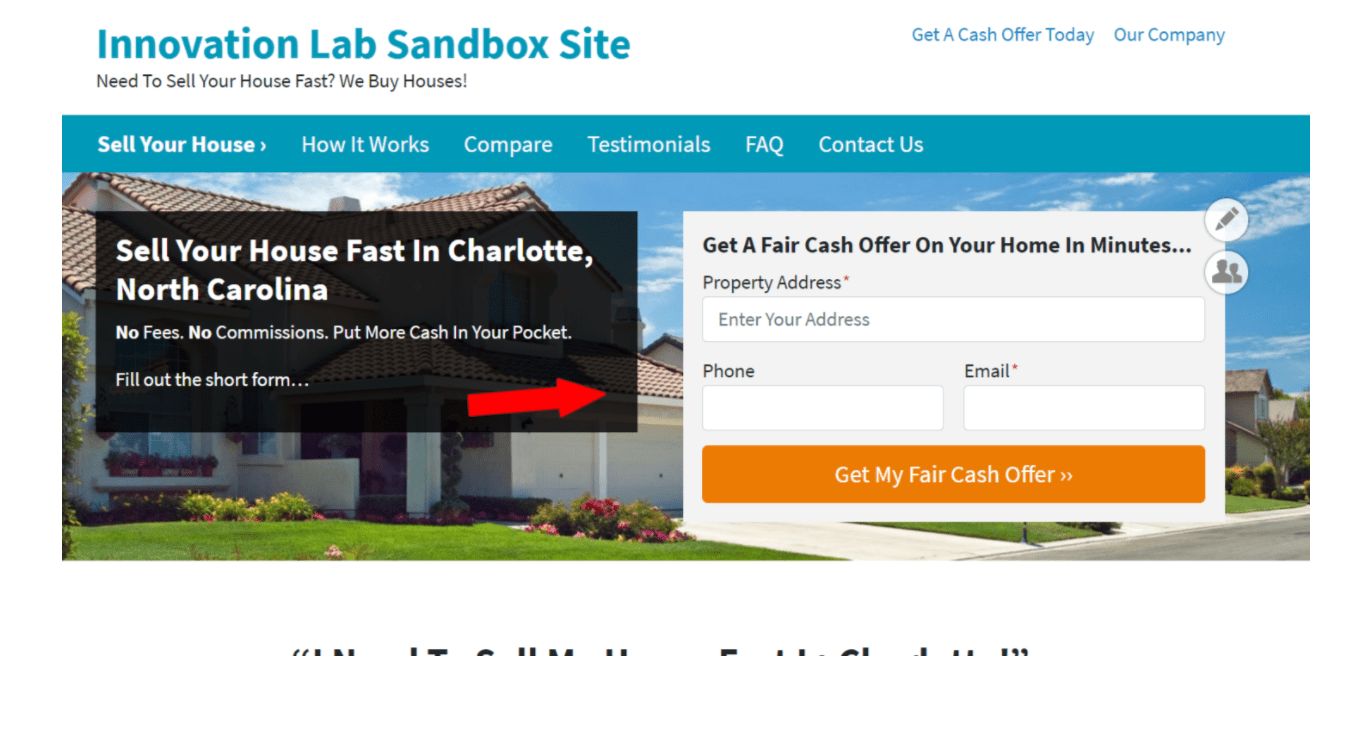
    hero section test results

    Example: Hero Section Test Results

    What Did We Test?

    Our CTA Hero tests spawned from a very simple realization… the vast majority of conversions across our network of member sites occur exactly where we would expect them to: in the forms found in the hero section.  

    So we dug in to find out how our members are approaching those hero sections.  It turns out that the answer to that was quite varied.  Some members are stuffing as much content as possible.  Some are reducing the amount of content.  Others include videos, pictures, etc.

    So we designed a very simple test… one that pitted what we considered a “traditional” hero section against one that had significantly reduced amounts of content both surrounding the form and in the form itself. 

    (Traditional Hero Section with several lines of contextual content + a form description)

    Slimmed version of the hero

    (Slimmed version of the hero with some contextual content + the form description removed)

    A few things immediately stand out with the “slimmed down” version.

    1. The form itself appears more prominent when you remove the form description.  It guides the eye more specifically to the input fields and the final CTA button rather than the text above it.
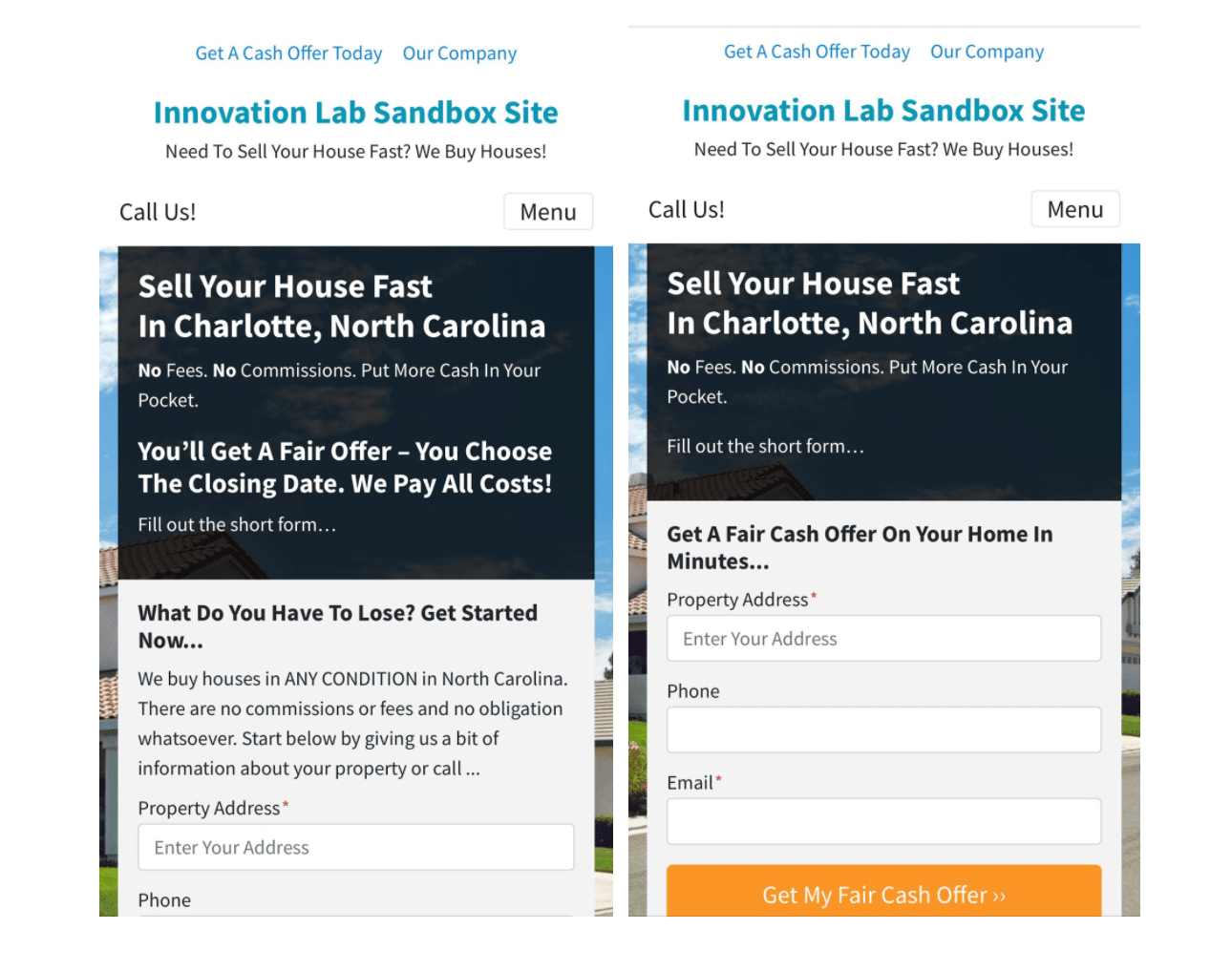
    2. By matching the content reduction on the contextual blocks (in this case, the information to the left), it decreases the overall footprint of the hero section and begins to “raise” the content immediately below it.

    Point #2 is especially important when considering mobile traffic.  At Carrot, we generally see that mobile visitors account for 57% of all traffic and 61% of all conversions across our network.  Our own design principles have been morphed to take a mobile-first approach accordingly, and that is where our primary hypothesis for this test originated from: that by reducing the content in the hero section, it would make the form itself more prominent and appear “above the fold” on mobile, thereby increasing user engagement and ultimately conversions.

    hero section test on mobile

    And The Results….

    We launched this test across a myriad of site types, categories, layouts and environments – and the results were quite amazing.

    On every individual site where there was enough traffic and conversions over the lifespan of the test to register a statistically significant outcome, the slimmed down version of the hero won (and by large margins!).

    • Test Site #1 – Land Seller Site
      • Conversion uplift of 45.87% – 398 conversions in the slimmed down version versus 259 in the traditional version
    • Test Site #2 – Motivated Seller Site
      • Conversion uplift of 22.35% – 163 conversions versus 137
    • Test Site #3 – Motivated Seller Site
      • Conversion uplift of 46.86% – 102 conversions versus 71

    Furthermore, our measurements of user engagement (which include scroll depth, time on page, bounce rate, etc) were significantly improved (by anywhere from 15-25%) on sites with the slimmed down version of the hero.

    A few other findings/caveats in our testing design…

    • We wanted to ensure that these changes in the hero section did not improve conversion for mobile versions while harming desktop versions/visitors, so we split up tests accordingly to isolate these visitors.  There were zero cases in which conversion rates increased on mobile and decreased on desktop.
    • Similarly, we wanted to ensure that these changes in the hero section did not negatively impact conversion on forms that may appear lower on the page.  There were zero cases in which lower-ordered forms experienced a drop in conversions that outweighed improvement to the hero section form, and in many cases, those lower forms improved as well (indicative of our increase in user engagement metrics).

    In total, this test was a resounding success – the slimmed down version of the hero section performed significantly better on all site types, categories, and versions.

    So what does this mean for your site?

    It means, generally speaking, that when it comes to your hero section, you should take a “less is more” approach!  Instead of packing that incredibly important part of your website with a wall of text, graphics, videos, etc, minimize it.  

    Some best practices we recommend from our testing results:

    • Focus on highlighting the form you ultimately want visitors to engage with by removing form descriptions and content surrounding it (as shown in the pictures above).
    • Load your site on your mobile device and see where that form appears.  Does it entirely fit within that initial “above the fold” view?  If not, can you reduce the amount of text that appears above it so that even 50% of the entire form appears in that view?  Our testing indicates that the more a form can appear in that initial view, the better.
    • Avoid placing graphics, images, videos or long-form content in the hero section.  There are so many better places to include that information and content lower on the page! 

    As we’ve said, that hero section is your website’s prime real estate.  It’s your opportunity to make an impression, sure, but it’s also your first opportunity to convert a visitor into a lead.  We hope that by bringing you these results from our Innovation Lab, it helps you take a closer look at this section on your site and how it could be helping (or harming) your conversion rates. 

  • 4 Real Estate Website Pitfalls That Can Kill Lead Generation

    What if you lost one lead this year because your website wasn’t optimized for conversion?

    No biggie, right?

    Well, no biggie so long as that lead wasn’t going to turn into a deal… if it was, then that’s $10,000, $20,000, or even $30,000 straight down the drain.

    And, as my real estate agent says, “It only takes one – the right one.”

    Sadly, for most unoptimized websites, the truth is much more depressing than a single lost lead per year. A website that loses one lead from your target market, after all, is going to lose all similar leads.

    This is why preparing your real estate website to convert its visitors is absolutely vital… before you drive traffic to it (paid and organic). How, though, do you know if your website is or isn’t optimized for conversion?

    Well, at Carrot, we’ve generated millions of real estate leads for our thousands of members, and these are four tell-tale signs that your website is losing you money.

    4 Signs that your website isn’t generating the online real estate leads as it should

    1. Your Website Isn’t Mobile-friendly

    For our thousands of Carrot members, 64% of all leads come through a mobile device. Not through a desktop or laptop, but through a thumb-clicking phone.

    And that’s happening all over the online world, not just at Carrot. 52% of all global online traffic is generated from smartphones, according to Shane Barker.

    This means, if you’re going to convert over half of your website visitors, you can’t create a bad mobile experience. Google is taking this so seriously that they recently rolled out mobile-first indexing – which basically means that they prioritize the performance of the mobile version of your website over the desktop version. And they’re not the only ones who take mobile website performance seriously…

    So do your website visitors.

    In fact, 61% of buyers form more positive opinions about brands that offer a remarkable mobile experience, according to Crazyegg.

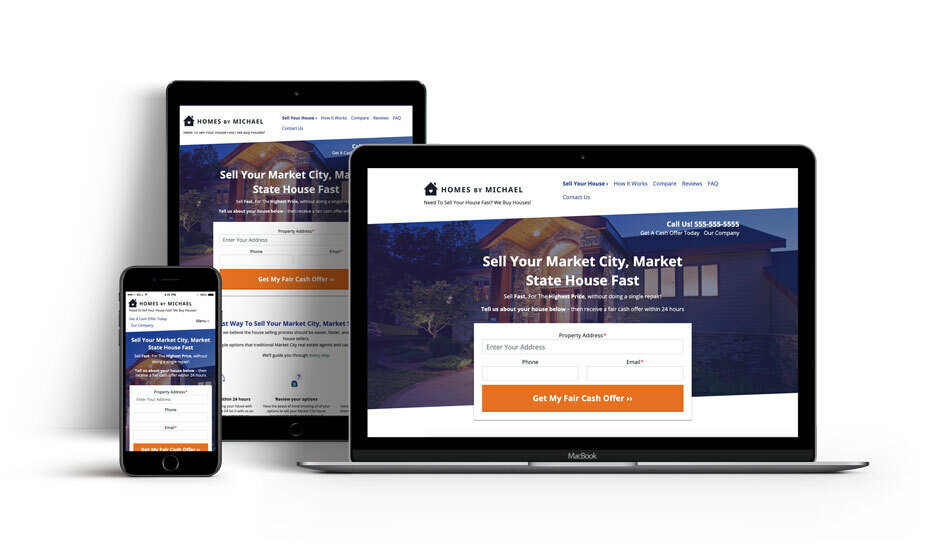
    That’s why, at Carrot, every single one of our website designs is crafted to convert visitors regardless of the device they’re using to browse.

    Carrot real estate websites for high lead generation

    Here are some signs that your website isn’t mobile friendly…

    1. You can scroll side-to-side and the screen doesn’t adjust to the size of the device.
    2. The words become so small they’re unreadable on a mobile device.
    3. The buttons are difficult to click with a normal-sized thumb on mobile.

    If any of those are true of your website, then you’re definitely losing mobile phone leads – and switching to a mobile-friendly real estate website design like Carrot could outright double your lead generation.

    2. You’re Not Making It Easy For Visitors To Give You Their Information

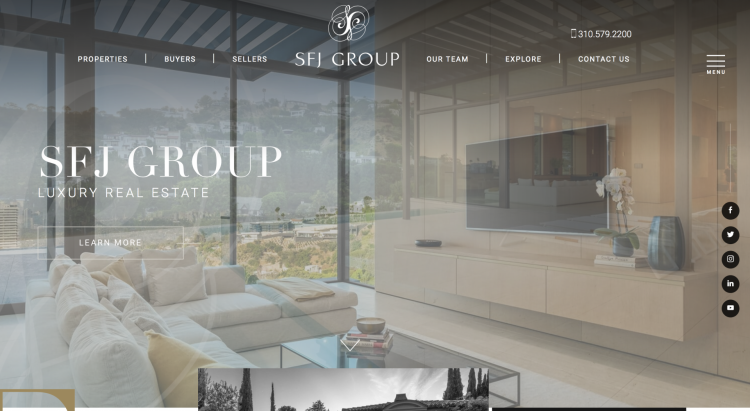
    Still today, most homepages look like this…

    real estate website without lead form

    (Image Source)

    At the top, there’s a title, then there’s a menu and heading. And there’s maybe some sort of vague CTA – in this case, the “Learn More” button.

    As you scroll down, you’ll see pictures of the real estate agent (or investor), maybe some testimonials, some notes about their services, and then finally a decent CTA.

    real estate website lack of lead form
    This is at the very bottom of their website.

    Now, that probably doesn’t seem like a big deal…

    Do people really care all that much if they have to scroll to find your CTA?

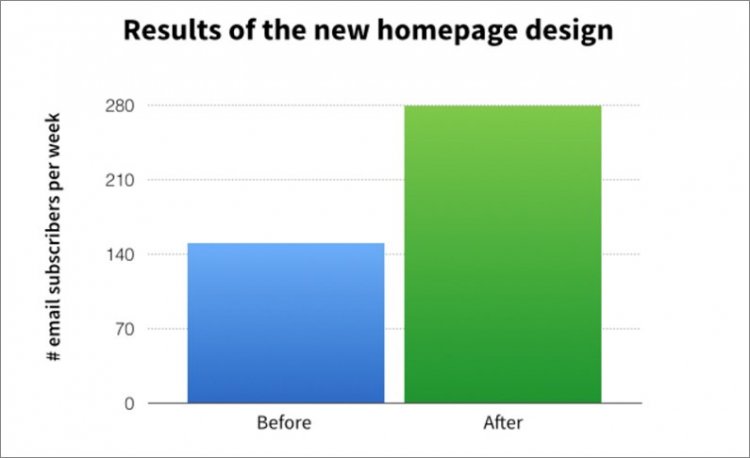
    To answer that question, let’s look at a quick study done by Bryan Harris – an email list building guru. He took his “right-side up” homepage and flipped it so that the CTA was front-and-center when someone arrived on his website.

    Immediately, he saw a 35% increase in his number of subscribers.

    new homepage design

    (Image Source)

    Remember, people who’re looking to buy or sell their home are looking for a solution to their problem. The faster you solve that with a relevant CTA, the more likely they are to opt-in.

    But you might be wondering what an upside-down homepage actually looks like.

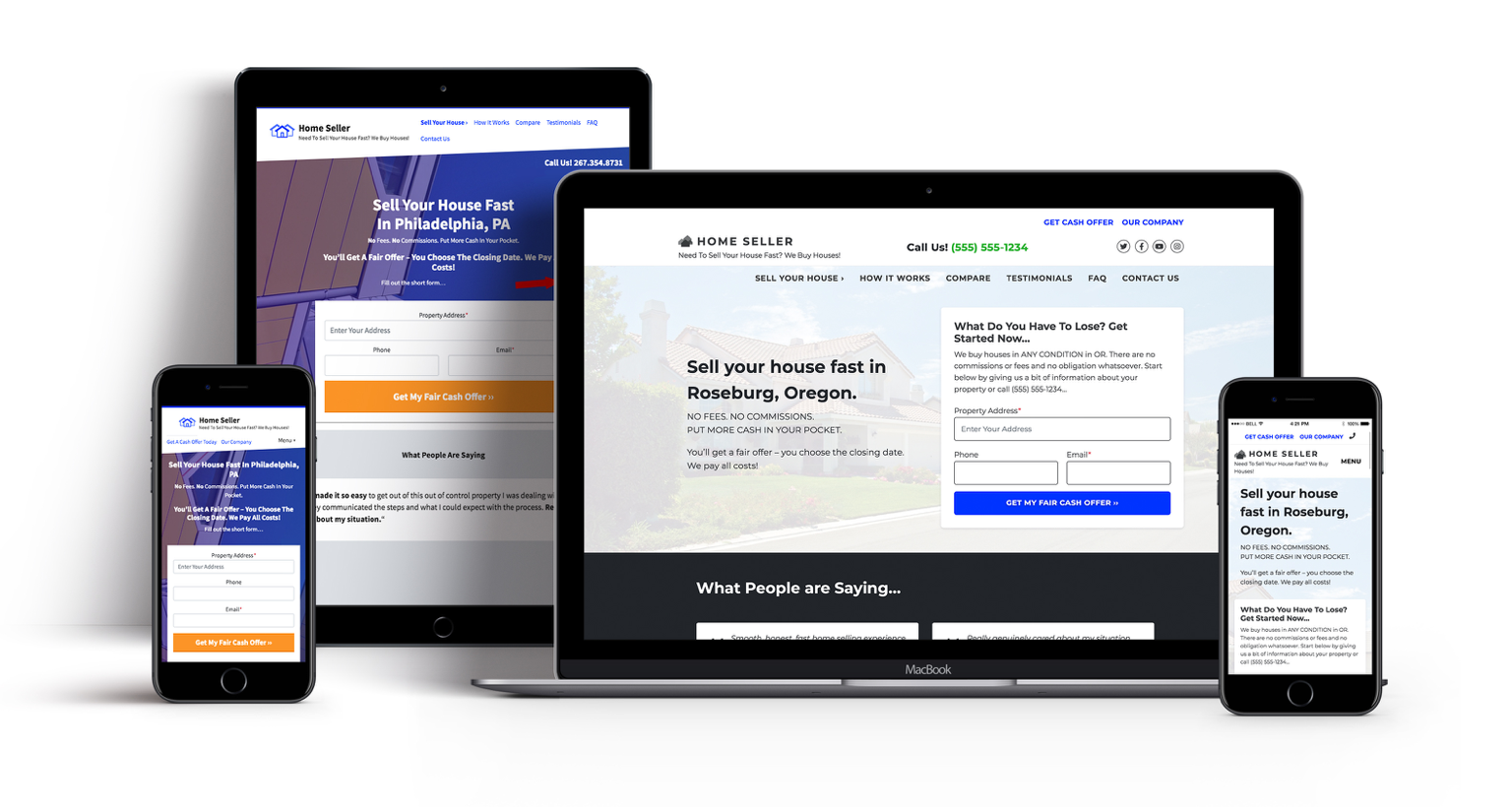
    At Carrot, we exclusively use the high-converting upside-down homepage model – putting the contact form and phone number right at the top of your website (on mobile and desktop) to guarantee that visitors to your website aren’t lost because they have to scroll more than they’d like.

    Here’s a quick testimonial from a Carrot member, Adam Mitchell, who spent $1000s on the wrong marketing and an under-performing website. He now does multiple deals per month in a competitive market.

    How Investor Adam Mitchell Blew $40k On Marketing

    3. The Sales Copy Isn’t Scientific

    What do I mean when I say that your homepage copy should be scientific?

    I mean that there should be a clear and obvious reason that each phrase and word is in its place. And if you’re wondering whether you wrote your homepage scientifically or not – with the psychology of your visitor’s in mind – then you definitely didn’t.

    Because scientific sales copy has to be intentional from the very beginning.

    Here’s a typical example of sales copy that misses the scientific mark.

    website sales copy

    (Image Source)

    A lot of people try to make their sales copy creative and cute…

    But that isn’t what you need. What you need is sales copy that appeals to people’s problems and then promises a remarkable solution.

    And the headline is the most important element, with 80% of people only reading the headline and 20% reading the rest. In other words, you need to strike the right chords in the right order, quickly.

    You need to be scientific.

    Here are a few examples of psychological rules in sales copy.

    The word “because” with a reason after increases conversion by 60% to 94% – it doesn’t even matter what the reason is, it just matters that you have a reason for what you’re selling, how much it costs, and why you’re the one selling it.

    Similarly, social proof – such as testimonials and credibility bars – can significantly increase the conversion rate of your website. For one website, social proof increased the conversion rate by 20%.

    But, those are just a few examples.

    For your formulaic sales copy pattern, follow these three steps, in this order:

    1. Empathetic description of pain – First and foremost, your prospect needs to know that you know exactly what they’re going through. After all, how could you possibly help them if you don’t understand their current position?
    2. Agitate that pain – Then, the prospects needs to be reminded of how terrible of a situation they are really in. Your goal is to empathetically remind them of how difficult their predicament is so that they’re ready to get out of it.
    3. Promise a solution that’ll take that pain away – Finally, in swoops Super Man. Your solution. Guarantee them with all the tools you have in your arsenal that your service (whether agent or investor) is going to remove their pain, then tell them how it’s going to do that.

    Consider our very own sales copy as an example of this. It’s only a few sentences, but it hits every note.

    Carrot homepage 2021

    4. Your Website Has Slow Load Times

    The slower your website loads, the more people who won’t stick around to see what you have to offer.

    Higher bounce rate. Fewer conversions.

    Period.

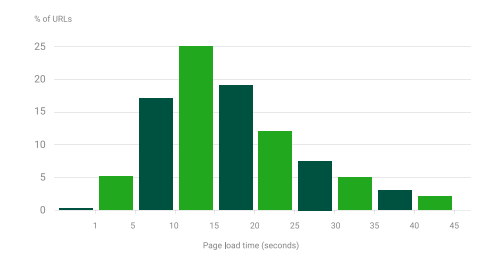
    As Neil Patel explains on his blog, for instance, 53% of people will leave a mobile site if it takes more than three seconds to load. And 47% of online users expect a website to load in just two seconds or less.

    As the nail strikes the coffin, a one-second delay in page response time often results in a 7% reduction in conversions.

    And most websites aren’t keeping up.

    slow website load times

    (Image Source)

    If you have a slow website, how many thousands of dollars might you be losing for each second? Here’s some quick math.

    Imagine that you get 2,000 visits to your website every month at a 10% conversion rate. That’s 200 conversions. Then imagine that you close 1 in 20 of those. That’s 10 deals per month.

    Now let’s assume that you make $10,000 per deal.

    At a 7% reduction in conversion rate for every one-second loss of load speed, just a two-second delay would lose you upwards of $10,000 or more every single month.

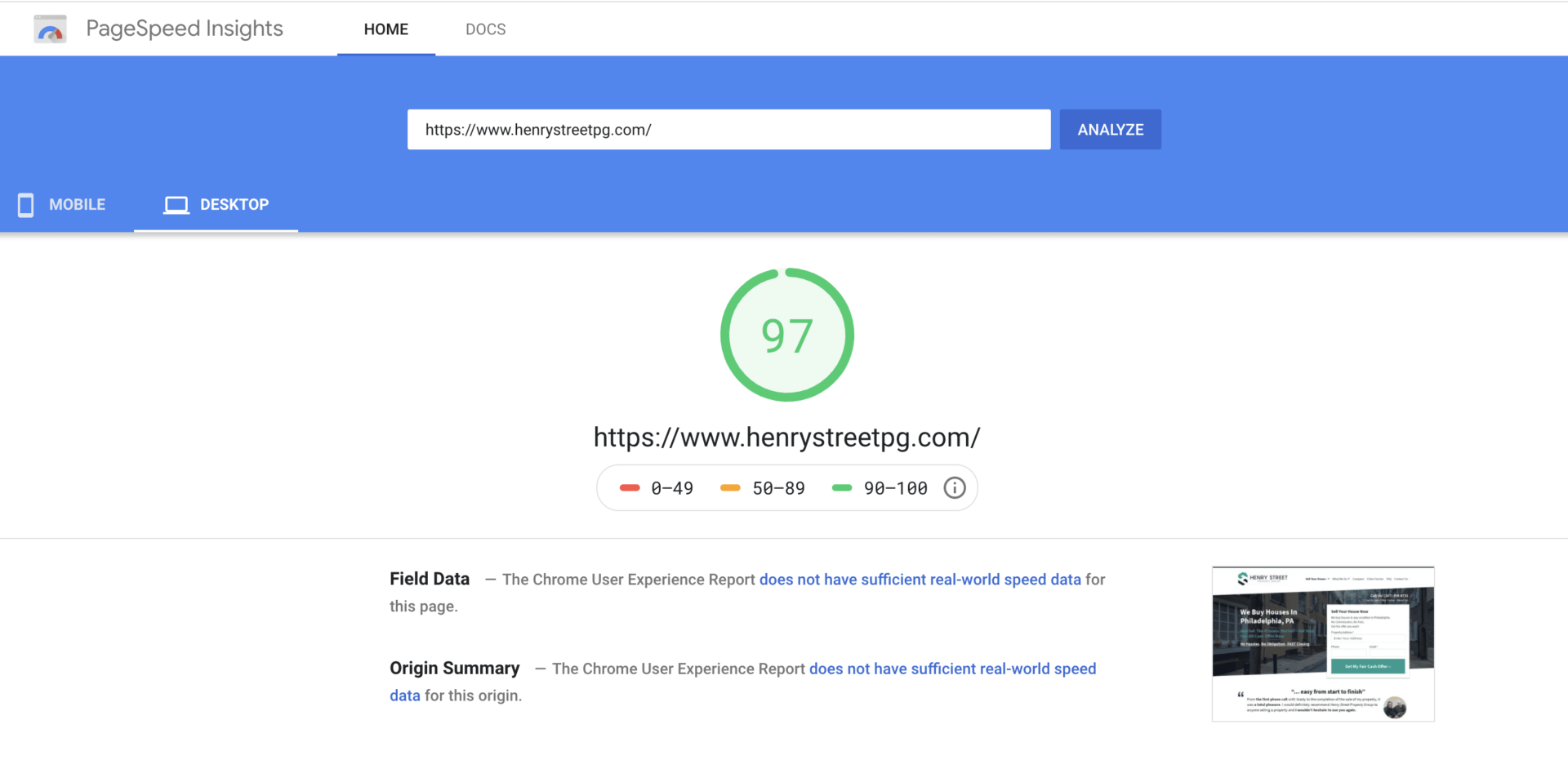
    This is why, at Carrot, we don’t mess around with slow load speeds. In this tech-stack study of 150,000 websites, Carrot outperformed Wix, Squarespace, and WordPress. In fact, Carrot was second to Google’s own website.

    real-estate-website-page-speed

    Conclusion

    Maybe in the 90’s, just having a website was enough. Just having a place where people could go online and learn about your business would do the lead-generation trick. But now we’re down the road…

    And we know what converts visitors… and what doesn’t.

    Still, many websites haven’t caught up with the times and optimized their websites for conversion. This is unfortunate, considering the significant impact that conversion optimization can have on business success.

    So, a quick recap.

    Avoid these four real estate website pitfalls that can kill your lead generation

    1. It’s not mobile-friendly.
    2. The homepage isn’t easy asking for their information.
    3. The sales copy isn’t scientific.
    4. It has slow load times.
  • Here’s What You Should Do If Your Real Estate SEO Rankings Drop: Recovery Guide

    It can be a nightmare…

    One day, you’re on page one of Google for your target keyword phrases, and then, one day, you’re not. Maybe it starts by noticing that you’re not getting as many leads as usual. When you check to see what’s going on, you find that a few of your primary real estate SEO rankings are suffering — the ones that drive passive organic traffic to your real estate website.

    document.addEventListener(‘DOMContentLoaded’, function() { jQuery(window).scroll(function() { if ( jQuery(document).scrollTop() > $(‘#carrotToast’).offset().top && jQuery(“.carrot-toast”).attr(“displayed”) === “false”) { jQuery(‘.carrot-toast’).toast(‘show’); jQuery(“.carrot-toast”).attr(“displayed”, “true”); } }); });

    No SEO or content marketer can accurately predict what any future Google algorithm update will look like.

    But it would help if you thought about it like this: Search engines are built with the intention to serve people.

    “Core” algorithm updates typically happen a few times a year, as Google tries to continuously to improve the quality of its search results.

    The latest core update started rolling out on August 15, 2024:

    Google Core Algorithm Update | August '24

    Google likes to reiterate that there is often nothing to fix on your site after core updates…

    “We know those with sites that experience drops will be looking for a fix, and we want to ensure they don’t try to fix the wrong things. Moreover, there might not be anything to fix at all.” … “There’s nothing wrong with pages that may perform less well in a core update.”

    Although, smaller core updates tend to happen every few months. Google has said:

    “We’re constantly making updates to our search algorithms, including smaller core updates.”

    So Google may have made updates to previous core updates, but they’ve also said:

    “We don’t announce all of these because they’re generally not widely noticeable.”

    But Google has acknowledged, when released, they can cause content to recover if improvements warrant.”

    Don’t get stuck thinking… “What can I do?” There are plenty of best practices you can optimize for. Focus on offering the best content you can. Algorithms seek to reward informative content.

    Here is a list of “high-level” questions to consider while creating unique content:

    • Does your content provide original information, reporting, or research?
    • Does your content provide a complete or comprehensive description of the topic?
    • Does your content provide insightful analysis or interesting information that is beyond obvious?
    • Does your provide substantial value and originality?
    • Is your headline and/or page title descriptive, and does it provide a helpful content summary?
    • Is your content worthy of sharing or being recommended?
    • Does your content show expertise?
    • Is your content trustworthy and shows that you are the authority on the subject?
    • Does your content showcase the author’s expertise or have links to an “About” page?
    • Is your content free of factual errors and spelling or stylistic issues?
    • Does your content display well on mobile devices?
    • Is your content genuine, or was it created for the sole purpose of rankings?

    Over the past few years, E-E-A-T, or Experience, Expertise, Authoritativeness and Trustworthiness, has been considered a strong SEO guideline. Check out Google’s own guidance on creating helpful, reliable, people-first content to learn more about E-E-A-T and the impact it can make on your rankings.

    Now you have some information that you can point to from Google about how to move forward if your website was impacted negatively after a Google core update.

    Maybe you’ve been tracking your keyword rankings using Carrot’s Keyword Rank Tracker, and you’ve noticed some keyword phrases just starting to dip (going from position 1 or 2 to position 7 or 8), or maybe you’ve fallen back to Page 2 of the search results.

    Let’s dive in a little deeper and show you what we tell our members…

    Why are your real estate SEO rankings suffering, and what can you do to fix it?

    It all starts with determining why your SEO rankings are slipping.

    Step 1. Determine Why Your Real Estate SEO Rankings Are Slipping

    Before you try to fix suffering rankings, we need to determine why your rankings are slipping in the first place.

    You can start by digging into the data about your website, using tools like Carrot’s built-in Analytics dashboard and our Domain Overview tool to get insights about:

    • Which of your posts or pages are getting the most traffic
    • Where your visitors are coming from
    • What pages are converting your visitors into leads
    • How many other websites are linking back to yours

    You’ll want to analyze your website data and try to determine if the drop in traffic or rankings actually has anything to do with a Google algorithm update, or maybe it’s due to other factors entirely.

    For example, many businesses experience seasonal dips or spikes in traffic during certain times of year, like summer or the December holidays.

    There are quite a few other possibilities. Among the most common reasons are…

    • Is a Competitor is Beating You? — This is the most common reason that a ranking will start to dip. If you’ve only gone down the search results page a few spots, then it’s likely that Google is trying to make space for a competitor who it perceives as having rank-worthy content for the specified keyword phrase. Check out Step 2 to figure out how to address this problem.
    • Has Google Penalized Your Site? — In rare cases, it’s possible that Google has penalized your site for one reason or another. If you’ve been paying for backlinks, using PBNs, or using other black-hat SEO tactics, it’s possible that Google has penalized your site. If this is the case, then your site will probably have completely disappeared, not just have dipped a bit. Check out Step 10 to learn more about how to fix this.
    • Did You Publish Lots of Templated Content Without Making It Unique? — Tools like Carrot’s Automated Content Library and Niche Authority Builder provide pre-written blog posts and pages to make content creation quicker, but you’ll always want to add your own insights and expertise to each post to make them your own. We suggest adding at least 30-50% of your own unique content in order to stand out among competitor sites and keep Google from viewing your content as duplicate.
    • Did You Trim Your Content On Your Home Page Or City Pages? — If you’ve recently made changes to your content, those changes might take time to bounce back in the rankings.
    • Are You Even Tracking Your Rankings? — You can’t fix an issue without data. Carrot’s Keyword Rank Tracker lets you easily grab back data to see what day things might have changed.
    • Is Your Page Load Speed is Too Slow? — Google has explicitly said, over and over again, that how fast your website loads (or even a specific page) is a direct indicator of how well you rank. The faster it loads, the better. Carrot prides ourselves on incredibly fast loading websites (they load nearly 70% faster than standard WordPress websites), but if you don’t have a Carrot site, check out Step 6 for ways to fix this.
    • Is Your Website is NOT Mobile Optimized? — Carrot websites are optimized for all viewing devices (including desktop, smartphone and tablets), but if your non-Carrot website isn’t optimized for mobile, then you’ll have trouble ranking for any keyword phrase. Google prioritizes the mobile version of your website over the desktop version, so this is an absolute must. Check out Step 8 to learn more about this.

    Once you know what the problem is, you should have a much easier time fixing the problem with the below steps. If your page completely disappeared, then you probably got penalized by Google.

    If your page slipped just a few positions, then a competitor is probably beating you (the most likely reason). And if you slipped big — say, to page 5 — then it may be because Google updated its algorithm and your page no longer fits the bill.

    Whatever the case, you can use the below steps to fix your problem and then measure progress toward improving your SEO rankings.

    Remember: SEO and evergreen marketing is an ongoing process. We recommend looking at trends over longer time periods, like month over month and quarter over quarter, rather than focusing on changes in traffic or keyword rankings on a daily or weekly basis.

    Step 2. Update & Enhance Your Content

    Assuming that your page hasn’t been penalized by Google and that you only slipped a few positions, this is the very first thing you should think to do.

    Because a lot of times, your real estate SEO rankings slip simply because someone else (a competitor, usually) created a better page than you and Google is trying to make space for them. This is an opportunity for you to pull out the big guns and beat them at their own game.

    When a page starts to slip by a few positions, here’s what you should do…

    1. Look At What The Other Page-One Rankings Are Doing — The first thing you should do is examine what other pages are ranking on the first page for the given keyword and make some guesses as to why those pages are beating you. What are they doing that you’re not doing? How can you do something better than them? Could you write a longer piece of content or create a video to enhance the post? Answer questions that people are asking about the topic? Could you offer your audience more details?
    2. Write Additional Unique Content — If possible, add a couple of hundred extra words to the page. Not just babble, of course, but valuable content. Ensure you include your target keyword phrase a few times within this extra content. Learn more about writing unique content and see examples of a “Good/Better/Best” blog post.
    3. Add Some Images & Alt Text — Google loves images just as much as readers. It breaks up the content and makes the page easier to digest. So add a few relevant images to the page. If you do, make sure also to add relevant alt text to describe what is seen in the image. Learn more about optimizing images.
    4. Create A Video To Enhance The Post — Leveraging video can be a great way to enhance the trust and credibility for your business along with boosting your traffic. Creating video posts is highly beneficial for website SEO because they can engage visitors more effectively than static written content, keeping them on the page longer, which signals to search engines that your website’s content is valuable. If you have a post or page with helpful content, consider creating a YouTube video about the same topic and embedding it into your page.

    If you have old blog posts or pages that haven’t been properly personalized AND those posts or pages receive very little or no traffic, you may want to simply remove those pages. This is especially true if the topics of those pages aren’t particularly important to your business objectives.

    With more and more content being published every day, Google simply doesn’t have the resources to index everything that’s published on the Internet. So it’s important to focus on quality and relevance to your ideal customer or client rather than just pumping out a ton of content.

    Step 3. Fix Broken Links & Look For Internal Linking Opportunities

    Google doesn’t like broken links — that is, links from your page that go to a page that no longer exists.

    If links on your page have gone bad (maybe because the place you were linking deleted their page), remove them and/or consider linking elsewhere. Just test out each link on your page to make sure it’s working correctly.

    Too many broken links tell Google that you’re not paying much attention to updating your content consistently, and the almighty algorithm doesn’t like that.

    Quick Methods to Find Broken Links using Online Checkers
    Here are some quick and easy tools you can use to find broken links. All you need to do is enter your URL into the search boxes, and they will provide you with a list of broken links:

    How to Fix Broken Links
    Once you’ve found the links that are broken, your next step is to fix them. You want to make your content easy for the user to read and navigate.

    You have two options when it comes to fixing broken links. You can update the link to point to a different page, or create a 301 redirect to have the old link forwarded to a related or relevant page.

    Look For Internal Linking Opportunities

    As you review the content on your website, look for opportunities to link up related posts or pages within your site. Internal links between related pages and posts on your own website helps Google crawl your website more easily.

    Linking internally also helps Google understand what content is related to other content on your site, and it’s a big part of our recommended blog content SEO strategy. (It’s also built right into our Carrot’s Niche Authority Builder!)

    Which brings us to…

    Step 4. Organize Your Content

    Many people don’t realize that it’s possible to have too much SEO-based content or at least too much disorganized content.

    Keyword cannibalization, for example, is when you destroy (or cannibalize) your rankings because you have too many pages that are targeting the same keyword phrase or very similar phrases.

    Google likes it most when you have one page per specific topic or keyword phrase — that is, each page on your website only targets one keyword phrase, and there’s no overlap.

    If you created several other pages targeting a similar phrase to the page you’re watching suffer, then it’s probably because you have too much-disorganized content for Google’s liking. Keep it simple and go back to having only one page per keyword phrase.

    Here’s a summary of our recommended blog content SEO strategy:

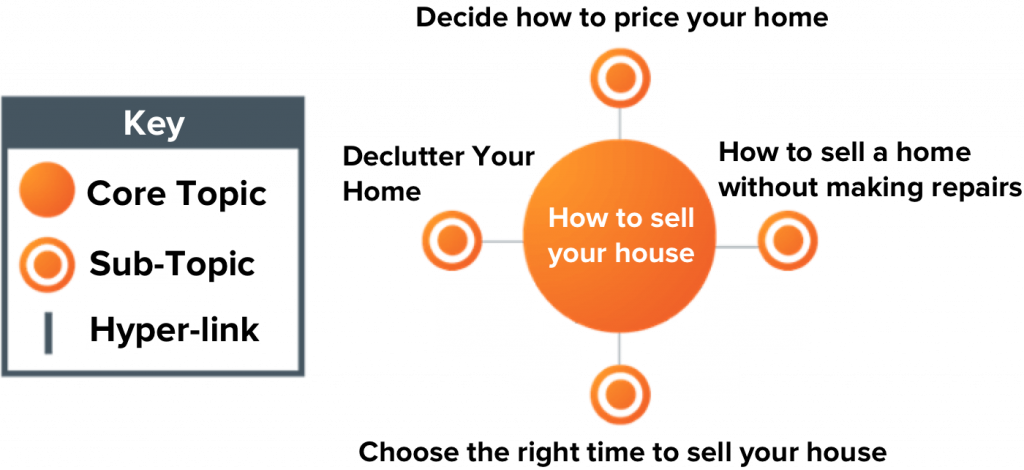
    • Write a main “niche topic page” for a broad core topic keyword relevant to your business. For example: “how to sell your house”
    • Then write a handful of other shorter supporting blog posts that are related to the main topic but dive deeper into sub-topics
    • Finally, create internal links between your niche topic page and the supporting blog posts to create a “topic cluster”:
    How to organize your content

    You can follow this process manually, or you can also use our Niche Authority Builder tool to execute this blog content strategy more quickly.

    Step 5. Get Your Citations in Order

    You’ve probably heard that building backlinks are one of the best ways to improve your SEO rankings. And that’s true — but it’s also pretty difficult to consistently build high-quality backlinks.

    Fortunately, getting your citations in order can have a similar impact.

    What are citations?

    Typically, they are third-party listing websites (like your Google Business Profile) that have your business info and a link back to your website. There are a few things you want to do with these citations.

    First, make sure that you have at least 50 or 60 citations on different websites — that will help your rankings quite a lot.

    Second, make sure that the information on all of those citations is the same across the board and up-to-date.

    It’s just a matter of adding your listing to these various sites — which can be tedious but is great for your rankings. If you don’t know how to do this or would rather have someone else do it for you, we have a citation building service. Check it out, and let us know if you need help!

    Or, if you want to build citations on your own, learn more:

    Step 6. Improve Your Page Speed

    The faster your website loads, the better. Regarding Google rankings, there’s no such thing as too fast.

    Not only is page speed an important factor within Google’s ranking algorithm, but it also decreases the bounce rate, increases the time-on-page, and even helps your conversion rate.

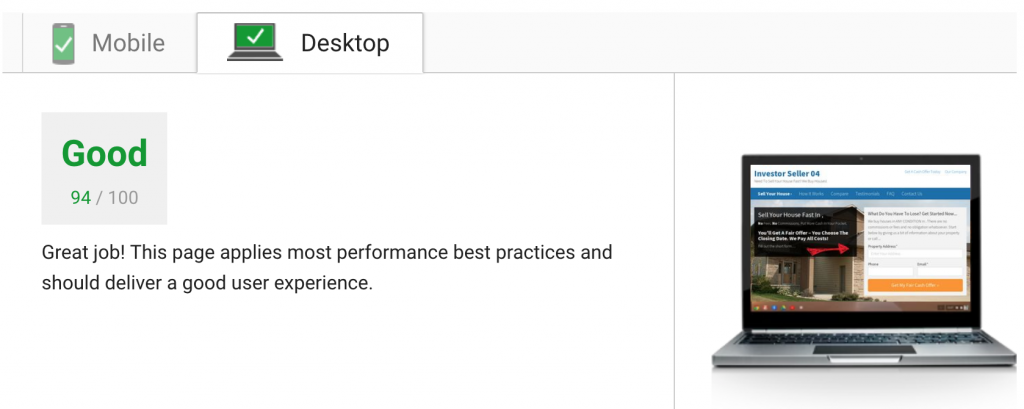
    That’s why, at Carrot, we take website load speed so darn seriously. We’re constantly making optimizations to keep our member’s sites moving wicked-fast. During one of our most recent tests, our sites received a 94/100 on their speed.

    page speed for good seo

    You can test your website’s speed over here to see how it’s performing.

    If you have a Carrot site, you shouldn’t need to worry about this, as our high-performing websites are built with speed in mind. (But feel free to reach out to our team if your website isn’t loading as you expect it to.)

    If you don’t have a Carrot site, you’ll want to do the following…

    • Compress Image Files — This is one of the primary ways to improve your website load speed. If you have a lot of high-quality images on your page, then that can hurt your page’s agility. By compressing those images, you make the files smaller and easier to load (which means faster).
    • Optimize CSS, JavaScript, & HTML — Clunky code is bad for load speed. Make sure that your CSS, JavaScript, & HTML is optimized to load quickly and that you don’t have any unused scripts running.
    • Reduce Redirects — The more times that a page has to redirect, the longer it’s going to take to load. Consider removing redirects entirely for the page you’re trying to fix.

    Carrot websites have image compression and page speed performance already built-in. So if this all seems too complicated, you can get yourself a high-speed Carrot site and never have to worry about this again. 😉

    Step 7. Get SSL Certification

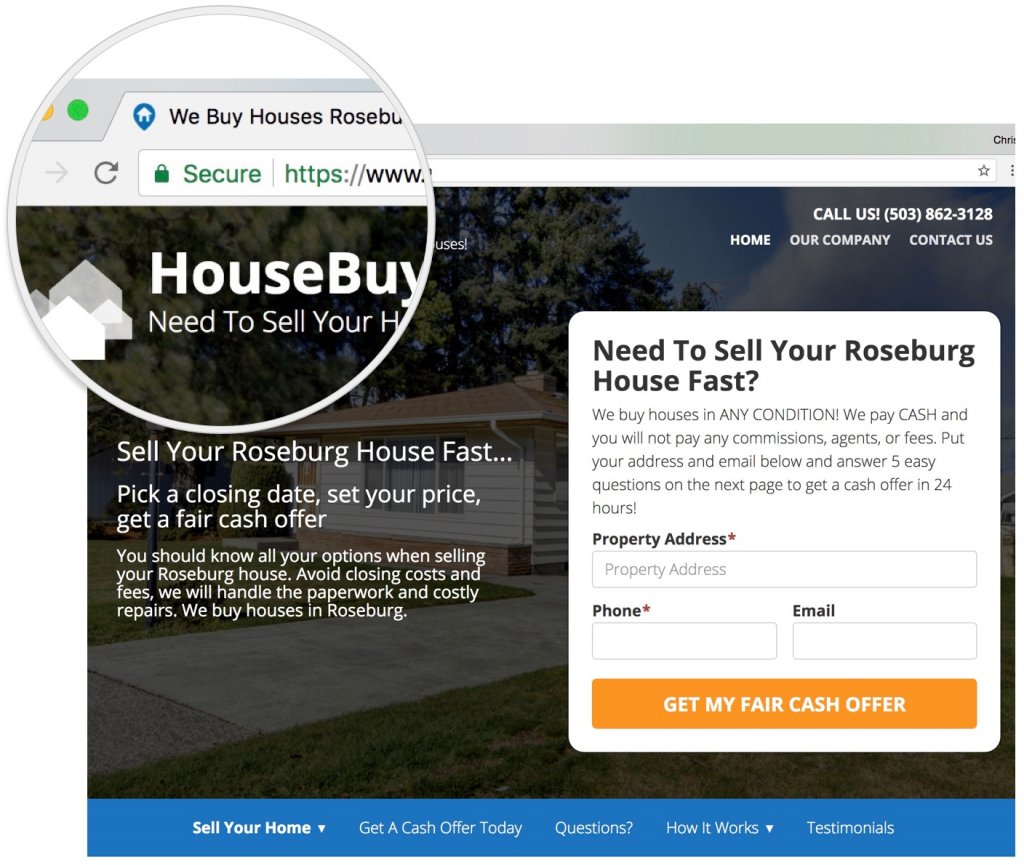
    Within the last few years, Google has strengthed the authority of websites that have SSL and weakened those that don’t. SSL certification is a basic way to secure your website from prying eyes. You can tell whether you have SSL certification or not by going to your website and checking to see if your URL is “HTTP” or “HTTPS” — if it’s “HTTPS”, then it has SSL certification already.

    With Carrot, all of our websites automatically include SSL for FREE.

    SSL SEO Rankings

    If you don’t have a Carrot website, you’ll have to do the process manually and pay about $50.

    This isn’t a total game-changer for your rankings, but it might be just the boost you need to beat pesky competitors.

    Step 8. Optimize Your Real Estate Website for Mobile

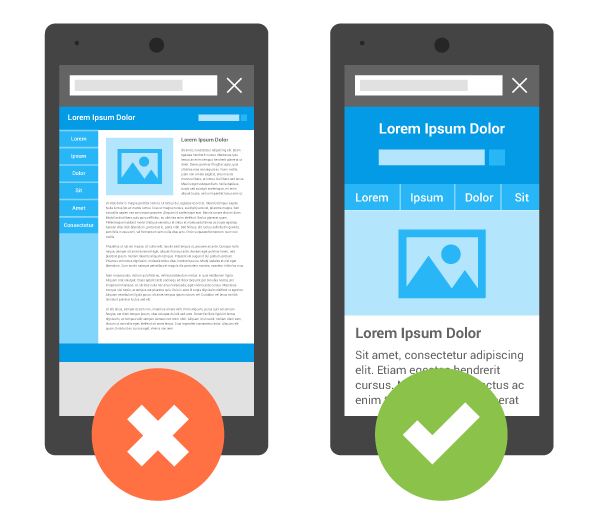
    If your website isn’t mobile-optimized, you should look into getting a different website builder that automatically adjusts for different devices. (Carrot websites are optimized for all viewing devices, including mobile.)

    mobile friendly websites

    If your website isn’t mobile-friendly, then it’s unlikely you’ll get many rankings at all — Google now prioritizes indexing the mobile version of sites over the desktop version, so this is an absolute must if you’re serious about ranking in search engines.

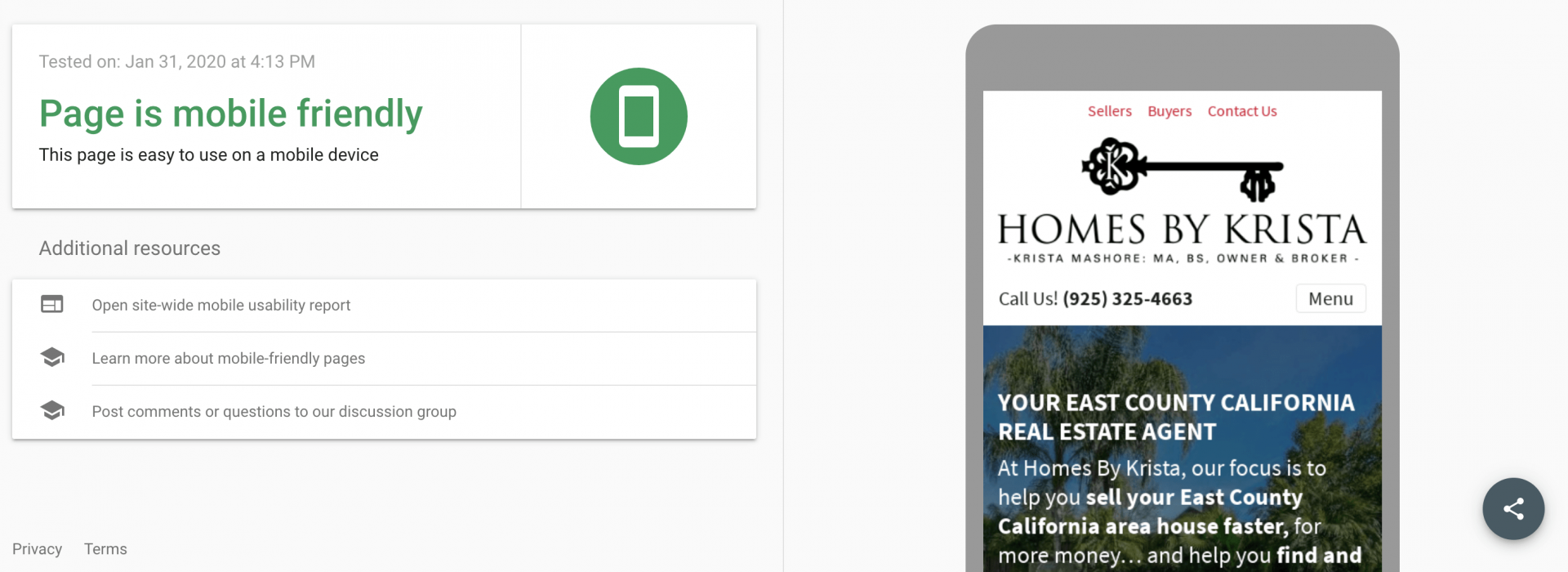
    You can test your site to see if it’s mobile-friendly using our mobile-friendly tool.

    Here are 7 tips to ensure you have a mobile-friendly real estate website:

    1. Get a Real Estate website that is “mobile-friendly” + responsive.

    mobile friendly real estate website

    2. Design for the touch, not the click
    Notice The Important “tap” Elements On This Carrot Site In The Green Zone

    effective mobile website design

    3. Make it easy for visitors to engage with you (both opt-in and phone)
    4. Get to the call to action quickly

    Mobile Optimized Website CTA

    5. Don’t use too many form fields.

    lead form entry questions

    6. Sandwich your call to action areas. One on top and one on the bottom.
    Optimize your page by adding a phone number and a second form to the bottom of the page.

    Mobile Optimized Secondary Forms

    7. Don’t rely on video as the primary call to action.

    Step 9. Improve Your Keyword Density

    People who are new to SEO make a few common mistakes when it comes to keyword density. Either they don’t include their keyword phrase in the copy, they include it way too much (which Google counts as spammy), or they try to rank for 10 different keyword phrases with a single page.

    So… if any of those sound like you… here are a few guidelines to stick to…

    • Aim For 1 Keyword Phrase Per Page — No more. No less. And if some keyword phrases are super similar, then put those on there as well. Just don’t try to rank for totally different keyword phrases on the same page… you’ll probably end up ranking for nothing.
    • Aim For 1% Keyword Density — As for the exact match of your keyword phrase, try for 1% keyword density. This means that for every 100 words, your keyword should be mentioned once. Less than this and Google might not know what your page is about, but more than this and Google might count it as keyword stuffing (which is a bad thing).

    Need help finding the right keywords? Carrot’s Keyword Explorer lets you spy on competitor’s rankings and find new keyword ideas for your content marketing strategy.

    Step 10. Avoid Black-Hat SEO

    Google isn’t afraid to penalize websites that’ve been using shady tactics to help their rankings. So we recommend avoiding black-hat SEO tactics, such as paying for backlinks or using Private Blog Networks (PBN’s).

    If you don’t know what that means, good, you’re probably not doing it. But if you have used those tactics and you think Google might be penalizing you, then you can check to see over on Google Search Console.

    To fix a penalty, stop any black-hat SEO tactics, produce high-quality content, and keep working on your SEO efforts. Over time, Google will learn to trust you again.

    Conclusion

    There you have it! Now you know what to do if your real estate SEO rankings are slipping.

    If you have further questions, be sure to check out our Help Center for tutorials on how to use our built-in tools, and hit us up in Carrot’s official Evergreen Marketing community to join the conversation & stay informed.

  • Advanced Real Estate Marketing Funnel: How Big Ones Do It

    A real estate marketing funnel is the system that guides visitors through your website or to your landing page. It turns visitors into leads, helps you nurture them into legitimate prospects, and eventually turns them into clients.

    This real estate marketing funnel post covers the basics of how to set up a marketing funnel, but the post you’re currently reading is for the advanced agent or investor who already has a business that’s growing. If you’re already generating consistent leads, closing consistent deals, how do you add that lever in your marketing, and take it up the next level?

    Because that’s where it gets exciting. You start to add magnitudes of results to your business by making some simple switches in your marketing.

    And the reason I’m saying this is because in a competitive market, like the time I’m recording this video right now, your sellers, your buyers, they have lots of options.

    So, if anyone is kidding themselves to think that you are the only option for your prospect net market, it’s not true.

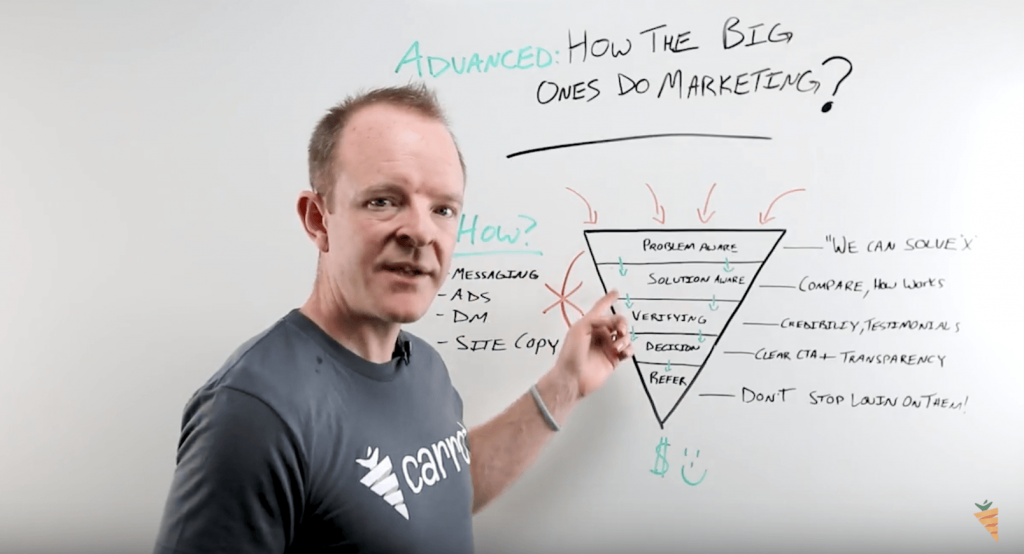
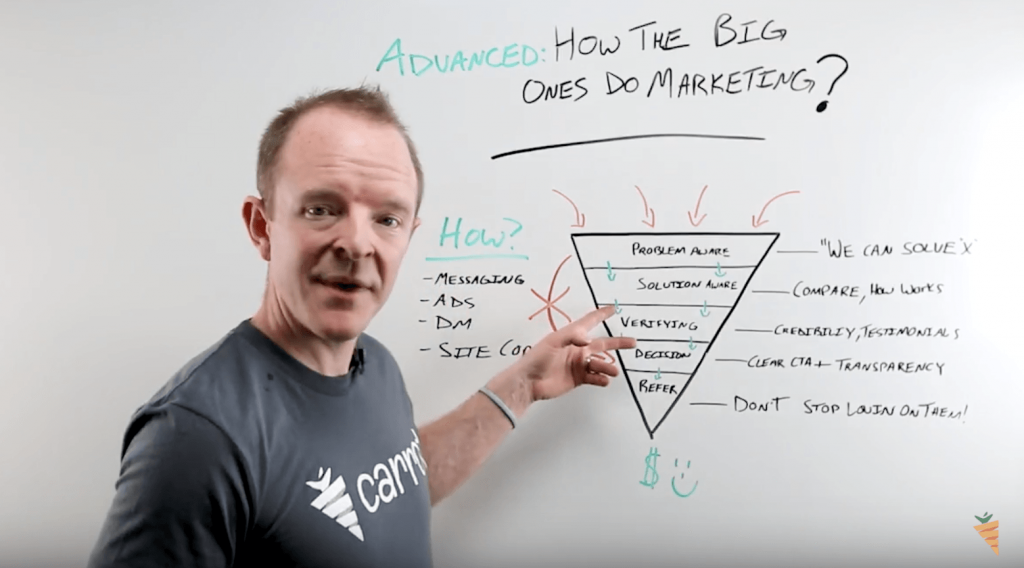
    Advanced Real Estate Marketing Funnel

    How A House Seller Decides…

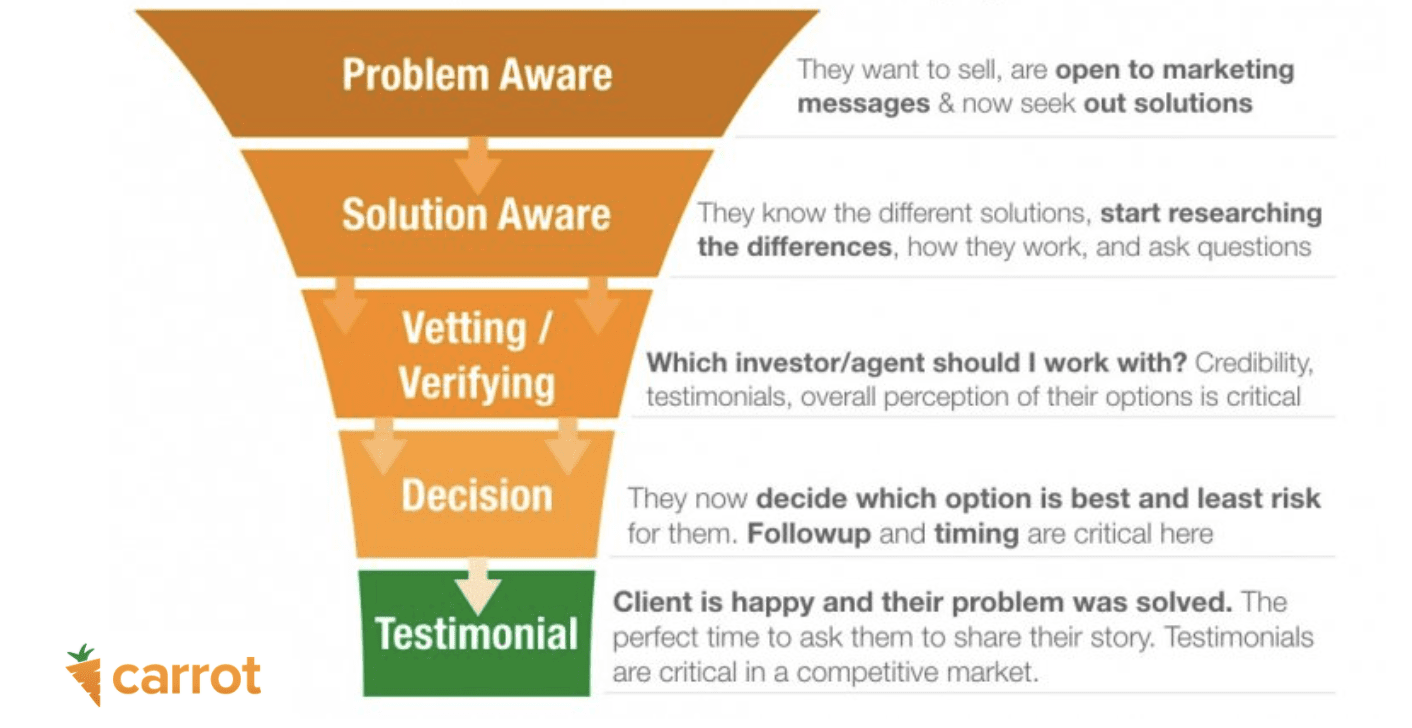
    The 5 stage process that all house sellers ponder as they sell their house. Does your marketing meet them at each stage and advance them to the next step… or does it leave them hanging?

    advanced real estate marketing funnel

    How do you make sure that you’re delivering the message that’s going to crack through all that marketing clutter out there? That delivers that message.

    It’s going to crack through that prospect so that they choose you versus the dozens of other competitors that you’re working around. How do you do that? Well, it’s by tapping into what’s already going on in your prospect’s brain.

    “Evergreen” Marketing

    One of the biggest real estate marketing resources that we oftentimes don’t use is the conversations that are going on in your prospect’s brain before they ever reach to you.

    This is “Evergreen” marketing approach helps control the conversation. The first thing I’d really encourage you to do is get to learn your prospect inside and out. Better than they know themselves.

    How do you do this?

    When you’re on the phone with your sellers or your buyers, ask them questions. “Hey, how did you get to my website? Where did you find out about me? Man, so why did you give me a call versus all those other direct mail … those postcards on there? What was it about me that stood out?”

    After you close those deals, ask them those questions and get those testimonials. But ask them the questions, not just so you get the testimonials, so you can get the data and information on how your prospects think, and I’m going to show you how to use it in your marketing.

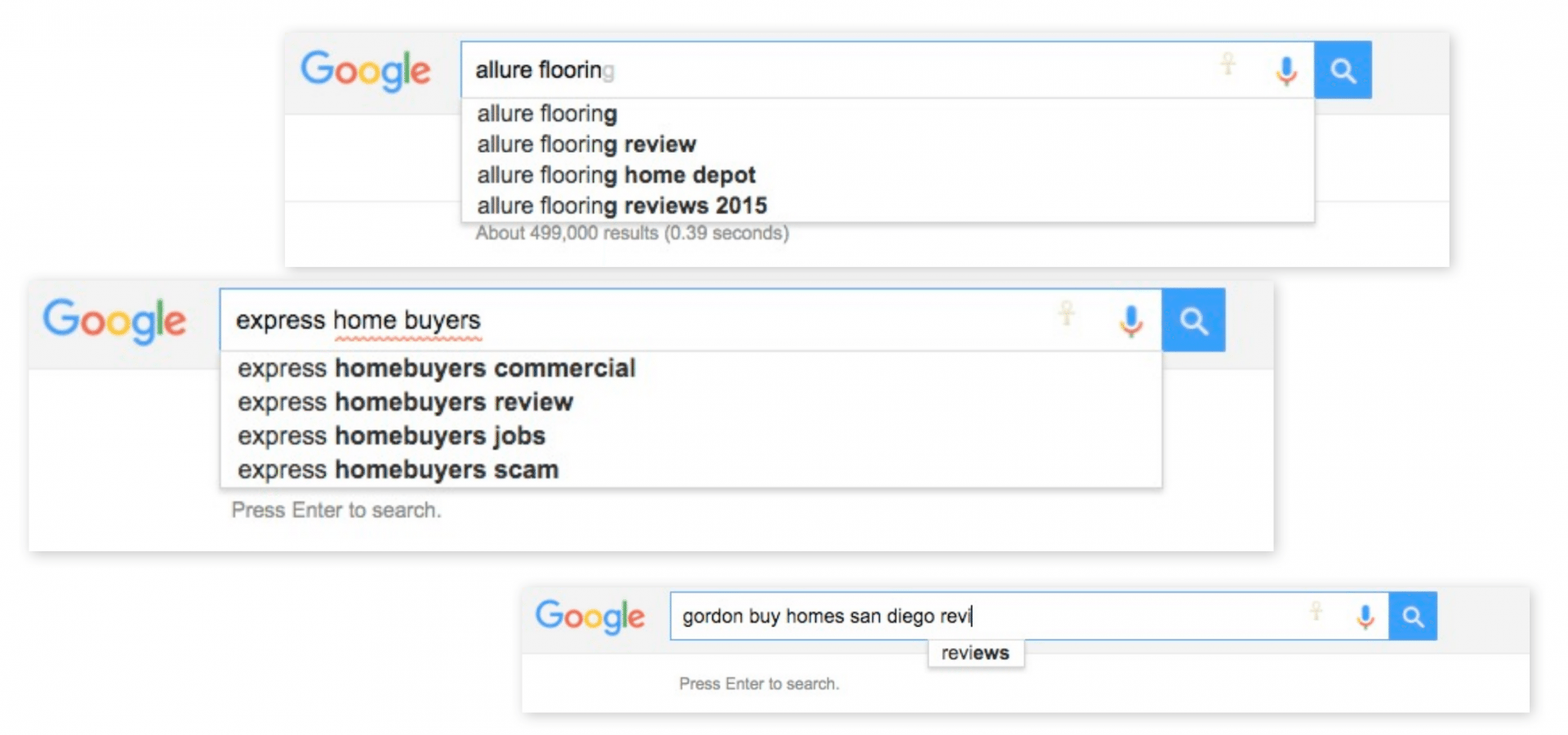
    Here Are A Few Examples Of Brands Or Companies When I Google Their Name…

    conversation marketing for brands

    Show Them You’re the Best Solution

    So, once again, you close the deal.

    “Hey, awesome. So, how did you find out about us? What was it about us versus the other agents or investors you were working with that kind of tipped you over the edge to have you work with us?”

    They’re going to say specific things, and those specific things are giving you a direct line into their brain and the way that they think. And now we can start to use those words, use those conversations, to connect with them better, to show them how you are the best solution.

    To make sure you’re crafting your marketing, so you’re the clear best solution. Not just the one that offered them the most money. If you do this right, you can offer them less money than your competition and you can still close the deals. All right. I’m going to show you how.

    Understand Your Prospect

    How do the big boys do market … big boys and girls … do marketing in a big way? The first thing is, once again, you have to understand your prospect. You can’t do amazing marketing without understanding your prospects.

    Many real estate agents and investors do marketing only at this first level and second level. That’s it. Most investors are stuck in problem aware and solution aware, and then they say,

    “Hey, here’s how we’re going to be able to offer you a price for your house.”

    Or,

    “Here’s how you buy a property from us or rent a property from us.”

    But where the meat is, where so much leverage is right now that investors and agents aren’t focusing on is this stuff in the middle.

    It’s this stuff in the middle. It’s dragging them, pulling them, guiding them from problem aware to solution aware to verifying to making a decision and then referring out.

    And one thing that’s a big, big, big myth and a big, big, big issue with real estate … not as many agents. Agents get this. You guys get this part. But real estate investors don’t, in general. That you work the deal thinking it’s a one-off transaction. That you’re never going to work with that seller or buyer again, especially sellers.

    People are treating it this way.

    But if you do this right, your sellers are going to refer you over to other people that you can work. So, you’ve gotta do all this. This one deal can turn into two, three, four, five deals for you if you work it right.

    Your Strategy

    Here’s what we’re going to do. So, the first thing in problem aware is the very first stage that your sellers or buyers or anyone is going through before they ever even see your message. This is where they just inherited the house. This is where they’re going through that divorce. This is where they just need to sell the house.

    They’re moving.

    And whatever that situation is… their listing expired with an agent and they don’t want to relist it… they now have a problem, and they’re aware of that problem. Before that problem exists in their life, they’re not going to notice your bandit signs. They’re not going to see your direct mail pieces and think twice about them. They’re not making the searches on Google to find you.

    So, one key is knowing that they’re problem aware.

    • What are those problems they’re having?
    • How are they feeling?
    • What things are they searching?

    As soon as you know that, put those messages into your direct mail. Put those messages in your bandit signs on your websites. At this stage, they’re going to notice that bandit sign, and call you up.

    They’re going to see the direct mail and go, “Man, are these people going to be able to solve this problem.” So, that’s why the direct mail piece and your website copy and ads need to be direct to that point. “Hey, do you have this problem? Sweet, we can solve it.” That sounded like a Vanilla Ice song for a second.

    Real Estate Marketing Funnel: The Solution Aware Stage

    Real Estate Investing Marketing Funnel solution aware stage

    So, right here, then they’re solution aware. As soon as they see you’re advertising somewhere and your competitor’s advertising, now they know there are solutions out there to their problem.

    Now they know, “Okay, well, I can list this house. I don’t really know what that looks like. There are also these things called house buyers out there, or I can buy investment properties from these entities or there are places to rent-to-own.” And then they know that it exists.

    But, how do we then make sure that your solution is the one that stands out in their mind? Well, over here on your website, in your marketing, in your ads, things like that when you’re talking to them, at this point, they’re wanting to compare things. How does X’s service compare to Y’s service? How does your service compare to other real estate investors?

    That’s where you’ve gotta have your unique selling proposition. Check out our USP Whiteboard Video, and our USP CarrotCast.

    You’ve gotta have a clear, clear value on why you are different than the others, and also compare you as a real estate agent versus a for sale by owner. Or you as a real estate investor versus listing with an agent. Compare those with the content on your website and in your advertising.

    Build Credibility in Your Process

    Next, you need to build credibility in your process. Because people want the process to be transparent. They want to know going into it that they’re pretty clear how the process is going to go down and this is one of the biggest things.

    I want to challenge you guys as real estate agents and investors… for some reason, there’s something in the psyche of a real estate investor, a house flipper, and a wholesaler, that makes you believe that you cannot be completely transparent with the way you’re developing your offers.

    If that mindset stays in your brain over the long-term, you’re going to lose deals versus the investors who grasp that,

    “Hey, you know what? Our prospect really cares.”

    They really want to know how this works, and if I can add transparency to the process if I can gain trust and credibility … if I can show them exactly how I’m coming up with that offer, and not think that by doing that it’s going to put me at a disadvantage,” you’re going to win.

    How is Opendoor, a company that’s valued at over a billion dollars just in three to four years … how is Opendoor winning the game in the markets that they’re going after?

    It’s not because their marketing is that much better. It’s because they have a very clear value proposition and people know exactly how their offer is going to be calculated.

    Exactly.

    And then the process is transparent throughout the whole thing.

    Strengthening Your Position

    So, next what we need to do is if we’ve done the comparisons with content … we have ads that pop up on Facebook that say, “Selling a house to an investor versus an agent,” or an ad that says something to the effect of … Brad Chandler of Express Homebuyers, had a great ad that says, “Don’t work with those fly-by-night investors. Here’s why.”

    Then it serves up a testimonial that has a seller that talks about working with two of those fly-by-night investors that didn’t fulfill on their promise of their offer, and how Brad did. So, that’s comparing.

    That’s planting seeds of doubt in that prospect about the other people and strengthening your position.

    Real Estate Marketing Funnel: Vetting and Verifying

    Real Estate Investing Marketing Funnel Vetting and Verifying Stage

    Next, once they understand there are options out there and how they differ, now they’re going to go, “Man, so, there’s four options, or three options, or two that I really think are pretty good. Which ones should I work with?” So, they’re going to go in the vetting and verifying phase.

    They’re going to be Googling your company name. Your company name plus reviews.

    They’re going to be looking for Better Business Bureau. Not just that you have a BBB profile, but you have a positive review profile. You’ve got a dozen or two dozen reviews that are four out of five or five out of five.

    On the agent side, they’re going to be looking for credentials and work history.

    real estate agent website credibility

    This is where you start getting testimonials and video testimonials of your prospects and clients talking about the experience of working with you. Talking about your character. That you follow through and close your deals. That you fulfill the promises you make.

    That you don’t weasel out of your contracts because you can. And this part is huge, because if there are four or five options they’re looking at, and they Google you and they don’t find anything that gives them that warm and fuzzy, that they really want to work with you but they do with someone else, they’re going to win the deal.

    I have a question for you. Who has ever purchased a product or decided to not purchase a product, any product, because of one review that you saw? Just one. That happens all the time. You’re on Amazon and you’re looking at it, and there’s one review that’s like, “Ah … man. I’m not going to get it. Because if that person experienced it, there’s a chance that I might as well.”

    So, if we’re not thinking that same way in our businesses … that one review, that one testimonial, that one bit of credibility can completely tip the scales from someone working with you to someone working with someone else, then we’re kidding ourselves. So, in this phase in the competitive market, the vetting and verifying market, is big.

    How do you do that with your ads?

    using testimonials in your fb ads

    Make sure you’re putting great case studies and testimonials in your Facebook ads, in your Google ads. Make sure you’re putting great case studies and testimonials in your credibility kit when you’re meeting with your sellers or with your buyers.

    They need to know that you’re a great company to work with, and there needs to be overwhelming proof that you’re a legit person. You’re honest, trustworthy, and you will fulfill your promise. All right?

    Last right here, decision. How do you pull them to a decision? First of all, you’ve gotta have a really clear call to action. Say, “Here’s what you do next.” Present them a real offer. Follow up on that offer. Don’t assume that they’re going to contact you if that offer is good. Follow up, be courteous, but follow up.

    Timing is a big thing there.

    follow up with your motivated seller prospects

    Real Estate Marketing Funnel: Transparency

    Transparency, once again. Add as much transparency to the entire process as possible. Someone opts in on your website, don’t just kick them out a generic email and then just land on their doorstep in two doors.

    Send them an email or pick up the phone and say,

    “Drew is actually going to be at your door at four o’clock tomorrow. Drew’s been with us for two years, or five years.”

    Or,

    “It’s actually going to be me. I’m going to be pulling up in my truck that has XYZ on it, so expect that. And here’s a few things I’m going to be walking through when we get there, and then we kinda talk about what we find and we can talk about the value of the home, and kinda work out a fair offer there for you. Does that work?”

    So, then they know exactly how the process is going to work, and then you can walk them through it too. “Once we make the offer, here’s how that works. We can close within seven days, or whatever that is.”

    Be crazy transparent during this process because the more transparent you can be at their point of decision, the more that they’re going to want to work with you and it adds credibility to that vetting and verifying phase.

    Sharing the Love

    Last, don’t stop loving on them. Once again, so many real estate investors … the agents are better … but so many real estate investors are not in the relationship business when you should be. You’re in the transaction business.

    “I closed 14 deals this month.” or, “I closed two deals this month.”

    How many of those deals did you send a thank you card 30 days after you closed it? Probably none of them.

    How many of those deals did you give them a care package at the closing table? Probably very few. How many of those deals did you follow up six months later and see how they’re doing after the move or after the sale, and find out if there’s anything else you can help them with?

    Or if there are any other people that they know that you can help? Probably very few of you, because you’re thinking so short term.

    And short term is not a fun way to build a business, and it’s not a profitable way to build a business over the long term. And you’re not going to build a great business. You’re probably going to be out of business within two to three years if that’s all that you’re doing. So, make sure you’re building all this up so referrals happen, and start loving on them.

    Business is way more fun when you love on your clients and client’s love on you.

    I’ll Finish This Advanced Real Estate Marketing Funnel Post With This…

    I’m going to finish it with this. I’ve been to masterminds with the largest house flippers and wholesalers in the country. I asked them this question once … there were 50 people in the room … I said, “Raise your hands, anyone in this room who would love to have a beer, have a drink with your clients?” 2 people raised their hand out of 50 people.

    And I’m saying this because this isn’t about marketing. This is about building a business you love. About building a business you love, and you can only do that if you love your clients. And loving on your clients does all this way better.

    It’s going to make your marketing really powerful. That’s how we’ve grown so much. Thousands of members because we love on our clients.

    We’ve realized that you are human beings that have real needs, real desires, real hopes, real fears, and we’re going to help you through that stuff.

    Do the same thing for your customers.

    For more resources and real estate marketing materials, click on the link!

    Watch The Video of This Post…

    Real Estate Investor Marketing | Advanced Marketing Funnel | How Big Ones Do It
  • 7 Tips To Master Local SEO for Real Estate Investors | Skyrocket To The Top of Search Engine Results

    Competition in the real estate market will always be fierce. But what if you could attract a steady stream of qualified leads without the constant hustle? The answer lies in local SEO for real estate.

    document.addEventListener(‘DOMContentLoaded’, function() { jQuery(window).scroll(function() { if ( jQuery(document).scrollTop() > $(‘#carrotToast’).offset().top && jQuery(“.carrot-toast”).attr(“displayed”) === “false”) { jQuery(‘.carrot-toast’).toast(‘show’); jQuery(“.carrot-toast”).attr(“displayed”, “true”); } }); });

    Imagine this: a potential seller in your market searches for an investor specializing in fixer-upper properties. Through the power of local SEO, your website appears at the top of their search results, showcasing your expertise in local market trends and flipping potential. This is the magic of a well-optimized local SEO for real estate strategy – attracting motivated sellers and generating deals on autopilot.

    This guide is designed for real estate investors like you. By following our 7 simple tips to master local SEO for real estate, you’ll be well on your way to ranking higher in local search results, attracting high-quality leads, and ultimately skyrocketing your real estate business.

    The Power of Local SEO for Real Estate Investors: Attract Local Leads & Dominate Your Market

    Local SEO focuses on optimizing your online presence to rank higher in search results for local searches related to real estate investing in your target market. With a strong local SEO strategy, your website could be the first they see, positioning you as the go-to expert.

    The benefits of local SEO for real estate investors are undeniable:

    • Attract a Steady Stream of Local Leads: By ranking higher for relevant searches, you’ll naturally attract motivated sellers in your area, saving you time and resources on lead generation.
    • Target High-Quality Leads: Local SEO prioritizes location, ensuring you connect with sellers searching for someone to buy their house quickly.
    • Boost Brand Awareness and Credibility: High local search rankings project an image of authority and expertise, making you the trusted choice for local sellers.
    • Cost-Effective Marketing Strategy: Compared to traditional advertising, local SEO offers a long-term, sustainable approach to lead generation without breaking the bank. This is what we call Evergreen Marketing.

    By mastering local SEO for real estate, you’re not just optimizing your website – you’re setting yourself up as a dominant player in your local market, attracting a constant flow of qualified leads ready to do business.

    7 Simple Tips to Master Local SEO for Real Estate and Skyrocket Your Lead Generation

    Now that you understand the power of local SEO for real estate let’s dive into practical steps to implement it. Here are 7 easy-to-follow tips for mastering local SEO for real estate and attracting qualified leads in your target market:

    Tip 1: Claim and Optimize Your Google My Business Profile

    Think of your Google My Business (GMB) profile as your online storefront for local searches. Claiming and optimizing your GMB profile is crucial for local SEO for real estate. Here’s what to do:

    • Claim your GMB profile: Search for “Google My Business” and follow the steps to claim your business listing.
    • Optimize your profile: Fill out all information accurately, including your business address, phone number, website URL, and service categories relevant to real estate investors (e.g., “cash home buyer,” “ real estate investor”).
    • Add high-quality photos: Showcase your professionalism with clear images of yourself, your team (if applicable), and properties you’ve invested in.
    • Encourage customer reviews: Positive reviews build trust and improve your local search ranking. Provide exceptional service and politely request satisfied clients to leave a review on your GMB profile.

    Tip 2: Target Relevant Local Keywords

    The key to attracting local leads lies in using the right SEO keywords. Conduct keyword research to identify search terms potential sellers in your area use. Here’s the trick:

    • Focus on local intent: Instead of just “real estate investor,” target long-tail keywords with location qualifiers, like “ cash home buyer” or “ investor for distressed properties.”
    • Use keyword research tools: Free and paid tools like Carrot’s SEO Keyword Bible or SEMrush can help you uncover high-volume, low-competition keywords relevant to your target market. You can use our Keyword Explorer Tool if you are a Carrot member.

    Tip 3: Create High-Quality, Local Content

    Content is king, and local SEO is no exception. Establish yourself as a local expert by creating informative content that caters to your target audience’s needs. Here are some ideas:

    • Blog posts: Create informative blog posts on topics like “ real estate market trends,” “ home buying guide for sellers,” or “[type of property] investment strategies in .” Here are 101 blog post topics to get you started.
    • Local case studies: Showcase your expertise by sharing success stories of past deals you’ve closed.
    • Local real estate guides: Create downloadable guides offering valuable insights into the local market, attracting leads, and establishing your authority.

    Tip 4: Build Local Citations

    Citations are essentially online mentions of your business name, address, and phone number (NAP) across various directories and websites. Building strong local citations is a key element of local SEO for real estate. Here’s how to get started:

    • Claim listings on local directories: Search for relevant online directories in your city/region and claim your business listings, ensuring your NAP information is consistent across all platforms.
    • Partner with local businesses: Network with other local businesses and explore opportunities for guest blogging or backlinks on their websites.
    • Industry associations: Join relevant real estate investor associations and get listed on their online directories.

    Tip 5: Encourage Positive Online Reviews

    Positive online reviews are gold for local SEO for real estate. They build trust with potential sellers and signal expertise to search engines. Here are some ways to encourage reviews:

    • Provide exceptional service: Happy clients are more likely to leave positive reviews.
    • Request reviews politely: After a successful transaction, ask your client to leave a review on Google My Business and other platforms. Provide direct links to make it easy for them.
    • Respond to all reviews: Thank happy customers for their positive feedback and address any negative reviews professionally.

    Tip 6: Engage with Local Online Communities

    Don’t underestimate the power of local online communities. Actively participating in relevant online forums, Facebook groups, and platforms like Nextdoor can boost brand awareness and establish you as a local expert. Here’s how:

    • Join local real estate investor groups: Share your knowledge, answer questions, and build relationships with other investors and potential clients in your area.
    • Engage in discussions: Provide valuable insights on local market trends and demonstrate your expertise in a casual setting.
    • Offer free consultations: Showcase your expertise by offering free consultations to potential sellers through online communities, building trust and generating leads.

    Tip 7: Track Your Results and Adapt

    Local SEO for real estate is an ongoing process. It’s crucial to monitor your progress and adapt your strategy accordingly. Here’s what to track:

    Get Started Now To Master Local SEO On Your Real Estate Investing Website

    As an investor working within today’s web environment, your best strategy to gain the attention of prospective clients in your market is to use local SEO.

    The Carrot platform is built to make it crazy easy to leverage local SEO and outrank your competition. So, take a demo of Carrot and see if it’s a fit.

  • Real Estate Copywriting: Generate More Leads By Starting With Your Audience

    Tips from the world’s top copywriters that’ll make your real estate copywriting stand out from the masses.

    document.addEventListener(‘DOMContentLoaded’, function() { jQuery(window).scroll(function() { if ( jQuery(document).scrollTop() > $(‘#carrotToast’).offset().top && jQuery(“.carrot-toast”).attr(“displayed”) === “false”) { jQuery(‘.carrot-toast’).toast(‘show’); jQuery(“.carrot-toast”).attr(“displayed”, “true”); } }); });

    Hordes of people left and right are now bumping shoulders among you and trying to get to the same sellers — all screaming at the top of their lungs: “I can buy your house fast for cash!!!”

    With more options for sellers and more investors on the scene, our efforts are becoming harder. So, what do we do in this populated market where our prospects are well aware of our message?

    The answer is right in your market.

    There’s a plethora of advice on how to stand out from the masses. But in this article, I look to the copywriting giants for help.

    So, the following advice is taken straight from the methods and teachings of great and famous copywriters like Gary Halbert, Dan Kennedy, Gary Bencivenga, John Caples, David Ogilvy, and Robert Collier… names that have had a huge impact on today’s marketing methods and even Carrot’s own content.

    But first…

    The problem with REI marketing

    If you Google “direct mail real estate investors,” you’ll get a host of articles and forum advice on how to get started with direct mail (DM). But who in their right mind would read through every one of those Bigger Pocket’s articles and forum topics? I did!

    When I first wandered into direct mail (before I was aware of copywriting and direct response), I implemented all the advice I gathered from the forums. I even used a famous coach’s DM method exactly as he recommended.

    The results?

    After tens of thousands of dollars spent and hundreds of calls, I got ZERO deals out of it, maybe two motivated sellers. And yes, I did follow up relentlessly and yes, I did send mail for seven months.

    But I wasn’t alone in this. I asked many investors in my area, and I quickly learned that the volume of deals required to obtain consistent results in my area is massive, and very few are successful.

    What was the problem?

    Fast forward to today, now being a young-schooled copywriter, following the masters of the past, and putting my knowledge to the test with Carrot as a professional copywriter, I realized an important thing… the advice given by coaches/gurus and forums in Biggerpockets is completely contrary to the advice of copywriting and direct mail masters; guys like Dan Kennedy, Eugene Schwartz, Bob Bly, and Robert Collier who all devoted their lives to “sales on paper” and squeezing as much money out of every marketing dollar.

    Here’s the difference I found:

    The World’s Top Copywriters say:

    1. Create a laser-focused list and keep narrowing down that list.
    2. Research and study that market relentlessly. Get in their minds. Find out what makes them tick, their fears, desires, etc… Find out what their main problem is.
    3. Create a copy that focuses on them and their problem, agitates their problem, and then provides your solution.

    Real Estate investors say:

    1. Get a list of absentee owners with equity.
    2. Send a simple letter saying, “Hi, my name is… and I want to buy your house at….”

    Here’s the good thing about direct mail in real estate investing: you can generate $20,000 with one deal. So, a .02% response doesn’t really matter if you have the budget for massive volume while still generating a decent ROI.

    Here’s the bad thing about DM in real estate investing: A .02% response can get you broke fast in a crowded market where the customer is well aware of your service.

    If you’re advertising in a crowded market and you’re doing what everyone else is doing… then your prospects are getting the same message from multiple people.

    At this point… your success is determined SOLELY by luck.

    Let’s do better.

    Let’s rise above the masses by learning from the pros who devote their entire lives to what we’re talking about.

    Here are 5 things you can do to improve your marketing message by just looking at your audience.

    Table of Content

    Compelling Real Estate Copywriting:

    Real Estate Copywriting Tip #1: Audience Comes First

    “Tell me about my crabgrass, not your weed killer.”

    Features VS. Benefits

    Your prospects need the utmost attention from you. So, stop talking about what you have and start talking about THEM and their problems.

    Every time your message says something along the lines of “I want to buy your house,” all it says to your prospect is “me, me, me, me!”

    This message only has what’s called a “feature” in your product. And listing a feature right off the bat doesn’t grab attention.

    Now don’t get me wrong, this can work and has worked in a market where your service is brand new and not really heard of. But things are heating up and there are tons of new investors and more options to sellers.

    Instead of talking about your features, re-write them in a different way that places the sellers in the middle: This is called a “benefit.”

    Here are some examples of Features vs. Benefits taken from Bob Bly’s “The Online Copywriter’s Handbook,” selling an alarm clock:

    Features

    1. a) Large illuminated digital display
    2. b) Snooze alarm switch
    3. c) Digital alarm

    Benefits

    1. a) Time is easy to see at a glance­—even at night.
    2. b) Tired? Just hit a button for 10 more minutes of sleep.
    3. c) Alarm wakes you at precisely the right time

    See how Bob changed a simple, boring alarm clock feature into a customer focused benefit? This can be done with any product or service. Take for example the features we use as house buyers, rewritten as a benefit:

    Features

    1. a) All-cash offer
    2. b) Fast close
    3. c) No hassle

    Benefits

    1. a) No more hoping and wondering if you have a sale — A guaranteed sale with one offer.
    2. b) In 5 days you can wave goodbye to your troublesome house and stressful situation.
    3. c) You’ll literally never have to leave your couch until you sell your house.

    Here’s an excerpt from one of my blog articles listing benefits of selling to a buyer…

    You can have your home sold in 1 week to a buyer today.

    • Get the assurance your house is sold and never risk the mobile sitting for months just losing money.
    • Never deal with headache buyers who are just flakey and disappoint you
    • Never deal with the agent calling you saying, “only one person showed up to the open house today and they weren’t interested”.
    • Never deal with the realization, months after, that you listed the house for $10,000 more than it should’ve (it’s happened to me and it’s not a good feeling).
    • Pay nothing out of pocket
    • Never deal with picky buyers (they don’t like the paint color, or the floor, or they wanted a new a/c, etc.)
    • Sell your property as-is (bugs in all, investors usually take it)”

    Focus on the problems

    Other than listing benefits in the message, you should also be agitating the central problem of your prospects.

    For example:

    1. If you sell a plumbing service, talk about what mold can do when it builds up due to a leaky water pipe.
    2. Or, if you sell a roofing service talk about what a complete roof replacement costs if you wait until the planks get rotted out.
    3. And, if you sell a house-buying-service, talk about how a foreclosed home due to tax delinquency can mean 7 years of ruined credit, losing all your equity in the property, and the embarrassment of losing a house.

    The key to all this is to add emotion.

    Features like “Cash-offer” and “Fast close” don’t trigger any emotion. But benefits that solve a problem and storytelling of emotional real-estate problems can pack an emotional punch.

    The famous negotiator, Jim Camp, once said, “you’re always safe when you’re in the customer’s world.” Meaning? Always go back to the market. Find out what they want, who they are, what they like, what they need, and what they desire and you’ll be better off than most.

    As the marketing giant Dan Kennedy has said in the “Ultimate Sales Letter,” “The goal is understanding. To persuade someone, to motivate someone, to sell someone, you really need to understand that person.”

    If you get this part right, it doesn’t matter how bad the rest is, you’ll do fine.

    But how do we find out what our market wants?

    Here’s an excerpt from one of my blog articles listing problems that communicate emotions…

    But if…

    you have another mortgage to pay 

    have no money to pay that rent space

    having medical issue and need to move ASAP

    risking eviction

    risking foreclosure

    need to move out of area for another job you just got

    need to pay debt that keeps piling up

    need to move in a week for whatever reason…

    Than, that offer that’s less that what you expected is much better than paying all that money out of pocket AND suffering through all the pain of staying in the house.”

    Real Estate Copywriting Tip #2: Research, Research, Research

    “If I have 4 hours to chop a tree, I’ll spend 3 hours sharpening my ax!”

    Top copywriters spend hours researching, profiling, and diagnosing their audience. To them, this part is THE most important part of marketing. Exploring and getting in the minds of your sellers is a must.

    But how do you do this?

    The best way is to talk to motivated sellers. If possible, talk to your previous sellers. Or go door-to-door knocking and spend time face-to-face with them. In other words, spend time with the market.

    A good tip given by Ben Settle (you can listen to the Carrot Cast with him here): Spend some time on forums and articles and read comments directly from some people right in your market.

    Copywriters like Ben Settle also take time to find out who their audience is in terms of political affiliation, age, gender, race, TV show interests, hobbies, etc.

    The bottom line is that you must find out what they truly desire, what they fear, and what they really want. A “cash offer” is not what they really want. What they may truly want is security, or they may truly fear a complete loss of equity or ruined credit from foreclosure, or they may want convenience and not to deal with anything else or to move forward with life away from their stress—in other words, get into the mind of the seller.

    The Hidden Benefit

    Ted Nicholas (sold over $200 million worth of “how-to” books using direct-response ads in magazines, letters, and newspapers) discusses the importance of emphasizing what he calls the “hidden benefit.” It’s not the obvious benefit, nor is it the first benefit you think of, but the most profound benefit to your prospects.

    Let me illustrate this by telling a story from Dan Kennedy’s book, “The Ultimate Sales Letter.

    He describes how he had to come up with a marketing campaign for a presentation called “How to recruit more insurance agents under you.” He spent a lot of time amid these insurance agents.

    One day, he was listening in on a conversation between two agents and noted that they had A LOT of interest in golf. Most of the time, they were talking about golf, not recruiting… thus a marketing message was born.

    His new message to the insurance agents? “Puts Recruiting on Auto-Pilot, So That You Can Go Play Golf!”

    That’s genius! What these insurance agents really wanted was NOT just to recruit. It’s to have more time to golf. Recruiting wasn’t their true desire. He asked, “Why do they want to recruit? What do they really want?” It’s to be able to make money while doing what they love: golf.

    Getting to what your prospect really wants is key.

    But that’s easier said than done if you don’t know who your prospects are, where they’re at, and what they TRULY want.

    I know what some of you might be thinking: “Well, that’s hard to do because I only advertise to a large list of homeowners with different interests.”

    Well then, my answer to that is…

    Real Estate Copywriting Tip #3: Narrow Down Your List

    “The only advantage I want is a starving crowd.”

    This is my final piece of advice from marketing expert Gary Halbert.

    We know that we must center the ad on the customer and do some research beforehand. But before you do your research, you must have an audience… a very targeted audience.

    Gary Halbert had once said in his book “The Boron Letters,” “I only want a starving crowd.”

    A list of absentee owners is not a starving crowd. What does a BIG list of homeowners with equity have in common? Nothing… except that they have equity.

    Are they “starving to sell their house at a discount for cash and a fast, as-is sale”? Who knows if there are any motivated sellers on that list? It’s a dice game.

    Combining multiple lists creates a better list that narrows in on problems rather than equity.

    An example would be absentee owners who have inherited a house and have had eviction or credit problems. A probate list containing an out-of-state heir/executor and the property going through probate was owned for at least 20 years.

    Now, I understand these are probably difficult lists to obtain, but the main idea I’m illustrating is that almost every single person on that list has a serious problem with money, a tiresome house, or doesn’t want to deal with unwanted property. If you need a simpler approach, just take an eviction, divorce, or tax delinquency list.

    Does it seem like it’s a little too much?

    Well, Gary Halbert, in the same book, gave away his method for determining a list. In doing so, he cut it down 10 times! That’s right, he used 10 different layers (criteria) to narrow it down to a hotlist.

    A list like that is much easier to research. Now, you can speak directly about their pain points.

    Plus, this produces a MUCH cheaper marketing budget.

    We’ve only touched on the audience in this article. And there’s much more to creating compelling copy.

    Real Estate Copywriting Tip #4: Unleash the Power of AI, But Don’t Get Lazy

    Listen, I get it. You’re a busy investor, juggling a million things. Writing compelling copy can feel like another mountain to climb. But fear not! AI-powered copywriting tools are here to be your secret weapon. Imagine having a 24/7 virtual assistant who can:

    • Craft Initial Drafts in a Flash: Are you stuck staring at a blank page? AI tools can churn out initial drafts based on your targeted seller’s unique selling proposition or property details (square footage, bedrooms, amenities). This gives you a solid foundation to build upon, saving you precious time.
    • Keyword Magic Trick: The right keywords are like gold in the online real estate world. AI can analyze market trends and suggest keywords potential sellers and buyers use in their searches. This ensures your copy gets discovered by the right audience, not lost in a sea of generic descriptions.
    • SEO Optimization Made Easy: Crafting SEO-friendly copy can feel like deciphering an ancient language. AI tools can analyze your content and recommend tweaks to boost your search engine ranking.
    • Grammar Police on Patrol: Typos and grammatical errors can scream “amateur.” AI acts as your virtual editor, providing real-time feedback on grammar, clarity, and sentence structure.

    AI: Your Partner, Not a Replacement

    Now, let’s be clear: AI is a powerful tool, but it’s not here to replace your savvy as an investor. While AI excels at data analysis and technical stuff, it lacks the human touch.

    Storytelling Sells!

    AI can’t spin a captivating yarn that tugs at the heartstrings of motivated sellers or paints a picture of a dream home (or a high-ROI rental property!). That’s where you, the savvy investor, come in. Use AI-generated drafts as a springboard, but infuse them with your unique voice and storytelling skills. Highlight the emotional connection your audience will have with you.

    The Winning Formula: Human + Machine

    The key to success is leveraging the strengths of both AI and human expertise. Use AI tools to streamline tasks, research keywords, and get a jumpstart on your drafts. Then, unleash your inner wordsmith to craft copy that showcases your skills, offers, and solutions.

    Remember, you’re an investor, and every detail counts. Make your copy work as hard as you do!

    Real Estate Copywriting Tip #5: Expanding Your Copywriting Arsenal

    Crafting compelling copy is just the first step in effective marketing. Here’s how you can leverage your copywriting skills to attract the right sellers and buyers and maximize your return on investment (ROI):

    Targeted Website Content:

    Your website is your digital storefront for attracting qualified leads. Compelling copywriting is key to converting visitors into offers:

    • Headline Hero: Craft clear, concise headlines that grab attention and instantly communicate the property’s potential.
    • Data-Driven Decisions: Include data and market analysis to showcase your market knowledge and support your offers.
    • Compelling Case Studies: Feature past success stories with before-and-after testimonials and showcase renovation examples to demonstrate how you’re uplifting the community.
    • Clear Calls to Action (CTAs): Make it easy for interested leads to connect with you. Include CTAs like “Get an Offer Today” or “Download our Free Guide: The Pros and Cons Of Selling A House To A Professional House Buyer.”

    Social Media: Engaging with Potential Leads

    Social media platforms are powerful tools to connect with motivated leads:

    • Captions that Convert: Write compelling captions highlighting your unique selling points (USPs) and using relevant hashtags to reach your target audience.
    • Targeted Ads: Craft engaging ad copy with clear CTAs to drive traffic to your website or landing page with detailed information.
    • Behind-the-scenes Content: Share behind-the-scenes glimpses of renovation projects or neighborhood highlights to build excitement and showcase your expertise.

    Building Trust with Consistent Branding:

    Maintaining a consistent brand voice and style across all your marketing materials establishes you as a professional and trustworthy investor:

    • Define Your Investor Persona: Are you a quick-flip specialist, a buy-and-hold investor, or something in between? Tailor your brand voice to resonate with your ideal buyer.
    • Develop a Style Guide: Create a style guide that outlines your preferred voice, tone, and formatting to ensure consistency across all your written content.

    Tailoring Your Copy for Different Property Types:

    Adjust your copywriting approach to highlight the specific benefits of each property type:

    • High-Demand Rentals: Focus on strong rental income potential, low vacancy rates, and desirable amenities for tenants.
    • Fixer-Uppers: Emphasize the property’s potential for value-added renovations and highlight the cost-saving benefits.
    • Commercial Properties: Showcase the property’s location, traffic patterns, and potential for increased business activity.

    By mastering these copywriting strategies, you can effectively market your investment properties, attract qualified buyers, and achieve your real estate investment goals.

    Every good advertiser starts with their audience

    I know that I’ve mentioned direct mail quite a bit. However, all this info applies directly to any marketing channel, such as Facebook, TV, Bandit signs, and PPC.

    Simply put…

    1. Narrow down your list to hit specific pain points.
    2. Research that list to learn more about your audience, hidden benefits, and pain points (including interests, hobbies, TV shows, age, gender, political affiliation, desires, etc.).
    3. Focus on the prospect and their pain points in the message.
    4. Use AI-powered copywriting tools as your secret weapon.
    5. Expand your copywriting arsenal

    Applying these tips doesn’t matter if you’re in a crowded market or not.

    Imagine your prospect who is tired of her rental and having money issues, and she’s holding two letters in her hand:

    One says, “I will buy your house…” a message she gets every week. The other (yours) speaks of the problems of evictions, the cost, and how difficult it is to sell a house with tenants and then introduces a solution.

    It’s obvious which one grabs more attention.

    However, this is nothing new. This has been tried and made true by hundreds of copywriters who help 8-figure businesses increase their revenue.

    If you implement these, you can put yourself ahead of the game by increasing your ROI (and your success). While others spend $10,000 a month for seven months on a huge equity list, saying, “I want to buy your house…”

  • Real Estate Branding [5 Smart Ideas + Examples]

    What makes your business different from any other real estate agent in your city? 

    How you answer this question and communicate what makes you unique is incredibly important. Real estate branding is vital for attracting and retaining clients.

    Your real estate branding aims to clearly and consistently communicate the experience and services you provide- visually, textually, and in person. 

    Without good real estate branding, you risk being just another agent, lost among hundreds of other agents trying to market their real estate business.

    Today, we’re highlighting a collection of the best real estate branding ideas. Check out these examples, see what these brands are doing right, and consider how your branding holds up to the competition. Ask yourself, is my business a brand?

    And remember, buyers and sellers are much more likely to choose a brand they connect with over a generic alternative.

    How Are You Branding Your Real Estate Business?

    At first, maybe that seems like a simple question. You choose some colors and some fonts, pay someone to design a logo or use a logo generator, and then build your website.

    Voila!

    But it’s not that simple…

    Every color, font, and logo communicates something about your brand. If you don’t choose those elements carefully, you might send messages you don’t want to send.

    And this guide will show you how to brand your real estate business effectively, whether you’re an investor or an agent.

    Before we dive into the five steps, though, let’s talk about why branding is vital for your real estate business.

    Why is Real Estate Branding Vital For Your Business?

    To understand why branding is important for your real estate business, you first have to understand what a brand is.

    So what is a brand?

    We like the way that Wikipedia defines it…

    “A brand is a name, term, design, symbol or any other feature that identifies one seller’s good or service as distinct from those of other sellers.”

    In other words, it’s an identity.

    Business owners create brands because it helps consumers quickly and easily identify their goods and services. It also helps its target market build a relationship with its business and identify with its mission and vision.

    Think about it — if Nike had a different logo and color palette with each of their marketing campaigns, it’d be challenging to know what advertisements and products were actually from Nike.

    This ad by Nike shows the advertising element of Headline. The ...

    Brands encourage consumers to personify businesses and attribute their human qualities and beliefs.

    For example: what feelings and thoughts come to mind when you think of these businesses?

    • Nike
    • John Deere
    • Home Depot
    • Amazon
    • Google

    Those are just names of big businesses.

    But each one creates a feeling (positive or negative, depending on the person).

    Maybe you like Amazon, Google, and Nike. That’s probably because you’re their target market, and they’ve created a brand that mimics your internal beliefs. If you don’t like those companies, then you’re probably not their target market.

    Or maybe you respect John Deere and Home Depot.

    The point is you like what you like because of the branding you’ve seen.

    It’s not an accident — it’s intentionally engineered into the company’s marketing resources and advertising campaigns to make consumers feel a certain way.

    That is the power of a brand.

    Consider some of these statistics

    • 86% of consumers say authenticity is important when deciding what brands they like and support.
    • 81% of surveyed consumers said that they need to be able to trust the brand to buy from them.
    • Using a signature color can increase brand recognition by 80%.
    • It takes about 50 milliseconds (0.05 seconds) for people to form an opinion about your website.
    • A consistent brand presentation has been seen to increase revenue by 33%.
    • 66% of consumers think transparency is one of the most attractive qualities in a brand.
    • Two-thirds (64%) of consumers worldwide said they would buy from a brand or boycott it solely because of its position on a social or political issue.
    • 73% of consumers cite customer experience as an essential factor in purchasing decisions.
    • 77% buy from brands that share the same values as they do.
    • 79% of people say that user-generated content highly impacts their purchasing decisions.

    Now let’s answer the all-important question.

    Why is it important to brand your real estate business?

    Because it builds trust, it builds authority, and it helps lead generation.

    Real Estate Branding Questions You Need To Answer Before Starting

    Evaluating your personal life and business while considering your real estate branding is essential.

    Ask yourself some questions while creating the real estate business that fits you.

    Here are some examples.

    What Are Your Goals?

    • How do you want your workday to be structured?
    • Where do you want to be in 5 years?
    • Do you want to be part of a real estate team or own your real estate business?
    • Do your personal goals fit your business goals?

    Who Are You Helping To Reach Those Goals?

    • What is the mission of your real estate business?
    • What are people saying after they do business with you?
    • How have you impacted your community?

    How Are You Helping Your Clients?

    • How can you make the buying or selling process easier?
    • What do your clients care about? How can you help to give them achieve that?
    • Are there ways to help save them time? Money?

    Now that you’ve answered some questions, it’s time to walk through the five steps to branding your real estate business.

    Step 1. Create Your Core Values, Mission, and Unique Selling Proposition

    Before you design a logo or choose colors and fonts, you must clearly understand your core values, mission, and USP.

    Remember: a brand isn’t just a random jumble of visual elements. It’s meant to express the identity of your business in a way that attracts your target market.

    So list out the following information.

    • Mission — This is the primary reason that your business exists. Ideally, this reason should be something that resonates with your target market. Maybe it’s to make the world a little bit better by passing 5% of your profits to charity. Or maybe it’s to bring honesty and transparency back to the real estate world.
    • Core Values — These are things your business cares about more than anything. For example, maybe you want to provide exceptional service with positivity and optimism. Or maybe you want to use some of your revenue to help support a specific charity. Here’s an example from Townsend Realty Group
    Real Estate Branding - Core Values
    • Unique Selling Proposition — This is why people will choose to work with you instead of another company. This is what makes you unique. Maybe you can close faster than competitors. Maybe you’re more personable. Maybe you sell houses at a specific price point. Check out the selling proposition from the The Beckham Group below…

    Beckham Group real estate use

    Once you know these three things for your business, you can start creating a brand to reflect those ideas and beliefs.

    First is choosing your brand colors and fonts.

    Step 2. Choose Your Brand Colors & Fonts

    Choosing your brand colors and fonts might seem like a tall order.

    Technically, there are 10 million different colors and about 300,000 different fonts.

    So… how do you make a choice?

    Well, here are a few tips…

    • Choose Colors Carefully — The most prominent colors in real estate logos are blue, red, black, green, and orange. The brain associates these colors in different ways. Blue brings a feeling of stability and reliability. Red sends the strongest emotions. Love, passions, and power. Green is calming and settles minds with ease. Orange communicates a feeling of excitement, enthusiasm, and warmth.
    • Stick To The Same Color Tones If one or more of your colors are light, keep all of them on the lighter side. If you design dark shades, create the rest of your pattern or image in the same style. This makes for an aesthetically pleasing image. It will remind your clients of your real estate business when they see it.
    • Use These Tools — You can use Coolors to generate free color palettes for your brand. And check out this guide to choose a font that fits your business, or use Quicktools to copy and paste fonts for easy font selection.

    Step 3. Design Your Real Estate Branding Elements

    Now that you’ve chosen brand colors and fonts that reflect your vision for your business, it’s time to design your actual branding elements.

    These are the graphics that you’ll use to identify your brand.

    That includes logos, images, and other graphics you think you’ll need.

    Many businesses choose to create different versions of their logos for different platforms.

    At Carrot, for example, we have a logo that includes the word “Carrot” and a version that just includes the graphic.

    (You can see all of our branding guidelines over here… check it out for inspiration)

    Your logo is probably the most crucial part of your real estate branding elements.

    It should go at the top of your website, in your emails, mailers, and everywhere else you market your services.

    And to be honest, a logo is probably all you need to get started in terms of graphical elements.

    You can always create other graphics down the road.

    Oh — and make sure your logo uses brand colors and fonts.

    But how do you create your logo and other branding elements?

    Well, you have two options.

    You can do it yourself using a tool like Canva.

    Or you can hire someone else to design your logo on UpWork or run a contest on 99designs where multiple graphic artists create logo mockups, and you choose your favorite.

    When you download your logo, ensure you can get several different file types, including PNG, SVG, and PDF.

    If you need logo ideas, here are some questions to get you thinking…

    • What’s a visual metaphor for how your business is making a positive impact?
    • How can you express your mission and vision in a logo?
    • How can you express your unique selling proposition in a logo?
    • What simple but attractive logo will work for now.

    The key here is at least partly not to overthink it.

    A logo is used to identify your brand, and while creating the right logo is important… just having a logo is more important.

    And you can always change your logo down the road if needed.

    For inspiration, here are a few of our favorite logos from our members…

    Shemeika Fox

    The G Team

    Kelly Kingston Homes

    Step 4. Brand All Of Your Content & Profiles

    Now, it’s time to brand all of your online assets.

    The first thing to focus on, of course, is your website.

    Branding your website is super easy if you’re a Carrot member. You can quickly and easily upload your logo and update the colors and fonts on your site.

    If you’re already a Carrot member, then click here to view our full branding guide.

    (Not a Carrot member? Click here to check out our plans!)

    The next step is to add this logo to your social media profiles. You’ll want to use your logo as your primary profile picture on your business pages.

    Here’s another example…

    Beckham Group Facebook Branding
    real estate branding on Instagram

    And here’s what it should look like on YouTube…

    real estate branding on YouTube

    Notice how the Fox Realty Group creates a consistent feel across all of their online platforms?

    That’s the ultimate goal.

    You want people to be able to quickly recognize your business, no matter where they see it.

    Ideally, this should also apply to your physical marketing campaigns—mailers, business cards, T-shirts, bandit signs, etc.

    Fox Realty Group also puts its logo straight into some of its content.

    For example, on their Instagram page, their logo is sitting in their “Just Sold” bubbles.

    real estate branding on social media

    You might even consider putting your logo at the top or bottom of your email marketing campaigns so that recipients can quickly identify your business.

    As a rule, there’s rarely a bad time to use your logo.

    The more people see it, the more they’ll relate it to your brand, which is exactly what you want.

    Think of some of your favorite companies… when is their logo not on their marketing materials?

    Yeah… pretty much never.

    Step 5. Create an On-Brand Sales Funnel

    What good is real estate branding or marketing materials if they don’t generate leads?

    Remember: the ultimate goal of all of this is to grow your business.

    And one of the most important parts of growing a successful real estate business is lead generation.

    You need to generate high-quality leads consistently every single month.

    Specifically, leads that turn into revenue for your business.

    So how do you do that?

    Well, running advertisements and sending mailers consistently is the first step. This will generate attention and drive your target market to your website.

    But the next question is whether your website does a good job of converting that traffic into leads or not…

    Because if it doesn’t, then your advertising budget will be wasted.

    Be sure to choose a high-converting real estate website template, customize it as you like, drive traffic, and collect leads.

    With Carrot, it’s really that simple!

    Conclusion

    You’re now ready to create a brand for your real estate business.

    But remember that the brand you choose now doesn’t need to be the one you have later.

    This is just your starting point. As your business evolves, your brand will likely evolve as well.

    And that’s okay.

    My friend once said that if you get to the point where you have to rebrand your business, you’re probably in a stronger position anyway!

    Use this guide as your starting place, get some deals or closings, and stay flexible.

    We’re excited to see where your business takes you. 🙂

  • [Updated Data – August 2020] How Has Lead Generation Changed During COVID-19 for Real Estate? – Exclusive Data and Action Plan

    How Has Lead Generation Changed During COVID-19 for Real Estate?

    The COVID-19 crisis is impacting all of us in some way, shape, or form. So what I wanted to dive into is what data we have in our system with over 10,000 real estate investor and agent websites.

    What data are we seeing right now and how the lead flow has been impacted by COVID-19 for real estate buyers and sellers?

    [Updated August 6] New Data Pointing to Conversion Rate Increases

    New Research

    There has been a clear shift towards new lead generation, and how our members are acquiring those in the past two months during the COVID-19 pandemic.

    According to our Google Analytics data, when comparing April and May to June and July, there has been a conversion rate increase of 10.92%.

    Paid Search has seen the largest shift, jumping 39.48% over the past two months. Compared to what we reported in April, it seems paid traffic has begun to normalize.

    Sessions are coming down as more people are feeling confident in the house selling process.

    Here are the numbers for the eight common channels:

    • Organic search: 3.21% increase
    • Direct: 7.84% increase
    • Social: 10% increase
    • Paid Search: 39.48% increase
    • Referral: 21.23% increase
    • Email: 36.72% decrease
    • Other: 0.26% increase
    • Display: 21.43% decrease

    In May, our data was showing sessions steadily increasing:

    We also saw conversion rates have begin to increase since a dip in mid-April:

    Here’s what one Carrot member said recently…


    Some of the main changes we’re seeing are:
    • Overall traffic from all sources has continued to increase week over week… meaning there is more demand right now for buyers and sellers needing solutions to their problems than before.
    • Conversion rates stayed low for a few weeks but are now on the uptick as the overall sentiment in the US is improving and people are starting to get out more.
    • Predictions: I predict once the stay at home orders lift we’ll see conversions go up above where they were for a short period then settle into normal zones.
    • Double down on why it’s important to NOT stop your marketing even if lead costs are higher from lower conversion rates… because the people are still searching… so you need to be getting content in front of them NOW while they’re researching and followup w/ them through retargeting so you’re in front of them when they’re ready. This should create a surge in demand once stay at home orders lift… but only those who stayed in front of the market will capture that demand.

    Additional COVID-19 Articles:


    I pulled up our own Google Analytics account, which is a master account for all of our member websites that are generating the top rankings in Google for motivated house sellers.

    So we have crazy, crazy cool data from every major market in the country.

    The first thing to notice is a report from March 1st through the time that I’m diving into this data, which is April 7th.

    Number one, we’ve reported this data in the past, Monday’s tend to be the hottest time when your sellers and buyers are hitting the internet to search.

    Now this includes Google searches. It does include some direct search, where people are typing your URL directly, but mostly Google search and Google pay per click. When people have that pain point the most, is your Monday or Tuesday.

    Monday and Tuesday have the highest demand for searches.

    Now here’s one thing that we saw as soon as the stay-at-home order took place in most of the cities around the country in early to mid-March.

    Image Explained:

    From March 1st – April 7th. On the right, sessions are “visits to our member’s sites” from sellers and buyers. Notice only about a 10% dip for a couple of weeks then it’s climbed back to normal numbers by April 1st.

    On the left, is the conversion rate on that traffic. While the traffic remained essentially the same… buyers and sellers are STILL searching for solutions. Some of them aren’t submitting their contact info because they’re unsure how to buy or sell during the Coronavirus stay at home orders.

    This EQUALS a huge opportunity.

    While you may be seeing your conversion rate dip on your marketing, the SEARCH volume is still there. You need to create content (VideoPost, our automated content, retargeting ads, around how you can help them during COVID still, etc.) and get it in front of them on your site, update your hero section to link to one of our COVID-19 automated articles (Content Pro and Advanced Marketer) and place retargeting content on FB specific to how you can still help them during COVID.


    You can see traffic to our client’s websites, agents and investors, has not really gone down much. There was a slight blip by about 5 to 10% in traffic volume with house sellers and house buyers.

    Now you can see it started to climb back up. So right here at the start of March before the shutdown started to happen, on a normal Monday it’d be just sub-50,000, between 45,000 and 50,000 people hitting our client’s website each day. And then you can see right there, somewhere between that week, week and a half, we started to see that drop-off.

    organic search volume rising after stay at home orders it

    Image Explained:

    This is organic traffic (traffic from google searches) from March 1st – April 7th. You’ll notice that initial “shock” of COVID dipped organic by 10% or so the 2 weeks after it hit.

    But, the past 2 weeks of organic traffic is increasing week over week again for motivated sellers and buyers (including land). We see this getting stronger as more sellers have more motivation the longer it goes on.


    Now towards the end of the month and even into the first part of April, we started to see traffic go back up a little bit. We think that that’s probably because that initial fear, that initial, “Hey, let’s wait and see what’s going on,” started to fade off and we came into that new normal.

    Here’s the thing that’s really, really important. That data shows that the traffic really has not gone down in a measurable way from your sellers and buyers.

    Now, if I map back to the start of March, the conversion rate of one of our homepages which are geared for lead generation, those range usually between 5 and 25%.

    So when we’re looking at gross conversion rate, that’s all traffic, all sources, any page that they landed on, even non-conversion pages, what percentage of them became a lead?

    Covid 19 conversion rate in March

    And this is a really respectable percentage, between 2 and 4% of all traffic comes to a lead on the Carrot system.

    If you’re driving to a landing page, there might be a 20 to 30% conversion. If you’re driving to a rent-to-own page, it might be between a 30 and 40% conversion rate.

    But here’s what’s interesting.

    Right when the stay-at-home order started to hit around the middle of March, in California and Oregon and Washington and a bunch of other states, conversion dropped off by about 20 to 30%.

    lead volume dip march during stay at home orders

    So what does that mean? If the conversion rate of a website for buyers, sellers, for agents and investors, dropped off by about 20 to 30%, while the traffic of the demand from buyers and sellers didn’t really change much, what does that mean?

    Well, one thing that we’re hearing a lot of, or a good number of even experienced agents and investors say, is you might see your lead cost go up a little bit, possibly.

    Some people are seeing their lead costs down right now because competitors have pulled out of the marketing spaces. You might see your conversion rate of PPC, of SEO, of direct mail, of cold calling, of any of those, you might see that actually go down right now even though the demand is still there.

    What Should You Do Right Now?

    Here’s what I want to give you guidance on. The demand is still here, but many sellers and buyers aren’t sure what to do right now in the midst of the Coronavirus. Do they reach out to you and try to elicit your services?

    Many of them might be nervous about…

    “Well shoot, I don’t want to have someone come to my house right now. Maybe I’ll wait until this is all over.”

    Or, “How can I still sell my house if this person can’t come in?”

    Or, “Where am I going to move if we’re in a stay-at-home order in my state of California?” as examples.

    Direct Action Items

    Here are some direct action items for you right now.

    #1. The demand is still there y’all for buyers and sellers, that’s not going away.

    Actually, even more so you’re starting to see it pick up here and get back to pre-Coronavirus numbers because people are in that new normal. They’re at home on these cell phones and they still have the problem or they have the desire that they’re searching out.

    Image Explained:

    Paid search-demand through Google Ads hasn’t changed much at all. It dipped less than 3% after the stay at home order… but now is growing to more google ads clicks than before Coronavirus.

    The opportunity here… in many markets we’re seeing paid ad costs dip as less savvy investors or agents pull back their marketing budgets (the worst thing you can do).


    Now, many motivated house sellers actually have even more of a desire and even more of an acute problem because their financial situation might be worse now.

    As an investor or as an agent, you can really step up and help them right now and show them that they can still be helped during this pandemic.

    #2. What can you do if you are seeing a softening conversion rate right now?

    Having a lower conversion is natural right now because of the “wait and see” attitude from some buyers and sellers.

    So what can you do?

    Right now you should be creating more content!

    We talk about that a lot, but you need to be creating content and local authority right now as people are still doing their searches. As soon as the Coronavirus is over and we’re back to life as semi-normal, demand is going to pop back and they’re going to be reaching out to the person or the people that they want to have help them.

    So right now, they’re doing the research. They’re digging in and saying, “Who do I want to work with?” As soon as it’s all over they’re going to be moving fast as a buyer or a seller to solve that problem.

    The way that you become the one that they’re working with is by putting out content, put out VideoPosts on your Carrot website to where it’s a short YouTube video.

    You can do it with your cell phone, talking about how they can still sell their home during the Coronavirus. Do a walkthrough in the house through Facebook, or through FaceTime or Zoom or whatever it is.

    You can still protect their safety and their health. Or if they’re a buyer, how can you start to work with them now to ensure that when they’re ready to buy or maybe they are ready to buy right now, that you can pull the trigger on it?

    If they’re a seller, they might be thinking…

    “Well, you know what, I kind of want to wait to sell.”

    What happens if they wait until everything is back to normal and then reach out to you?

    Then they’re going to be behind the eight-ball by two, four, six weeks, and there’s going to be buyers that are hungry and ready to go at that point and they might miss some of that high demand window to get the most out of their property.

    Talk with them with your content and videos. Put the content on your Carrot site using our VideoPosts feature. Put them on Facebook as retargeting sequences so they can shift they’re thinking into…

    “I’m going to start preparing right now and I can still get this taken care of during the Coronavirus pandemic, and I can work with these investors or these agents even right now and we don’t have to meet in person.”

    🔥 Diving Into More Data 🔥

    Let’s dive into a couple of other cool pieces of information.

    Social Media Traffic Data

    Let’s hop over to social media. Social media is actually even picked up a little bit. There are a lot more people on your Facebook as well as other social platforms.

    Social Media Growth During COVID

    That’s where you need to be putting those videos about how you can help them during this crisis, or how you can still help them buy or sell. That content needs to be going on social media right now. We’re seeing traffic picking up on social media over the past month.


    Direct Traffic Data

    Let’s take a look at direct traffic. Now a hunk of this is actually organic search that Google lumps in, and a hunk of it is somebody actually typing in your URL. You can see the same thing. The demand for that has not really gone down at all.

    Direct Search Traffic durning COVID

    Paid Traffic Data

    Looking at paid search, that demand hasn’t really changed, either. It’s actually gone up. On Monday, April 6th, there were 7,730 sessions to our websites through Google paid traffic. A month later we’re actually seeing more traffic.

    Paid Search Traffic During COVID-19

    So while there’s a lot of agents and investors pulling back their marketing right now, what’s happening is we’re in this interesting window where oftentimes your paid traffic through Google and through Facebook is a little bit cheaper because there’s less competition.

    Some are even stopping their marketing. You should not. You should be leaning into your marketing because we’re starting to see that data come back.


    Time Lag Data

    There is a situation called “time lag”.

    Image Explained:

    How many visits it takes someone to turn into a lead. Why is this important, those people who are not sure about how to sell/buy during Coronavirus who are searching but not acting, they need content and YOU to be the trusted Authority.

    Create a COVID-19 update on your home page that links to our new COVID-19 articles (content pro and adv marketer upsell. Link direct to those packs in the article) and also create video posts right now, one per week on how people can sell or buy right now.


    41,628 opt-in conversion leads, not including the 40,000-plus phone call leads that came in through the same time period.

    Look how long it took some of those people to become a lead. The vast majority, become a lead on the first day.

    But then, some of them, it takes weeks if not months to become a lead for you. So this is where putting in really good retargeting campaigns is very, very important, especially right now while some people are waiting it out.

    Length of the path for visitors to actually interact and engage with you

    How many times does it take them visiting your website, especially right now during this time period, to become a lead?

    Right now that time period is lengthening versus our normal because some of those sellers and buyers are unsure how they can best be served during this Coronavirus time.

    You need to be creating content and local authority to help them come back through this time. Think about content topics such as…

    • Where they’re going to move
    • How they can get people into their house right now
    • How they can still stay safe and healthy during this process

    From the last image above, 86% of people on the very first interaction become a lead on your website, agents and investors.

    But then it takes some people over 12.

    So one half of 1%, it takes over 12 interactions. But the sweet spot is six or under.

    The vast majority of people take between one to six interactions on your website to become a lead, and that’s actually lengthening right now.

    Organic Conversion Data

    The one single most consistent, predictable, and highest converting lead source, is organic. It’s putting content online and getting high rankings in Google, which we specialize in. It converts the highest.

    organic conversion rate during covid

    On average, no matter what page they land on, there’s a 5.54% conversion rate percentage and very, very low bounce rate on Google organic search.

    Whereas, social has the lowest conversion rate. It’s lower by almost two thirds. But it still converts well. That’s because people are seeking a solution to their problem in Google organic. Social, you’re kind of interrupting them with content but it still works. Keep that in front of them.

    Paid Conversion Data

    Let’s look at paid traffic. Paid traffic on average is about a 2% conversion rate. That’s still great. You can still make an amazing, amazing ROI with that.

    Paid traffic during COVID 19

    Create evergreen content

    I want to come back to evergreen marketing because that’s what is going to be around in a year, two, three, four years from now.

    How do you do less marketing that performs better?

    How do you do marketing that is consistent, predictable, and momentum-building?

    That’s with evergreen marketing.

    Publishing content online that builds authority, that attracts people when they’re seeking out solutions to their problems, and then once they land on your website, it’s not just the normal broker-provided website or a custom website that looks pretty but doesn’t convert well, or a Wix site that performs terribly.

    It might look pretty but it doesn’t convert well. You need to be delivering amazing authority-building content, which we do with our content marketing tools where we have COVID-19 automated articles now.

    If you’re on the Content Pro plan or Advanced Marketer, we have COVID-19 articles written for you to publish on your website. You can go right now into your system and schedule to tell people how you can help them. Share those on social media.

    Use VideoPosts right now. Create a video every single week. I’m creating a podcast every week about COVID-19 and how you can wade your way through that. Do the same thing with your buyers and sellers.

    We’re here with you. We want to see you start to thrive and crush it in this market. We’re starting to see the traffic grow. We’re starting to see conversions start to go back up.

    The way you wade through this market is creating more and more content, becoming the authority. So when things get back to normal, you’re going to see a pop in demand when all your other competition’s waiting it out.

    Lastly, check out our Authority Building Webinar to learn more ways to stand out in this market, build authority, and build momentum.

  • How to Calculate Your Google Ads for Real Estate Budget while Avoiding Common Mistakes

    When we speak with potential members and host our Coaching Calls about Google Ads, one of the most common questions we hear is:

    How much should my Google Ads for Real Estate budget be?

    That’s a great question and there can be a couple of answers.

    Adopting the Right Mindset for Your Google Ads for Real Estate Account

    Before we dive into calculations, we need to cover the mindset approach you’ll need to have before starting a Google Ads account.

    Understand You’ll Need Time for Testing

    It is important to realize going into an ad campaign that you’ll need to do so with a realistic time frame in mind. The time frame will depend on your budget and it also depends on your market.

    There might not be enough search volume for your target keywords to get leads data in one or two months. For example, “sell my house fast” might be searched for 30 times per month in your market and you would get 4 clicks from that particular keyword.

    Is it realistic that you would get a lead from only 4 clicks? Probably not. Of course, though, you’ll be targeting more than just one keyword.

    The goal is to make sure there is enough search volume for your target keywords to achieve your goals within your time frame.

    Mistake #1: Don’t Stop Too Soon

    Stopping too soon is one of the biggest mistakes we see, not just for real estate investors or agents, but in business in general.

    Too many of us stop way before we actually should stop. We invest a little bit of money in this marketing type and it doesn’t pan out right away and we go…

    “Oh my gosh, that must not work.”

    We throw up our arms and then we start something else and then we do that for a little bit. Then that doesn’t work like we thought it would, and we throw up our arms again…

    If you create a pattern of going and investing a little bit, dabbling, and then pulling back because you didn’t get the results you wanted, you’re probably going to be in that pattern forever until you change your thought process.

    If you fall into that pattern you’re going to be looking back in a year or two and going…

    “Oh my gosh, I ended up investing a lot of money, I lost a lot of money, I didn’t grow the business that I wanted to, and I don’t have the freedom that I wanted and thought that I would have in my business.”

    You’re going to blame it on everything but your marketing mindset. Having the right marketing mindset can save you from that.

    Give yourself enough time. For Google Ads, that’s typically gathering three months of solid data before taking a hard look at if it’s working for your budget and market.

    Google Ads Budget – How Much Should You Spend?

    If you’re just starting out, it’s smart to start with a test budget. You’ll want to hold your costs while you’re figuring out what is going to work. 

    While you’re in data-gathering mode. It’s possible that your initial campaign will be profitable, but you may break-even, or you may lose a little money. 

    We’ve created many campaigns that were profitable right out of the gate, but you shouldn’t put all of your chips in and expect this to happen. Instead, it’s helpful to shift your mindset to looking at the first month or so as investing in market research.

    With your initial campaign, you’ll:

    • Gain insights into what ad messages are resonating with your target market.
    • Learn what keywords are converting into qualified leads and customers. 
    • And, you’ll be able to test your landing pages to figure out what is working best for converting clicks into leads and customers.

    Before you get started, learn how you can get “cost per click” estimates before going live with an account using the Google Keyword Planner tool...

    How to Find Keyword Bid Estimate Using the Keyword Planner Tool

    Related Content: Google Ads Traffic Has Increased 4% During COVID-19. The Necessary Adjustments to Also Increase Your Leads


    What should your budget be? Here are a couple of ways to formulate your budget

    First, you can calculate an estimated budget by multiplying the number of keywords you want to test by the cost per click and by a minimum of 100-200 clicks. As a general rule, you’ll want to get at least 100-200 clicks to determine what is converting for you.

    For example, if you’re going to test 10 keywords with a cost per click of $10, we’ll need to plan on a test budget of $1,000 to $2,000. You’ll find that there will be a mix of winning and losing keywords, ads, and possibly landing pages from the start.

    As you see the data come in, you’ll “prune” your campaign by keeping the winning keywords, dropping the losers to bring your campaign to profitability, and ready for the next round of expansion and testing.

    The second calculation is how we typically estimate a monthly budget. Start by looking at how many clicks it’s going to take to get a lead. As a general rule, it takes 15-20 clicks to get a lead. Let’s say your cost per click averages $20 per click. Next, let’s say it takes 5 leads to turn into a deal.

    • 15 clicks to get a lead
    • $20 per click
    • 5 leads to get a deal

    The equation looks like this:

    Clicks x Cost Per Click x Number of Leads to Get a Deal

    15 x $20 = $300 x 5 = $1500. You’ll need to budget $1500 to get one deal.

    Need a calculator? Use the Carrot ROI Calculator! You can also read this post to determine your Max Cost Per Lead.

    Mistake #2 Eventually… Focus on ROI, Not Cost

    If you want to dominate your market, you can’t just focus on “costs”, you must focus your energy on maximizing your return on investment (ROI) from Google Ads.

    We have a client who spends more than $10,000 per month with Google Ads. He’s happy to do so because he earns healthy profits on that advertising.

    The million dollar question is…

    “How do I get to that point where I’m scaling up my Google Ads and capturing more of my market share?”

    That is how you scale up your Google Ads. Know your numbers and remove emotion from it.

    1. Find your average profit per deal first.
    2. Find out how many leads it takes you to close a deal.
    3. Figure out your conversion rate on your website.
    4. Figure out how much it’s going to cost you to get those visitors to your site from Google Ads.

    Conclusion

    You can’t fully explore Google Ads for real estate without money. And, making room in your budget isn’t always easy or fun.

    At least, there are a couple of quick ways to create a Google Ads budget from scratch.

    First, start by researching how much your keywords are going to cost using the Google Keyword Planner tool. This will give you an idea of how much your keywords will cost per click.

    Once you’ve done that, you can do some simple calculations to find what you might need to start your budget at.

    If you don’t have enough to make that budget work, take a look at what you might be able to cut right now to test Google Ads. Can you cut down one of your other marketing platforms to give it a full test? You might want to keep an eye out for being limited by budget status as well.

    If so, it’s time to put that money into action.

    Lastly, you have to give it time, monitor your campaigns, and double down if they start performing well!