Author: admin

  • On-Page SEO for Real Estate: 16 Steps for Optimized Websites

    The real estate market thrives on movement, and in today’s digital age, that movement starts with a click. Gone are the days of relying solely on yard signs and classified ads. For real estate professionals in 2024, a strong online presence is no longer a luxury; it’s a necessity.

    document.addEventListener(‘DOMContentLoaded’, function() { jQuery(window).scroll(function() { if ( jQuery(document).scrollTop() > $(‘#carrotToast’).offset().top && jQuery(“.carrot-toast”).attr(“displayed”) === “false”) { jQuery(‘.carrot-toast’).toast(‘show’); jQuery(“.carrot-toast”).attr(“displayed”, “true”); } }); });
    Here’s the reality: over 93% of homebuyers utilize online resources while searching for a perfect property. But the online world isn’t just for buyers. Motivated sellers, eager to sell fast and streamline the process, are also turning to the web in ever-increasing numbers.

    This digital landscape presents a golden opportunity for real estate investors and agents: a platform to connect with motivated sellers looking for a trustworthy investor and eager homebuyers ready to move with the right agent. However, with countless real estate investors and agents for online attention, simply having a website isn’t enough. To truly stand out and capture valuable leads, you need a strategic approach to search engine optimization (SEO).

    This blog post dives into the 16 best practices for on-page SEO specifically tailored for the real estate market in 2024. By implementing these actionable strategies, you can ensure your website surfaces at the top of search results, attracting potential buyers and motivated sellers, ultimately propelling your real estate business forward in the ever-evolving digital landscape.

    You know how powerful SEO can be for your real estate business. With over 15 million users on our Carrot member’s websites and over 45,000 leads per month right now (as of the update of this post), there is a huge hunk from SEO.

    Table of Contents

    On-page SEO for Real Estate: 16 Steps for Optimized Websites

    Understanding the Importance of On-Page SEO for Real Estate

    Imagine a beautifully staged property with a “For Sale” sign hidden behind a giant, opaque billboard. That’s essentially what a real estate website without strong on-page SEO is like. Potential buyers and sellers can’t see it, can’t find it, and can’t connect with the valuable resource you offer.

    On-page SEO is the art and science of optimizing the elements within your website to improve its ranking in search engine results. In the competitive world of real estate, ranking higher means more visibility. More visibility translates into more qualified leads, client conversions, and a thriving real estate business.

    Here’s a breakdown of the magic on-page SEO works for real estate professionals:

    • Attract Housebuyers: When potential buyers search for homes in your area, optimized keywords and content ensure your website appears at the top of search results. This positions you as a trusted resource, attracting buyers actively looking for properties.
    • Engage Motivated Sellers: Sellers seeking to list their property also search online. By targeting relevant keywords related to selling a home, your website becomes a beacon, attracting motivated sellers seeking top-notch agents to guide them through the process.
    • Boost Credibility and Expertise: High-quality, informative content showcases your knowledge of the local market and establishes you as a valuable resource for both buyers and sellers. This builds trust and positions you as the go-to agent in your area.
    • Drive Organic Traffic: Effective on-page SEO helps your website rank organically, meaning you don’t have to rely solely on paid advertising. This translates into cost-effective lead generation, attracting potential clients who are actively searching for real estate solutions.

    By investing in on-page SEO, you’re essentially investing in the foundation of your online presence. It’s the key to unlocking the full potential of your website, transforming it from a hidden gem to a lead-generating powerhouse in the ever-competitive world of real estate.

    Keyword Research: Unlocking the Language of Your Audience in Real Estate

    In the dynamic world of SEO, understanding user intent is the Rosetta Stone to crafting a website that resonates with your target audience. This is especially true in the real estate market, where homebuyers and motivated sellers navigate the online landscape with distinct goals.

    Moving Beyond Search Volume: Traditionally, SEO focused on keyword volume – finding the most commonly searched terms. However, modern SEO delves deeper, prioritizing keywords that reflect user intent. This means understanding the “why” behind user searches and what potential buyers and sellers are truly looking for when they type their queries into search engines.

    Homebuyer Focus: A Journey of Discovery

    For homebuyers, the search journey often involves a mix of informational and transactional keywords:

    • Informational Keywords: These keywords reveal buyers in the research phase, gathering information and understanding the market. Examples include:
      • “Best school districts in [your city]”
      • “ cost of living”
      • “Tips for first-time homebuyers”
    • Transactional Keywords: These keywords signal a buyer is nearing a decision and ready to connect with an agent. Examples include:
      • “[Your city] homes for sale under $300,000”
      • “Open houses this weekend near [landmark]”
      • “Find a real estate agent in [your zip code]”

    By targeting both informational and transactional keywords, your website caters to buyers throughout their search journey, establishing you as a valuable resource and trusted guide from start to finish.

    Motivated Seller Focus: Selling Smart, Selling Fast

    Motivated sellers also have distinct search intent. They might be looking for:

    • “How to sell my house fast in [year]” (e.g., “How to sell my house fast in 2024”)
    • “Free cash offer”
    • “Top cash house buyers in [your area]”

    These keywords reveal sellers seeking guidance and expertise to navigate the selling process effectively and get their property sold as quickly as possible.

    Keyword Research Tools: Your Partners in Discovery

    There are numerous tools available to help you conduct real estate-specific keyword research. These tools can be your partners in uncovering valuable insights:

    • High-volume, Relevant Keywords: Tools like Google Keyword Planner and SEMrush can provide data on search volume and competition for various keywords.
    • Long-tail Keywords: Targeting long-tail keywords with lower competition can be a goldmine for attracting qualified leads, especially for local markets. Tools like Ahrefs and Moz can help you discover these long-tail gems.
    • Local Keyword Targeting: By incorporating local keywords like your city or neighborhood, your website becomes more visible to potential buyers and sellers in your specific area. Tools like Google Trends can be helpful for identifying local search trends and capitalizing on them.

    By leveraging keyword research and understanding user intent, you can craft a website that speaks directly to homebuyers’ and motivated sellers’ needs and desires. This strategic approach will attract valuable leads, propel your real estate business forward, and position you as a trusted advisor in the online space.

    Optimizing Meta Titles and Descriptions for Listings: Crafting Click-Worthy Snippets

    First impressions are everything in the competitive world of real estate online searches. This is where meta titles and descriptions for your listings come into play. These crucial elements are essentially the billboards for your properties on search engine result pages (SERPs). Compelling meta titles and descriptions can distinguish between a potential buyer clicking through to your website or scrolling right past.

    Here’s why optimizing these elements is essential for real estate websites:

    • Increased Click-Through Rates (CTR): Well-crafted meta titles and descriptions entice users to click on your listing, driving valuable traffic to your website.
    • Improved Search Ranking: Search engines consider metadata when ranking websites. You can improve your listing’s visibility in search results by strategically incorporating relevant keywords.
    • Targeted Audience Attraction: Effective meta descriptions allow you to highlight the unique selling points of your listings, attracting the right kind of buyers searching for specific features or locations.

    Crafting Click-Worthy Snippets:

    • Keep it Concise: There’s a limited character count for titles and descriptions (typically around 60 characters for titles and 160 characters for descriptions). Focus on including the most crucial information within these limits.
    • Keyword Integration: Strategically incorporate relevant keywords that potential buyers are searching for. However, avoid keyword stuffing as it can appear unnatural.
    • Actionable Language: Use strong verbs and calls to action (CTAs) to encourage users to visit your website and learn more about the property.
    • Highlight Unique Selling Points: What makes your listing stand out? Is it a stunning view, a spacious backyard, or a modern renovation? Briefly mention these features in your meta descriptions to grab attention.
    • Location, Location, Location: For local SEO, include the city, neighborhood, or zip code in both titles and descriptions to target local searches.

    Pro Tip: Leverage Structured Data Markup: To optimize your optimization further, consider implementing structured data markup for your listings. This schema markup provides search engines with even richer information about your properties, potentially enhancing your listing’s appearance in SERPs with features like star ratings or virtual tours.

    By following these best practices and crafting compelling meta titles and descriptions, you can transform your real estate listings from overlooked entries to click magnets, attracting qualified buyers and generating leads for your business.

    Creating High-Quality, Engaging Content for Housebuyers and Sellers: Content is King (and Queen) in Real Estate

    In today’s digital age, content is no longer just an afterthought – it’s the cornerstone of a successful real estate website. High-quality, informative content catering to housebuyers and sellers is essential for attracting leads, building trust, and establishing yourself as a local market expert.

    Think Beyond Listings: While showcasing properties is crucial, your website should offer more than just listings. Creating a diverse content library positions yourself as a valuable resource, attracting visitors at various stages of their real estate journey.

    Content for Housebuyers:

    • Local Area Guides: Craft informative guides that showcase your area’s best neighborhoods, schools, and amenities. This positions you as a knowledgeable local expert and attracts buyers interested in specific communities.
    • Hyperlocal Virtual Tours: Go beyond static photos with engaging virtual tours that allow potential buyers to experience properties virtually. Highlight unique features and layouts to create a truly immersive experience.
    • First-Time Homebuyer Resources: Provide informative content specifically tailored to first-time homebuyers. This could include guides on navigating the mortgage process, understanding down payments, determining how much house you can afford based on your financial situation, and homeownership basics.
    • Cost-of-Living Comparisons: Help potential buyers understand the financial landscape by creating content that compares the cost of living in your area to other cities or regions.

    Content for Motivated Sellers:

    • Free Foreclosure Guides: Empower sellers with the knowledge and options to navigate foreclosure more confidently.
    • Guides for Selling Fast in [Year]: Create timely content that addresses current market trends and seller concerns. For example, “Top Tips for Selling Your House Fast in 2024” can attract motivated sellers seeking a quick and efficient sale.
    • A Smooth Path to Selling a Probate Property: Inheriting a house presents both sentimental value and the opportunity to generate financial gain. This guide equips sellers with the knowledge to navigate the probate process and prepare the property for a successful sale.

    Focus on Expertise, Authoritativeness, and Trustworthiness (E-A-T):

    When crafting content, prioritize E-A-T. Showcase your real estate expertise by incorporating data-driven insights on local market trends. Leverage your experience and knowledge to provide valuable advice and resources for buyers and sellers. Building trust is key, so ensure your content is accurate, well-researched, and up-to-date.

    By creating a comprehensive content library that caters to housebuyers and sellers, you’re not just attracting visitors but nurturing leads and establishing yourself as a trusted advisor in the real estate market. Remember, informative content is an investment that reaps long-term rewards for your business.

    Optimizing Image Alt Text for Visual SEO: Descriptive Text Meets Search Engine Power

    Images are a powerful tool in real estate websites, showcasing properties and capturing the imagination of potential buyers. But in the world of SEO, images alone aren’t enough. Optimizing image alt text is a crucial on-page SEO strategy that unlocks the full potential of your visuals and enhances accessibility for all users.

    What is Alt Text?

    Alt text, short for alternative text, is a hidden description attached to an image. It acts as a substitute for the image itself, displayed when the image fails to load or when using a screen reader for visually impaired users.

    Why is Alt Text Important for SEO?

    • Search Engines See the World Differently: Search engine crawlers can’t “see” images as humans do. Alt text provides a crucial description, helping search engines understand the content of your images and their relevance to your web pages.
    • Boosts Image Ranking: Optimized alt text with relevant keywords can contribute to your images ranking higher in image search results. This increases the visibility of your properties and potentially drives organic traffic to your website.
    • Accessibility Matters: For users who rely on screen readers, alt text provides an audio description of the image, ensuring everyone has access to the full content on your website.

    Crafting Effective Alt Text for Real Estate Images:

    • Be Descriptive, Not Decorative: Avoid generic alt text like “Image of a house.” Instead, describe the key elements of the image: “ living room with fireplace and modern furniture.”
    • Target Relevant Keywords: While keyword stuffing is a no-no, strategically incorporating relevant keywords can improve image searchability.
    • Keep it Concise: Aim for clear and concise descriptions while providing enough detail, ideally under 125 characters.
    • Focus on User Intent: Consider what a potential buyer might look for when viewing the image. Is it a spacious backyard perfect for entertaining? Mention that in the alt text!

    Optimizing alt text is a simple yet powerful on-page SEO strategy. By providing informative descriptions for your images, you cater to search engines and users with visual impairments. This translates to a more accessible website, improved image searchability, and a stronger online presence for your real estate business.

    Incorporating Location-Based Keywords Strategically: Supercharge Your Local SEO

    In today’s digital age, where people increasingly search for real estate online, location is everything. Potential buyers and sellers are specifically looking for properties in their desired areas. This is where location-based keywords come into play, acting as powerful tools to attract qualified leads to your real estate website.

    Understanding Location-Based Keywords:

    Location-based keywords are search terms that incorporate geographic locations, like cities, neighborhoods, zip codes, or landmarks. Here are some examples of location-based keywords for real estate:

    • “ homes for sale”
    • “Best school districts in [neighborhood name]”
    • “Open houses this weekend near [landmark]”
    • “How to sell my house fast in “

    Why are Location-Based Keywords Important?

    • Target Local Audience: By strategically using location-based keywords, you ensure your website appears in search results by people specifically interested in your area. This translates to attracting highly qualified leads – potential buyers and sellers actively searching for properties in your local market.
    • Boost Local SEO Ranking: Search engines prioritize local results for users with location-based queries. By incorporating these keywords throughout your website content, from meta descriptions to blog posts, you signal to search engines the local focus of your business, potentially improving your local SEO ranking.
    • Stand Out from the Crowd: In the competitive world of real estate, location-based keywords can help you cut through the noise. Targeting local searches allows you to compete with other agents in your specific area rather than facing nationwide competition.

    Strategic Use of Location-Based Keywords:

    • Don’t Just Focus on City Name: While “ house” is a good starting point, delve deeper. Consider incorporating specific neighborhoods or zip codes to attract even more targeted leads.
    • Content is Key: Weave location-based keywords naturally throughout your website content. Create blog posts about local market trends, highlight properties in specific neighborhoods, or offer guides for navigating your area’s buying or selling process.
    • Local Landing Pages: Create dedicated landing pages for specific neighborhoods or property types. This lets you showcase your expertise in various local markets and target even more granular searches.
    • Go Beyond the Website: Incorporate location-based keywords in your online marketing efforts beyond your website. Utilize them in social media posts, online directories, and even paid advertising campaigns to maximize your local online presence.

    By strategically incorporating location-based keywords, you transform your real estate website from a generic online presence to a powerful local lead generation machine. This targeted approach ensures you connect with the right audience, potential buyers, and sellers actively searching for properties in your specific market. Remember, location is key, and using location-based keywords strategically puts you on the map for real estate success.

    Mobile Optimization: Ensuring Your Website Works Seamlessly on the Go

    In today’s mobile-driven world, how your website appears on smartphones and tablets is no longer an afterthought; it’s a necessity. The majority of real estate searches now happen on mobile devices. Imagine a potential buyer scrolling through listings on their phone, only to be met with a clunky website, slow-loading or requiring zooming and pinching to navigate. Frustration sets in, and they move on to a competitor with a mobile-friendly website. Don’t let this be you!

    Here’s why mobile optimization is crucial for real estate websites:

    • The Mobile-First Mindset: Statistics show that many real estate searches happen on mobile devices. A website that isn’t optimized for mobile is invisible to many potential buyers and sellers.
    • Enhanced User Experience: Mobile users expect a seamless experience. A website that’s easy to navigate, loads quickly, and displays beautifully on smaller screens keeps visitors engaged and fosters trust in your brand.
    • Improved Conversion Rates: A user-friendly mobile website makes it easier for potential clients to contact you or request a showing. This translates to higher conversion rates, ultimately leading to more business for you.
    • Search Engine Optimization Boost: Mobile-friendliness is now a significant ranking factor for search engines. A website that performs well on mobile devices is more likely to rank higher in search results, both on mobile and desktop searches.

    Making Your Website Mobile-Friendly:

    • Responsive Design is Key: A responsive design ensures your website automatically adjusts its layout and content to fit any screen size, be it a desktop computer, a tablet, or a smartphone.
    • Prioritize Fast Loading Speeds: Mobile users are impatient. A website that takes too long to load will be abandoned. Optimize your images, minimize redirects, and consider using a content delivery network (CDN) for faster loading times.
    • Make Sure Everything is Tappable: Buttons, links, and CTAs (calls to action) should be large enough for easy tapping on a mobile screen. Ensure forms are also mobile-friendly and avoid requiring excessive typing.
    • Test, Test, Test: Don’t just assume your website is mobile-friendly. Use Google’s Mobile-Friendly Test tool and test your website on various mobile devices to identify and fix any potential issues.

    By prioritizing mobile optimization, you ensure your real estate website caters to the modern, on-the-go user. A seamless mobile experience translates to happy visitors, more leads, and ultimately, a thriving real estate business in the age of mobile dominance.

    Improving Page Load Speed: Keeping Your Website Speedy for Satisfied Users (and Search Engines)

    In the fast-paced world of online real estate, first impressions are made in milliseconds. Website loading speed plays a crucial role in user experience – a slow website frustrates potential buyers and sellers, causing them to bounce before they see your listings. But it’s not just about user happiness; page load speed is also a significant ranking factor for search engines.

    Here’s why optimizing page load speed is essential for your real estate website:

    • Enhanced User Experience: Nobody enjoys waiting for a website to load. A speedy website keeps visitors engaged, allowing them to browse listings, explore your services, and contact you for real estate needs.
    • Reduced Bounce Rate: Bounce rate refers to the percentage of visitors who leave your website after viewing only one page. A slow website leads to high bounce rates, essentially losing potential leads before they even get a chance to explore your offerings.
    • Improved Conversion Rates: Faster loading times translate into a smoother user experience, which can lead to higher conversion rates. When visitors can easily navigate your website and find the information they need quickly, they’re more likely to contact you or request a showing.
    • SEO Benefits: Search engines prioritize websites that deliver a positive user experience. Faster loading speeds signal a well-optimized website, potentially boosting your ranking in search results and increasing organic traffic.

    Strategies for a Speedy Website:

    • Image Optimization: Images are often the biggest culprits behind slow loading times. Resize images to fit your website layout and compress them for the web without sacrificing quality. Consider using tools like TinyPNG or ShortPixel for efficient image optimization.
    • Minimize Code: Clean and efficient code ensures your website loads quickly. Remove unnecessary code, minify existing code (reducing its file size), and leverage browser caching to store frequently accessed elements for faster loading on future visits.
    • Leverage a Content Delivery Network (CDN): A CDN stores copies of your website’s static content (like images and scripts) on servers around the world. This allows content to be delivered to users from the closest server, significantly improving website loading speed, especially for visitors from different locations.
    • Prioritize High-Quality Hosting: The server where your website resides plays a big role in performance. Choose a reliable hosting provider with a good reputation for speed and uptime to ensure your website is always accessible and delivers content quickly.

    By implementing these strategies, you can transform your real estate website from a sluggish snail to a website that loads in a blink. This translates to a positive user experience, happy visitors, and ultimately, a website that works hard to generate leads and grow your real estate business.

    Creating Informative Neighborhood Pages: Becoming the Local Real Estate Authority

    In today’s digital age, potential homebuyers often embark on their search journey online. This presents a golden opportunity for real estate agents: the chance to establish themselves as local market experts by creating informative neighborhood pages on their websites.

    Beyond Listings: Building Trust with Local Expertise

    Simply showcasing listings isn’t enough. High-quality neighborhood pages provide valuable information to potential buyers, positioning you as a trusted resource and advisor. This content goes beyond basic demographics and delves into each neighborhood’s unique character and lifestyle.

    Content that Captures Local Flavor:

    • Area Overview: Provide a comprehensive overview of the neighborhood, including its history, architectural styles, and overall vibe (family-friendly, trendy, artistic, etc.)
    • Local Amenities: Highlight the neighborhood’s key attractions: parks, restaurants, cafes, schools, shopping centers, entertainment options, etc.
    • Transportation Options: Is the neighborhood walkable? Does it have easy access to public transportation? Outline commute times to major employment hubs.
    • Community Life: Showcase the neighborhood’s community spirit. Are there farmers’ markets, local festivals, or community events?
    • School Information: For families, school quality is a top priority. Provide information on the public and private schools within the neighborhood, including ratings and academic performance.
    • Cost of Living: Offer insights into the average cost of living in the neighborhood, including housing costs, groceries, utilities, etc.
    • Visual Appeal: Complement your informative content with high-quality photos and videos that capture the essence of the neighborhood.

    Optimizing Neighborhood Pages for Local SEO:

    • Target Local Keywords: Integrate relevant local keywords throughout your content, including neighborhood names, nearby landmarks, and specific amenities.
    • Internal Linking: Link your neighborhood pages to relevant listings within that area and vice versa. This creates a user-friendly experience and helps search engines understand the connection between your neighborhoods and properties.
    • Promote Your Local Expertise: Showcase your knowledge of the area by offering insights and highlighting unique aspects of each neighborhood. This positions you as the go-to agent for buyers seeking expertise in specific locations.

    By creating informative neighborhood pages, you achieve several key goals:

    • Attract Local Buyers: Targeted content attracts potential buyers actively searching for homes in specific areas.
    • Establish Local Expertise: High-quality content positions you as a trusted advisor with deep local market knowledge.
    • Drive Organic Traffic: Optimized neighborhood pages improve your website’s local SEO ranking, leading to more organic traffic from potential buyers searching for information online.

    Investing time and effort in crafting informative neighborhood pages is an investment in your local online presence. It’s a strategic approach that allows you to connect with the right audience, build trust, and ultimately generate leads from qualified buyers seeking their perfect home in your local market.

    Utilizing Internal Linking: Weaving a User-Friendly Web for SEO Success

    Imagine a well-organized library. Books on similar topics are shelved together, and clear pathways guide you from section to section. This organization makes finding information effortless. Your website should function the same way. Internal linking, the strategic practice of linking website pages to each other, is the architect behind this user-friendly structure, and it also plays a crucial role in SEO.

    Weaving User-Friendly Pathways:

    • Enhanced Navigation: Strategic internal linking creates a clear hierarchy and connects relevant content, making it easier for users to navigate your website and find the information they seek.
    • Improved User Experience: A user who can seamlessly flow through relevant content is likelier to stay engaged and explore your website further. This translates to a more positive user experience, a key ranking factor for search engines.

    SEO Benefits of Internal Linking:

    • Distributing Link Equity: Search engines consider the quality and quantity of links pointing to a webpage when determining its ranking. By strategically linking high-authority pages (pages that already rank well) to other relevant pages on your website, you distribute “link equity” throughout your site. This can potentially boost the overall SEO of all your pages.
    • Signaling Relevance to Search Engines: Internal links act like breadcrumbs for search engine crawlers, helping them discover and index your website’s valuable content. How you link your pages tells search engines which content on your site is most relevant to each other, providing valuable insights for ranking purposes.
    • Improved Organic Traffic: When users can easily find relevant content through internal links, they will likely stay on your website and explore more pages. This leads to increased organic traffic, a key metric for website success.

    Strategies for Effective Internal Linking:

    • Link Relevant Content: Don’t just link for the sake of linking. Focus on connecting content that is thematically relevant and provides a natural flow of information for users. For example, link a blog post about “First-Time Homebuyer Tips” to relevant neighborhood pages on your website.
    • Anchor Text Matters: The text you use to link to another page (anchor text) should be descriptive and relevant to the content it leads to. Avoid generic text like “click here.” Instead, use an anchor text that entices users to click, like “ Real Estate Market Trends.”
    • Utilize Breadcrumb Navigation: Breadcrumb navigation allows users to see their location within your website’s hierarchy, making it easier to navigate back to previous pages.
    • Link From High-Authority Pages: Pages that already rank well on search engines hold more “link equity.” Linking to other pages from these high-authority pages can spread that value and potentially improve their ranking as well.

    By implementing a well-thought-out internal linking strategy, you create a user-friendly website that keeps visitors engaged and helps search engines understand the structure and value of your content. This translates to a more positive user experience and potentially improved search engine ranking for your real estate website. Remember, internal linking is all about creating a web of relevant connections that benefits both users and search engines.

    Optimizing URL Structures for Clarity and SEO Advantage

    In the competitive world of real estate online searches, first impressions matter – and that includes your website’s URLs. Beyond simply directing users to the right page, well-structured URLs offer a glimpse into the content’s purpose and can even provide a slight SEO boost.

    Balancing User-Friendliness with SEO:

    • Clarity for Users: Strive for clear and informative URLs for human visitors. Imagine someone scanning a list of search results – a descriptive URL can entice them to click through, knowing exactly what content awaits.
    • SEO Considerations: While user-friendliness is key, don’t neglect SEO best practices. Incorporate relevant keywords strategically throughout the URL structure, but avoid keyword stuffing which can appear unnatural.

    Crafting Effective Real Estate URLs:

    • Keep it Descriptive: Instead of generic URLs like “page1.html” or “propertyID=123,” opt for descriptive structures that reflect the content. For example, “[city-name]/[neighborhood-name]/[property-type]/[unique-identifier]” provides valuable information for both users and search engines.
    • Incorporate Keywords: Strategically include relevant keywords within the URL structure. This can be the city name, property type (house, condo, etc.), or even a specific neighborhood.
    • Use Hyphens for Separation: Separate words within the URL using hyphens (-) for better readability. This makes the URL structure easier to understand for both users and search engines.
    • Keep it Concise: While informative, aim for relatively concise URLs. Ideally, keep them under 60 characters to ensure they display fully in search engine results pages (SERPs).

    Optimizing Existing URLs:

    If you already have a website, don’t despair! Consider implementing 301 redirects to update your existing URL structures. A 301 redirect signals to search engines that a page has permanently moved, ensuring your SEO value isn’t lost.

    The Benefits of Clear and SEO-Friendly URLs:

    • Improved User Experience: Clear URLs make it easier for users to understand the content they’re about to access, leading to a more positive browsing experience.
    • Enhanced Click-Through Rates (CTR): Descriptive URLs in search results can entice users to click through, knowing exactly what content awaits.
    • Potential SEO Boost: While not a major ranking factor, well-structured URLs with relevant keywords can contribute to a positive SEO impact.

    By prioritizing clear and SEO-friendly URLs, you create a website that’s not only user-friendly but also optimized for search engine visibility. This translates to a more positive user experience, potentially increased click-through rates, and a website that works hard to attract qualified leads and grow your real estate business.

    Craft Compelling CTAs: Turning Website Visitors into Motivated Sellers

    In today’s real estate market, a strong call to action (CTA) can be the difference between a website visitor browsing listings and a motivated seller contacting you. Effective CTAs for house sellers go beyond a simple “Contact Us.” They should be clear, concise, and speak directly to the seller’s needs and desires. Here’s how to craft CTAs that convert:

    Understanding Seller Motivations:

    • Highlight the Benefits: People sell houses for various reasons. Focus on the benefits that resonate most with your target audience. Do they want a fast sale? Top dollar for their property? A stress-free experience? Tailor your CTAs to address these specific desires.

    Examples of Compelling CTAs for House Sellers:

    • “Get a Free Home Valuation Now!” This CTA is clear, actionable, and speaks directly to a seller’s desire to understand their home’s market value.
    • “Sell Your House Fast & Hassle-Free. Get a Free Consultation Today!” This CTA focuses on two key benefits – speed and convenience – that are often priorities for sellers.
    • “Thinking About Selling? Learn How to Maximize Your Home’s Value!” This CTA targets sellers who may be in the early stages of considering a sale. It offers valuable information while positioning you as a knowledgeable resource.
    • “Ready to Cash In on Your Investment? Request a Personalized Selling Strategy!” This CTA speaks to sellers who view their home as an investment and want to maximize their profit.

    Crafting Effective CTAs:

    • Keep it Short and Sweet: Your CTA should be clear, concise, and easy to understand. Aim for a few words that pack a punch.
    • Action-Oriented Language: Use strong verbs that encourage immediate action. Words like “Get,” “Request,” or “Start” motivate visitors to take the next step.
    • Highlight Urgency (Optional): In some cases, creating a sense of urgency can incentivize action. Consider CTAs like “Limited Spots Available: Schedule Your Free Consultation Today!”
    • Visually Appealing Design: Make sure your website’s CTA buttons are visually distinct and easy to find. Use contrasting colors and clear calls to action.

    By crafting CTAs that are clear, benefit-driven, and action-oriented, you can transform website visitors into motivated sellers ready to connect with you and discuss their real estate needs. Remember, a strong CTA is a powerful tool for generating leads and growing your real estate business.

    Addressing Concerns Upfront: The Power of FAQ Sections for Real Estate Websites

    Imagine a potential buyer or seller visiting your real estate website. They’re likely brimming with questions: What’s the selling process like? What are closing costs? How do I find the right agent for me? A well-crafted FAQ section can be a goldmine, addressing these common queries and providing valuable information upfront.

    Benefits of a Comprehensive FAQ Section:

    • Improved User Experience: An FAQ section empowers visitors to find answers to their questions quickly and easily, without needing to search through other website content or contact you directly for basic information. This translates to a more positive user experience and keeps visitors engaged on your website.
    • Reduced Support Inquiries: By addressing common questions upfront, you can reduce the repetitive inquiries you receive via email or phone. This frees up your valuable time to focus on consultations and client needs.
    • Positioning Yourself as a Resource: A comprehensive FAQ section showcases your expertise and positions you as a knowledgeable resource in the real estate industry. This builds trust with potential clients and establishes you as a go-to agent for their real estate needs.
    • Improved SEO Potential: While not a direct ranking factor, well-written FAQs that incorporate relevant keywords can contribute to a positive SEO impact. Search engines may favor websites that provide valuable and informative content to users.

    Crafting an Effective FAQ Section:

    • Identify Common Questions: Consider the questions you ask most frequently by clients. Use these as a starting point for your FAQ section.
    • Categorize Content: Organize your FAQ content into clear categories for easy navigation. This could be by buyer vs seller queries, financing issues, or the selling process itself.
    • Conciseness is Key: While providing informative answers, aim for clear and concise explanations. Avoid overly technical jargon and keep your responses easy to understand for a general audience.
    • Link to Additional Resources: If an FAQ answer requires more in-depth explanation, consider linking to relevant blog posts or website pages on your site for further information.
    • Keep it Updated: As market conditions or regulations change, update your FAQ section regularly to ensure it provides the most accurate and current information.

    Implementing a well-structured and informative FAQ section creates a valuable resource for website visitors. This translates to a more user-friendly website, positions you as a knowledgeable agent, and potentially reduces support inquiries, freeing up your time to focus on client needs and growing your real estate business. Remember, a well-crafted FAQ section is an investment that pays off in the long run.

    Keeping Your Finger on the Pulse: Monitoring and Analyzing On-Page Metrics for Continuous Improvement

    In the ever-evolving world of SEO, there’s no such thing as “set it and forget it.” Just like a well-oiled machine, your real estate website needs regular monitoring and analysis to ensure it’s performing at its peak. By tracking and analyzing on-page metrics, you gain valuable insights into user behavior, identify areas for improvement, and ultimately optimize your website for better search engine ranking and lead generation.

    Essential On-Page Metrics to Monitor:

    • Organic Traffic: Track the organic traffic your website receives over time. This indicates how well your website ranks in search results and attracts visitors through organic search.
    • Bounce Rate: The bounce rate refers to the percentage of visitors who leave your website after viewing only one page. A high bounce rate might indicate issues with page content, loading speed, or user experience.
    • Time on Page: The average time users spend on a webpage provides insight into how engaging your content is. Low time on page might suggest visitors aren’t finding the information they need or the content isn’t compelling enough.
    • Conversion Rate: Track how many website visitors convert into leads, whether by contacting you, requesting a valuation, or signing up for your newsletter. Conversion rate indicates how effective your website is in generating leads and achieving your business goals.
    • Keyword Rankings: Monitor your website’s ranking for relevant keywords in search results. This will help you understand how well your SEO efforts are performing and identify areas for improvement.

    Tools for Monitoring and Analysis:

    • Google Analytics: A free and powerful tool from Google, Analytics provides a wealth of data on website traffic, user behavior, and conversions.
    • Search Console: Another free Google tool, Search Console, offers insights into your website’s search engine visibility and helps identify potential issues hindering your ranking.
    • Website Heatmap Tools: Heatmap tools visually represent where users click on your website pages. This can reveal areas that might be confusing or require optimization for better user engagement.

    Taking Action for Improvement:

    • Analyze the Data: Don’t just collect data – dig into the insights and identify trends or patterns. Are certain pages experiencing high bounce rates? Is organic traffic declining? Understanding these trends reveals areas that need your attention.
    • Test and Refine: Based on your analysis, implement changes to your website and track their impact on key metrics. This could involve optimizing page content, improving website speed, or refining your keyword strategy.
    • Continuous Monitoring: SEO is an ongoing process. Make website monitoring and analysis a regular habit. By consistently tracking key metrics and adapting your strategy, you ensure your website remains optimized for search engines and continues to attract qualified leads for your real estate business.

    By dedicating time to monitor and analyze on-page metrics, you better understand how users interact with your website. This valuable data empowers you to make data-driven decisions, continuously improve your website’s performance, and ultimately achieve your real estate SEO goals. Remember, website optimization is a journey, not a destination. Embrace the process of monitoring, analyzing, and refining to keep your website at the forefront of search results and generate a steady stream of qualified leads for your real estate business.

    Harnessing the Power of Structure: Utilizing Schema Markup for Real Estate Listings

    Increasing your real estate website’s visibility is crucial in today’s digital age, where people rely heavily on search engines to find information. Schema markup is a powerful tool that goes beyond basic SEO and helps search engines understand the specific details of your property listings. This translates into richer search results for potential buyers and ultimately drives more qualified leads to your website.

    What is Schema Markup?

    Schema markup is a type of code that you add to your website’s HTML to provide search engines with richer information about your content. Think of it as adding labels to your listings, explaining what kind of property it is, its features, and other relevant details.

    Benefits of Schema Markup for Real Estate:

    • Enhanced Search Results: By implementing schema markup for your real estate listings, search engines display richer snippets in search results. This can include details like property type (house, condo, etc.), number of bedrooms and bathrooms, square footage, and even pricing information. These richer snippets stand out from the crowd, grabbing the attention of potential buyers searching for properties online.
    • Improved Click-Through Rates: Schema markup can significantly increase click-through rates (CTR) from search results. The informative snippets provide users with a clear understanding of whether a listing is relevant to their needs, encouraging them to click through to your website for more details.
    • Targeted Audience: Schema markup lets you specify property type, price range, and location. This attracts a more targeted audience – potential buyers actively searching for properties that match their specific criteria.

    Types of Schema Markup for Real Estate:

    • RealEstateListing: This schema type is specifically designed for real estate listings and allows you to specify details like property type, number of bedrooms and bathrooms, price range, location, and availability.
    • Location: Schema markup for location allows you to specify the property’s address, including city, state, and zip code. This enhances local SEO and helps potential buyers search for properties in specific neighborhoods.
    • ImageObject: Schema markup for images allows you to provide captions and descriptions for your property photos, improving the overall user experience and potentially boosting image search ranking.

    Implementing Schema Markup:

    While schema markup may seem complex, several user-friendly tools and resources are available to help you get started. Many website building platforms offer built-in schema markup options, or you can utilize Google’s Search Console to generate the code for your listings.

    By incorporating schema markup for your real estate listings, you unlock a powerful SEO tool that enhances search engine understanding, creates richer search results, and ultimately attracts more qualified leads to your website. Remember, in the competitive world of online real estate, even a slight edge in search results can make a significant difference.

    The world of SEO is constantly evolving, and 2024 is no exception. Search engines like Google are becoming increasingly sophisticated, placing a higher emphasis on user experience, content quality, and relevancy. To stay ahead of the curve and ensure your real estate website thrives in search results, here are some key trends and potential algorithm updates to keep on your radar:

    Focus on User Intent:

    • Understanding User Needs: In 2024, SEO goes beyond simply keyword stuffing. The focus shifts towards understanding the user’s intent behind a search query. Are they looking for information, browsing options, or ready to contact an agent? Tailoring your content and website structure to address these needs is crucial for ranking well.
    • Long-Tail Keywords: As user intent becomes a priority, long-tail keywords (more specific search phrases) will be more important. Focus on incorporating long-tail keywords that reflect the specific needs of potential buyers in your local market.

    Content Reigns Supreme:

    • High-Quality, Informative Content: Search engines prioritize websites that offer valuable and informative content that keeps users engaged. Invest in creating high-quality content that addresses your target audience’s needs, answers their questions, and establishes you as a thought leader in the local real estate market.
    • Freshness Matters: Regularly update your website with fresh content. This could include blog posts on local market trends, neighborhood guides, or informative articles about the buying or selling process.

    Technical SEO Remains Crucial:

    • Mobile-First Indexing: Google’s mobile-first indexing prioritizes websites that display and function flawlessly on mobile devices. Ensure your website is mobile-friendly, loads quickly, and offers a seamless user experience for mobile users.
    • Core Web Vitals: Core Web Vitals are a set of metrics that measure website speed, responsiveness, and visual stability. Optimizing your website for Core Web Vitals ensures a smooth user experience and can potentially boost your ranking.

    Staying Informed:

    • Industry Blogs and Publications: Subscribe to reputable SEO blogs and publications to stay updated on the latest trends and algorithm changes.
    • Google’s Search Central: Google frequently updates its Search Central resource with information on best practices and potential algorithm updates. Monitor this resource to stay informed directly from the source.

    You can proactively adapt your real estate website strategy by staying informed about these SEO trends and potential algorithm updates.

    Remember, SEO is a marathon, not a sprint. By consistently creating high-quality content, optimizing your website for user experience, and keeping pace with industry changes, you ensure your real estate website remains visible in search results and continues to attract qualified leads for your business.

    Conclusion: Dominate Your Market by Using the Power of On-page SEO for Real Estate

    The real estate market thrives on a strong online presence. By implementing the 16 best practices explored throughout this post, you can transform your real estate website from a simple brochure into a lead generation machine. Here’s a quick recap to empower your online success:

    • Prioritize Page Load Speed: A speedy website keeps visitors engaged and improves SEO ranking.
    • Craft Informative Neighborhood Pages: Establish yourself as a local expert by creating valuable neighborhood content.
    • Utilize Internal Linking: Weave a user-friendly web that connects relevant content and boosts SEO.
    • Optimize URL Structures: Clear and SEO-friendly URLs enhance user experience and search visibility.
    • Write Compelling CTAs for House Sellers: Craft CTAs that resonate with seller motivations and drive conversions.
    • Implement FAQ Sections: Empower visitors with answers to common questions and showcase your expertise.
    • Monitor and Analyze On-Page Metrics: Gain valuable insights to continuously improve your website’s performance.
    • Harness Schema Markup: Unlock the power of structured data to create richer search results and attract targeted leads.
    • Embrace Mobile-First Indexing: Ensure your website offers a flawless mobile experience.
    • Focus on User Intent: Craft content that addresses potential buyers’ specific needs and questions.
    • Prioritize High-Quality Content: Informative and valuable content positions you as a thought leader and keeps users engaged.
    • Target Long-Tail Keywords: Attract qualified leads by incorporating long-tail keywords that reflect local searches.
    • Stay Updated with SEO Trends: Learn about the latest SEO best practices and algorithm updates.
    • Leverage Google Search Central: Stay informed directly from Google’s resource on SEO best practices.
    • Invest in High-Quality Images: Optimize images for faster loading times and enhance user experience.
    • Integrate Social Media: Expand your reach and connect with potential clients on social media platforms.

    The real estate landscape is dynamic, and so should your online presence. By embracing these strategies and consistently refining your website, you can establish a dominant online presence, generate high-quality leads, and ultimately achieve your real estate business goals. So, take action today and watch your website flourish into a powerful tool that fuels your success in the exciting world of real estate!


  • Carrot Year in Review – The Best of 2018

    As in years past, Carrot and our members had an excellent year. Here’s a brief snapshot of some of the amazing stories and things that happened in 2018.

    It was an exceptional year for our Carrot members and another year of HUGE growth for our team and company. With the intention of amplifying our members, we use our Mission… “Add humanity to business and help people regain time for the things that matter.”

    Let’s recap some of the cool stuff in this quick post!

    2018 Carrot Review

    Carrot members crushed lead generation

    We launched many NEW Features for our members

    It was a year of giving… when all said and done, Carrot will be donating close to $60,000 to different charities

    The CarrotCast Podcast continues to inspire

    AgentCarrot is officially available to the World

    Our team grew by 10 this year as we continue to innovate and be the leader in our industry.

    … and more!

    Here we go!


    Hundreds of Thousands of Leads … You’re Crushing It!

    Our members made another big leap in lead numbers in 2018. With over 315,000 leads coming in this year (when you DON’T count phone call leads… which we can’t track in Google Analytics currently) you’re pulling in more AdWords, SEO, Facebook, and social media online leads as a collective group than any other real estate investor and agent lead generation platform… by far. Keep crushing it!

    Carrot Member Goal Completions (Leads) January 1 – December 25, 2018

    53% of Leads Came From Mobile Devices

    53% of Carrot Member Completions (Leads) Came from Mobile Devices

    Which States Converted More Leads? Well…

    Carrot Member Completions (Leads) Per State – Top 10 –

    Texas reigns as the busiest lead volume state in 2018. Compared to 2017, Missouri fell from the top 5 and Virginia cracked the top 10 overtaking Tennessee this year.


     Major NEW Features Launched

    Core Value of ours is “Consistent Improvement and Innovation“… and both our members and Carrot continue to push this value. In addition to the features we released in 2018, we helped our members spend more time focusing on their business …

    Here is a look back on some of the features our AMAZING team rolled out in 2018 (but not limited to)…

    All of these while keeping our member’s needs in our focus.

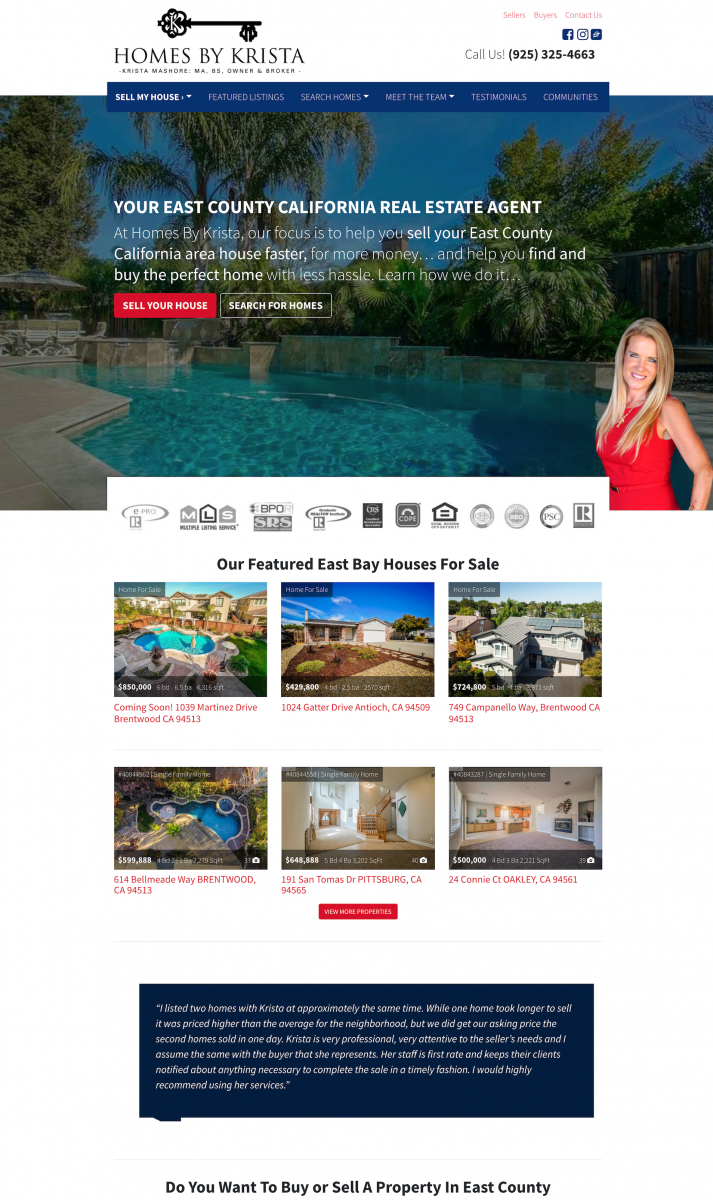
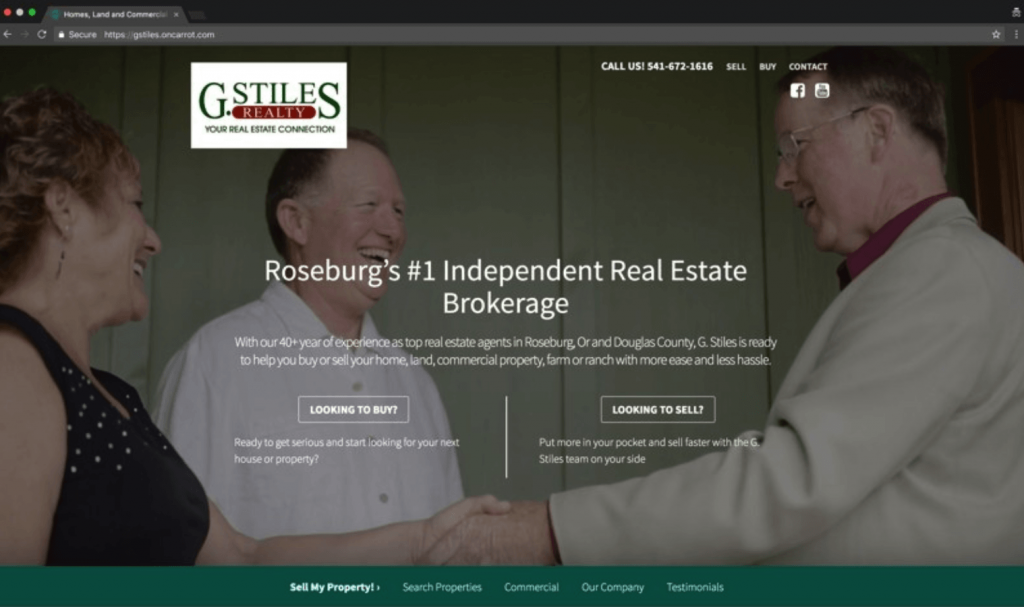
    Logo Credibility Bar

    Hemlock Design


     We Launched AgentCarrot!

    AgentCarrot Real Estate Agent Websites

    For years, the way Carrot clients have dominated their markets online started with a highly optimized website (for SEO and lead conversion) then amplified with our content marketing tools and training.

    We had been in the beta phase with AgentCarrot for the past year and after amazing, amazing feedback from our Agent members, we were crazy excited to release the full version in April.

    Our vision is to continue to improve how real estate agents and investors grow their business leveraging the web.

    We’d like to send a special thanks to all of those who contributed to AgentCarrot’s success. Both to our members and the Carrot team!

    Learn more about AgentCarrot Real Estate Agent Websites!


    Carrot – Honored to Be On the Inc. 5000 List

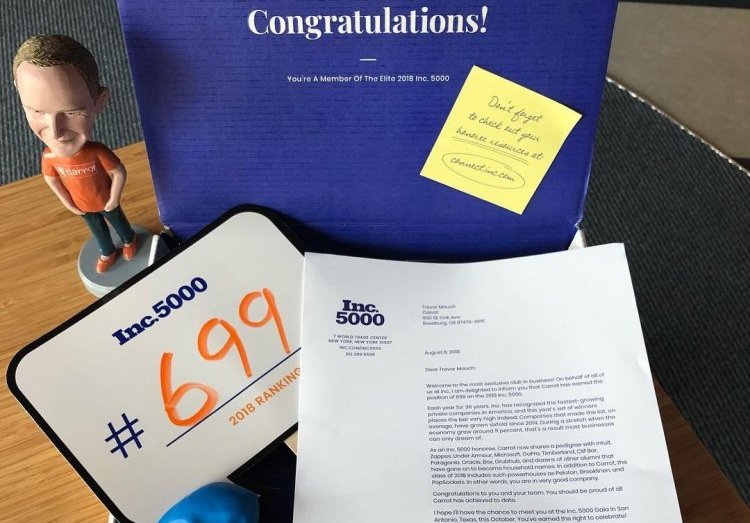
    Inc. 5000… Carrot’s #699!

    This year we were placed at the 699th fastest growing company in the nation according to the Inc. 5000 list. Major Kudos to the Carrot team and our members. We wouldn’t be here without an amazing product, team, and amazing members.

    Here are 10 more reasons why Carrot is one of the fastest growing Start-ups in the Nation.


    Top 5 CarrotCast Episodes of 2018

    The CarrotCast podcast had over 97,000 unique downloads in 2018. Here are the top five episodes of the year.

    [podcast-subscribe]


    Negotiation Psychology: How To Talk With A House Seller to Close More Deals + Help More People w/ John Martinez

    I see a lot of good, really good, salespeople and a lot of really bad salespeople. You can tell whose good by how often people talk and when they talk, what they say. So, real quick, the best salespeople in the world in all industries … they talk maybe 10% of the time and when they do open their mouths it’s with the question.

    John Martinez


    After 20 Years Tyler Was Going To Give Up Real Estate Until He Made These 3 Changes w/ Tyler Fordreal estate investor success Tyler ford

    Long story short, I had my main guy that had worked with for ten years, did all of my rehabs, totally trusted him. I was getting ready to go out of town and he was going to be finished with this job before I got back and I prepaid him and also loaded up a Home Depot card. I can home and no work was done and he was nowhere to be found.

    Tyler Ford


    How Krista Sold 144 Homes Last Year in One of the Hottest Markets – Her Strategy and Story w/ Krista Mashore

    … Agents, if you’re out there listening, people need to like and trust you. I mean you’re going to have a much easier time of gaining clients if they know, like, and trust you. They get to know and trust you by seeing you. By you showing up everywhere. Why are you giving them value by you helping them and I’ll you value, value, value.

    Krista Mashore


    How to Stay Ahead of Current Real Estate Market Cycles to Build Financial Freedom w/ Ramon Gonzalez

    You know guys, that’s a two-edged sword. Everyone talks about debt with things go right, but I’ve been there with that when it doesn’t go right. It’s like right now people say oh you know what I just start off the loan and take a little piece. What for? 12% sounds pretty nice and I still get to go hang out with my daughter. I want more life. I don’t want more drama or more headaches.

    Ramon Gonzalez


    What It Takes To Go From Being Broke to Closing 100+ Deals Per Year w/ Justin Colby

    People talk about this a lot, you gotta believe it before you see it and I’m truly and example of this. I didn’t even really know how to do any of this but I believed I can make an impression in the real estate community. In the investment world I knew it could create an income that I would be happy with but I also knew I could create a life that I wanted.

    Justin Colby


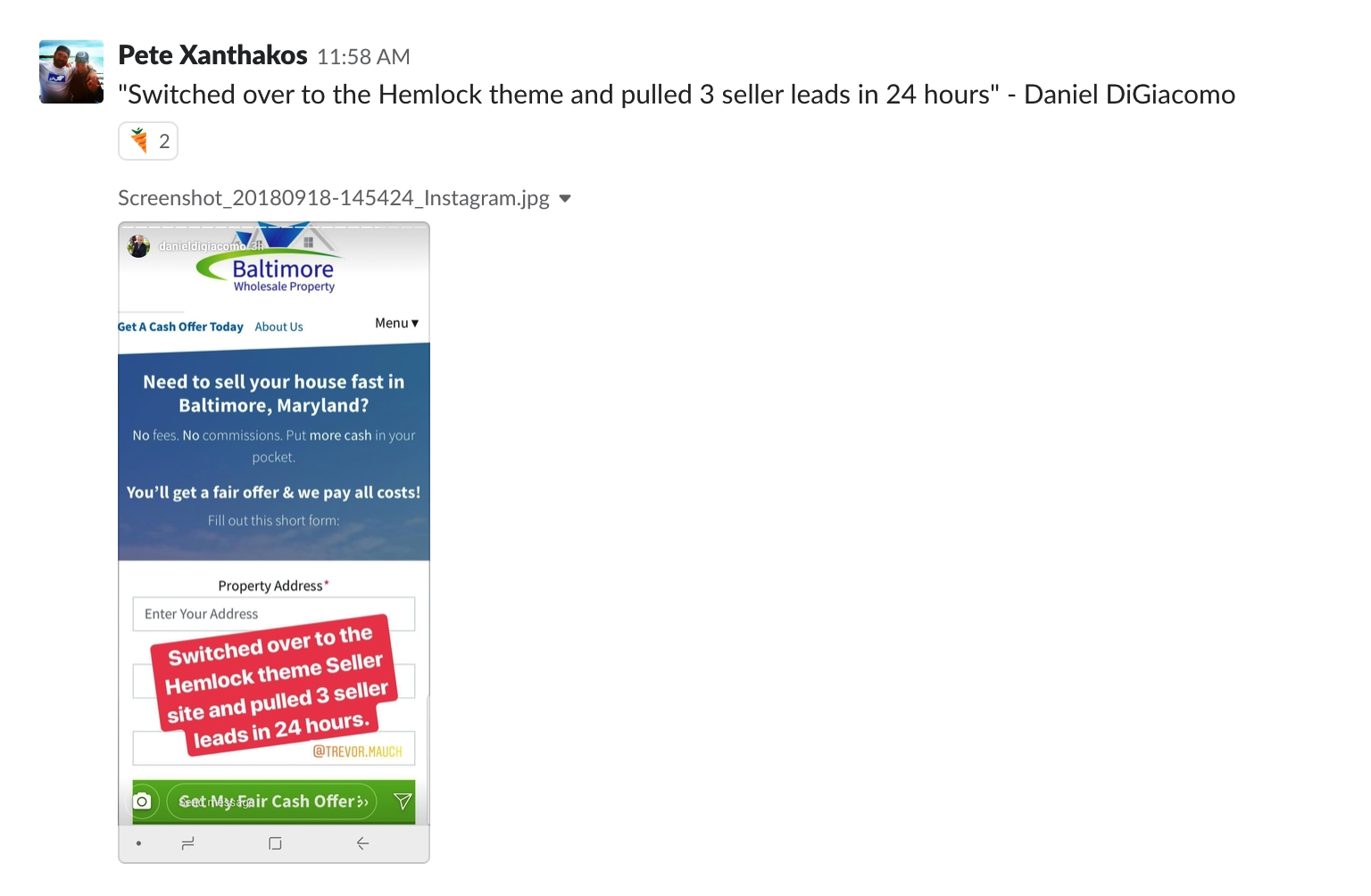
    Hundreds of “Doses Of Awesomeness” From Our Members

    We LOVE to hear stories from our members that are helping them change their businesses and their lives! So much that we have a dedicated #Awesomeness channel in Slack.

    Here are just a few examples of the ones we get each and every week… not counting the hundreds that happen that we never hear about!


    World-Class Net Promoter Score

    Carrot 2018 NPS

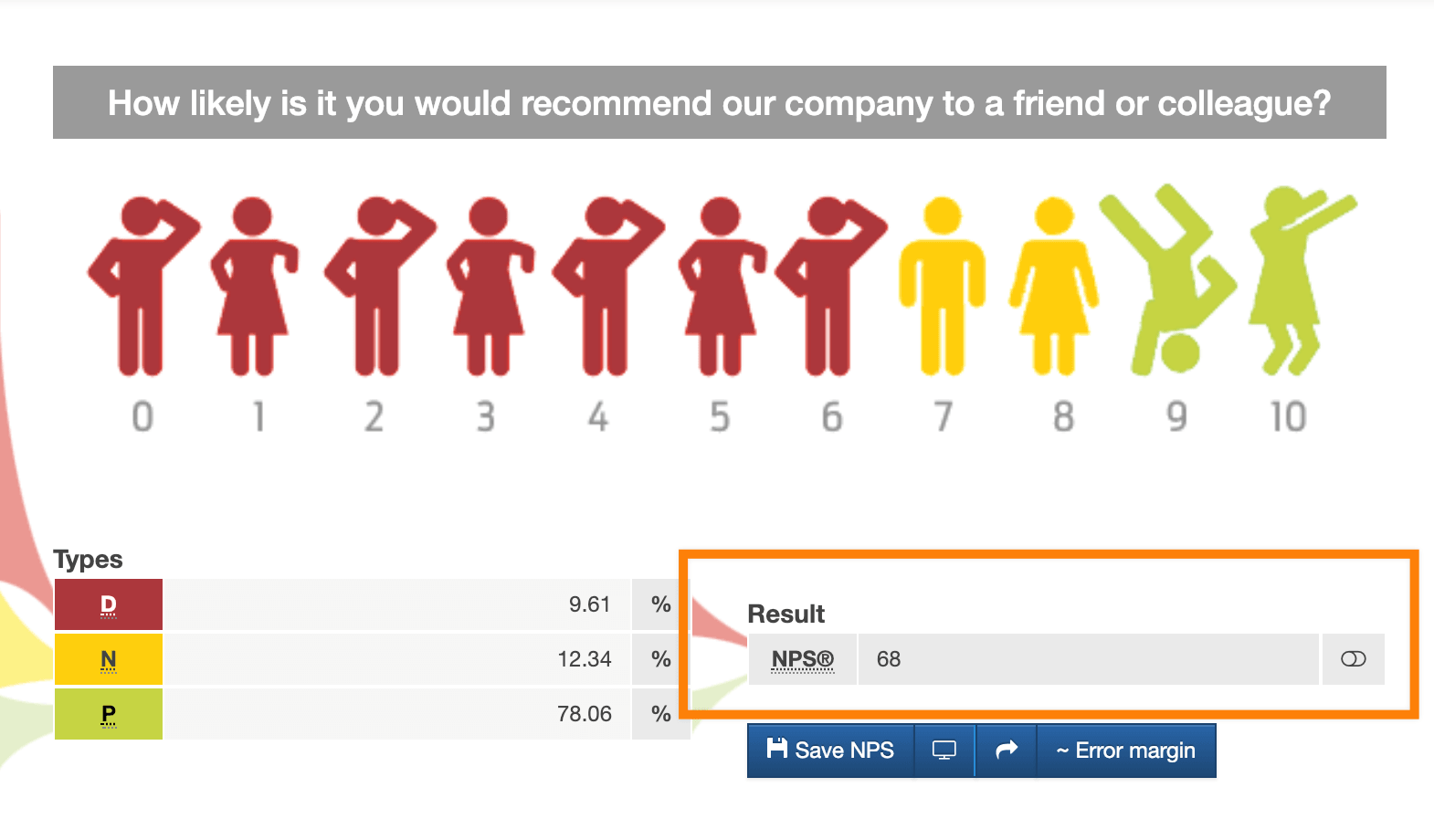
    How do you know if you’re providing value and happiness to your members? How do you know if you’re failing? By using “Net Promoter Score”. It’s basically a question that asks how likely you are to recommend Carrot to a friend or colleague.

    With thousands of responses in 2018 the majority scored us a 9 or 10… leaving us with an impressive NPS of 68.8%.

    To put that into perspective, here is what some of the most respected companies in the world have scored for their NPS:

    Image Source: Retently

    One of our core values is to “Deliver WOW Through Great Service” we’ll continue to go all out in 2019 to make our clients excited, happy, and successful, and to change the way people expect companies to serve them in the future after they experience service the “Carrot Way”.


    We Added 3300 YouTube Subscribers and Accumulated Over 2,500,000 Watch Time Minutes…  That’s Over 1736 Days!

    Carrot YouTube Channel 2018 Stats


    Two Carrot Team Retreats + Growing Our Team… Again

    The Carrot team grew +10 this year as we continue to innovate and be the leader in our industry. Our first retreat took place in beautiful and at the time snowy, Sunriver, Oregon. Next, we took to the high seas. Well not quite. The Summer retreat was “boat access only!” in Lakeside, Oregon.

    Retreats are a great way to pull back, celebrate wins, and deep dive into high-level planning for the future.


    CarrotCamp (Spring and Fall 2018)

    The 2017 CarrotCamp was such a hit, we had to double it. So, we decided to have one in the Spring and Fall of 2018. CarrotCamp is not like most events. It’s not just a workshop or seminar, nor is it a retreat.

    We designed CarrotCamp so it fits more like an immersive experience where we deep dive into the campers world. It’s unplugging and getting out of the office and into nature. It’s also time to work with the Carrot team to get massive things done to uplevel marketing… all the while building relationships with other high-level real estate entrepreneurs that will hopefully last a lifetime.

    Thank you again 2018 CarrotCampers!

    Be on the lookout for CarrotCamp 2019 Editions. Kicking off May 20-21, 2019. Learn more about CarrotCamp Spring 2019.


     What An Amazing Year. And We’re Grateful To Have You On This Journey With Us.


    How Was Your Year? 

    How was your 2018? Let us know below in the comments section. The amazing, the fair, and the awful 🙂

    Also… fire up your 2019 and get momentum building?

    These 2 resources are the most shared and commented we’ve ever made. They can change your life…

    Thank you for all you do and for inspiring us every day to do great things.

    Chat with you in 2019!

  • 10 Reasons Why Carrot is One of the Fastest Growing Start-ups in the Nation

    Recently, we were placed as the 699th fastest growing company in the nation according to the Inc. 5000 list.

    #699 on the 2018 Inc. 5000 list

    If I’m being honest, this came as a surprise to many of us.

    Sure – we’ve all known for a while that Carrot is growing quickly (I think we hired 4 or 5 people in the last 6 months, making us a team of 20). But for the most part, we’re working, planning new projects, and having a blast while we do it.

    Finding that we’re within the thousand fastest growing company in all of the U.S. is a bit like shooting hoops every day at the local gym and finding out five years later that you’re one of the best free-throwers in the nation…

    You were just doing it because you enjoy it, but somewhere along the way, you became one of the best.

    Really? Why? What did we do differently? 

    Well, we put together a list of 10 of our most integral beliefs as a company that contributed to landing on the Inc. 5000 list. We think (whatever that’s worth) that it’s these fundamental beliefs which guide our success and could guide yours as well.

    1. Culture is More Important than Growth

    Carrot retreat 2018

    Why do people get out of bed every day?

    Why do they go to work?

    What determines how hard they work, how productive they are, or the quality of that work?

    At Carrot, we believe people work harder and better when they love what they do and who they work with. Every person on the Carrot team was chosen because of their passion for life – creating a culture that prioritizes itself before everything else.

    The wonderful thing about a culture-focussed business, though, is that growth naturally follows.

    When people love what they do and have genuine relationships with coworkers, they work harder and they stay around longer.

    2. Honesty is More Important than Sales

    CarrotCamp 2018

    While we passionately believe that Carrot is a good fit for the vast majority of real estate investors and agents around the nation, we also understand that Carrot isn’t a fit for everyone.

    Some investors and agents have found success elsewhere – through a competitor or a private web development company – and more power to them!

    We offer a service, we do the best that we can, and we believe that it’s one of the best real estate marketing solutions around. Still, it isn’t for everyone. And we’d rather have a mutually beneficial relationship with our customers than sell them something they don’t need.

    3. One Lost Member is a Tragedy

    Carrot customer feedback

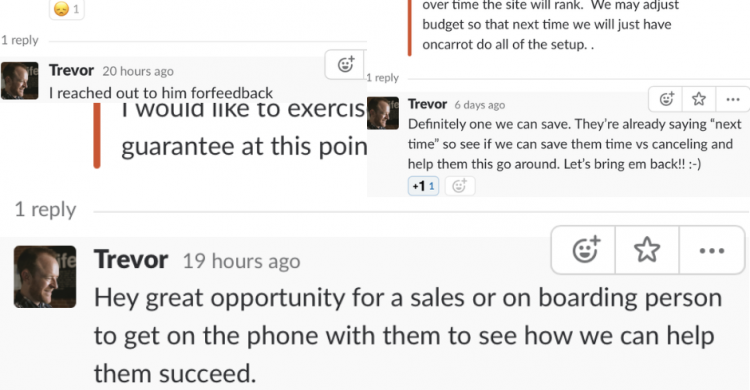
    Every member cancellation comes through our company’s #General Slack channel – which everyone in the company has access to. When someone cancels, we try to save them if we feel they’ve made a mistake – not through sales-speak and unhelpful promises, but through genuine concern for their business and a desire to help.

    Many people cancel because they’re discouraged about business in general and they’ve hit a breaking point. These people just need a gentle hand to guide them in the right direction.

    At Carrot, doing that isn’t below us.

    If our desire is to help our customers, then that means we have to meet them where they are. Often times, a cancellation is a cry for help.

    Which is why we treat every cancellation as a tragedy and an opportunity to inspire someone who’s lost hope.

    4. Dreaming Big is More Important than Always Succeeding

    Carrot planning session

    We have an ambitious team of 20 people at Carrot.

    People from support, marketing, product, services, and sales often have new crazy ideas they’d like to implement. Whether it’s testing new sales copy on our homepage, writing a book, or launching a new feature, there’s a way to make it happen.

    In fact, we use a 1-page plan template that allows anyone to create a project, pitch it to the team, and get it approved, tweaked, or rejected.

    Speaking from experience, few ideas get outright rejected – more often, there’s a recommended change or two.

    And the person who pitched is then the leader of that project, setting due dates and seeing it through to the end.

    It doesn’t always work, but the team always learns something new along the way. And down the road, that learning usually leads to product iterations, better processes, and a stronger business model.

    Dream big. Learn along the way.

    5. Saving a Member Time is More Important than Saving Ourselves Time

    trevor mauch and max maxwell at carrotcamp

    We’re in business to help people. And often times, helping people requires sacrifice – late nights, long calls, and/or difficult conversations with members.

    But that doesn’t discourage us. It fires us up. It reminds us why we’re in business. It reminds us why we’re a part of Carrot.

    Because we want to help real estate investors and agents save more time in life for the things that matter most.

    To achieve our mission, we have to be willing to sacrifice our own time to help our members.

    And while late nights, long calls, and difficult conversations aren’t all that common, each of us is willing to sacrifice an evening to make our member’s life a little bit easier.

    6. 90% of Success is Believing You Can Pull it Off

    Carrot teamwork

    We have a bit of an unintentional mantra here at Carrot. It’s dead simple and almost mindless – but it’s also indicative of the spirit Carrot employees carry with them everywhere…

    “We’ll get it.”

    Look, business often gets discouraging. Sometimes a process breaks, a customer struggles with our service, or a weakness in our company shoves its way to the front of our priority list… and we’re left to pick up the pieces.

    We have to solve the problem.

    But it isn’t always that easy. Sometimes, we’re left with a big question mark, a big “what’s next?” or “how will we actually solve this in the future?” type of concern…

    Cue mantra: “We’ll get it.”

    And we will – usually, we just need more time to think about the problem and come back at it the next day.

    But the belief that we will get it never fades, despite setbacks.

    7. Arguing is Better than Settling

    trevor mauch Carrot HQ strategy session

    If you’re overthinking a product launch, then it’s probably best to just bring it to market and adapt as you receive customer feedback. At Carrot, though, we’ve been in the real estate space for 5 years and we have a pretty good idea of what our customers want or need from us.

    (There’s always more to learn, of course)

    So when we are launching a new product, service, or feature, we argue. Not “I hate you,” “you suck,” type of arguing. But we passionately defend our positions on what we believe is best for the market’s need, while still being respectful.

    We don’t throw personal jabs, we argue ideas, and we believe that ideas do not define a person – which then gives us the freedom to throw them out or refine them.

    Because in the end, we’d rather argue about a product before launch than release a sub-par service or feature to our customers.

    8. Open-minded Differences are the Secret to Healthy Company Culture and Thrilling Growth

    Carrot Team 2018

    My personality clashes with several people on the Carrot team. Several of them think differently than I do, perceive the world differently, and even live their lives quite differently.

    Normally, I avoid these kinds of people. We all prefer familiar over unfamiliar, making us gravitate naturally toward other people who act like us, believe the same things, and live the same way.

    Problem is, similarity makes growth impossible.

    If everyone around you thinks the same way, acts the same way and believes the same things, they’ll never challenge you… and you’ll never grow.

    At Carrot, that’s not the case – the differing personalities (quite extreme differences, often) force all of us to rethink our positions and adapt to the environment around us.

    That, with a healthy dose of open-mindedness, naturally leads to thrilling personal and collective growth.

    9. The More You Give, the More You Get

    Carrot giving back to the community

    Call us hippies if you want (we are based out of Oregon, after all), but we believe that what goes around, comes around. We believe that by giving time and money to other people who need it will pay us back in the future.

    We don’t know how it work…

    But we believe it.

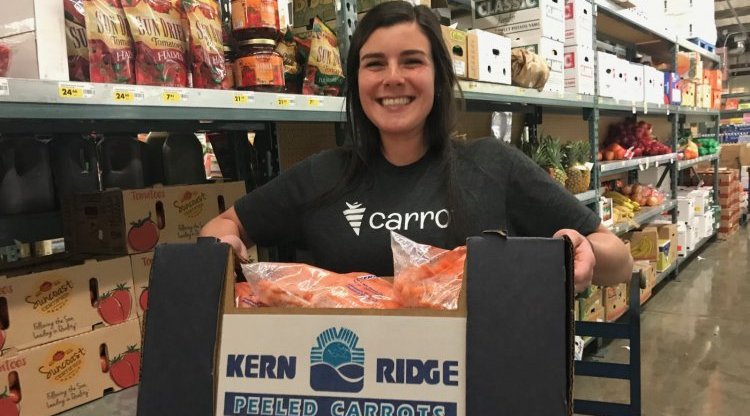
    And that’s why, every quarter, we donate a portion of our company revenue to charity organizations around the U.S. – yes, usually we buy them a ton of carrots.

    10. Changing Lives is Better than Getting Credit

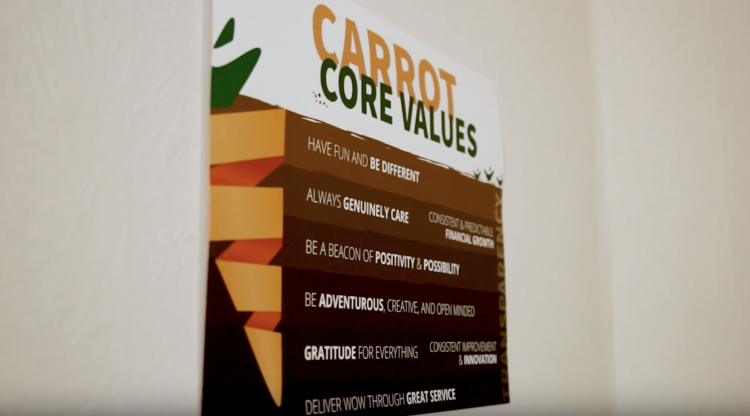
    Carrot Core Values

    I won’t lie – getting credit for your project or idea is awesome. Everyone loves to receive positive feedback about something they accomplished.

    But you know what is 10x more satisfying than getting credit for something you did?

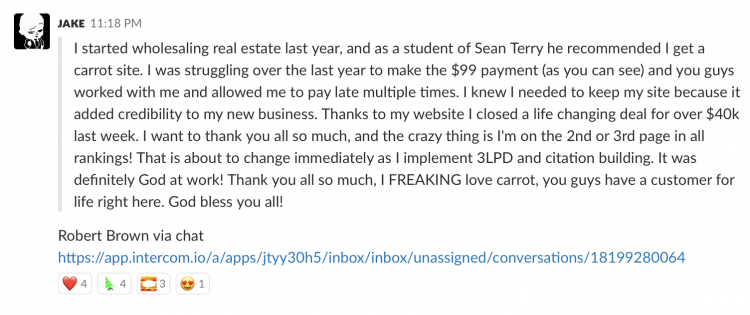
    Receiving a message like this…

    Carrot Customer service

    And that is why we’re in business – to change lives.

    So long as we’re doing that, getting credit can sit under the table and be quiet.

  • How Many Backlinks Does it Take to Start Ranking Your Real Estate Website in Google?

    You’re working to build backlinks to your real estate website…

    But after a few successes, you’re still not seeing an impact. You’re starting to wonder, “How many backlinks does it take to rank my real estate website in Google?”

    After all, you’re busy building a business and you don’t have loads of time to guest blog for backlinks. You have better, more important things to do.

    Still, it would be nice to outrank your competition on page 1 with some well-placed backlinks.

    That’d mean passive traffic, high-quality leads, and less work/money to generate results.

    Problem is, the way you’re building backlinks isn’t all that efficient and you’re not seeing the light at the end of the tunnel – which makes you wonder, “Will this ever work?”

    That’s why I’m going to give you a general idea for how many backlinks you’ll need to start outranking your competition and then I’ll show you some quick, easy ways to build backlinks.

    Let’s get started.

    How Many Backlinks do you Need to Outrank your Competition?

    While I’d love to answer that question with a specific number of backlinks… I can’t.

    The answer depends on how many backlinks your competitors are building, your existing domain authority, your competitor’s domain authority, your overall SEO strategy, the quality of the backlinks you build, and a whole slew of other factors.

    Having said that, though, there are a few things you should know about SEO in general when trying to increase your rankings with backlinks.

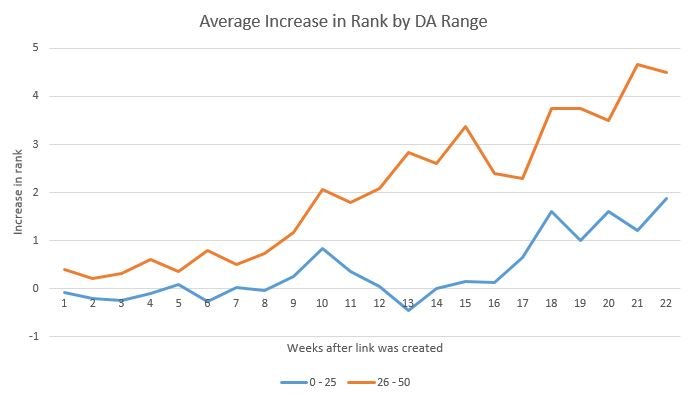
    First off, the higher your current domain authority, the more difficult it is to increase your SEO power.

    (Image Source)

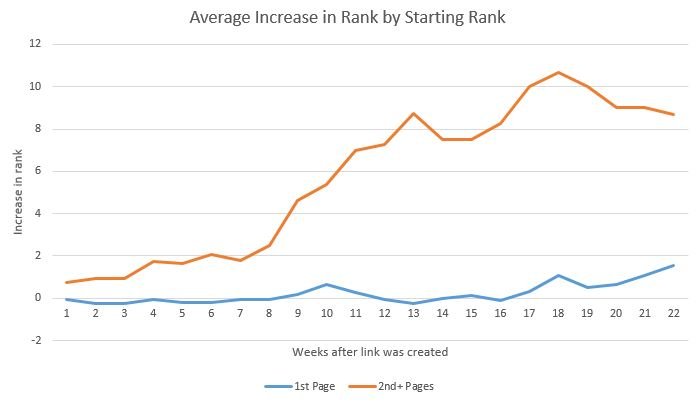
    The same goes for where you’re currently ranking for your target keyword phrase.

    (Image Source)

    This just means that the more SEO authority you have, the harder it is to increase that authority with backlinks.

    In the beginning, one or two high-quality backlinks might increase your domain authority and rankings significantly. As your website becomes more established, though, the competition gets increasingly fierce.

    Of course, that also depends on how competitive your market is.

    A friend and I put up a Carrot real estate investor website in Klamath Falls, Oregon – a low-competition market – and in just a week, the website was ranking 6th on the first page without us doing anything.

    Since you’re reading this, I’m going to assume that didn’t happen in your market.

    Which means you’ll need to put some energy into building quality backlinks. But here’s the thing…

    Not All Backlinks are Created Equal

    Some backlinks are more powerful than others. And these are the factors that determine how impactful any given backlink is on your rankings.

    Anchor Text

    Anchor text is the hyperlinked words that a backlink sits upon.

    (Image Source)

    Why is that important?

    Because Google factors in anchor text when determining what the linked-to page is about and in determining how relevant your page is to the phrase you’re trying to rank for.

    For instance, a backlink with anchor text that says, “Sell your home fast” would have a more positive impact on your rankings than anchor text that says “the market is healthy right now” or something else vague and irrelevant to your target keyword phrase.

    When building backlinks, try to get anchor text that is relevant to the keyword phrase you’re trying to rank for.

    Domain Authority

    The domain authority and page authority of the page where you receive a backlink from helps determine how impactful that backlink is on your own domain authority.

    The higher the domain authority of the website you received a backlink from, the bigger impact it’ll have your website.

    What is domain authority?

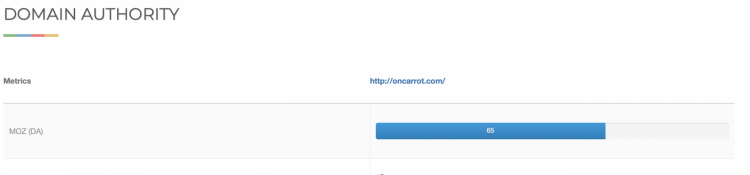
    It’s the general score (1-100) of how much authority a domain or page has in Google’s search engine. You can check the domain or page authority of any website here: https://www.seoreviewtools.com/website-authority-checker/

    This is Carrot’s domain authority, for instance.

    This is a good way to gauge how much impact each backlink is having. After you receive a new backlink, check to see how much impact that backlink had on your domain authority. Just make sure that Google has re-indexed your website, otherwise, the impact won’t show up when you check.

    To request priority indexing from Google, go here.

    Relevance

    It’s not just anchor text and domain authority that determine the quality of a backlink, it’s also the relevance.

    If you get a backlink from a website that talks about how to conquer the emotional struggle of divorce, that backlink wouldn’t have as much positive effect on your target keyword rankings as one from a real estate website.

    Ideally, the backlinks you build will be from websites relevant to real estate.

    I’m not saying you should reject a backlink opportunity from an irrelevant website – those could still drive traffic and help diversify your backlink portfolio.

    But I am saying that you should actively work for relevant backlinks instead of irrelevant ones. That will provide a higher impact on the links you build.

    How to Build More High-quality Backlinks in Less Time…

    You do need to build backlinks. But the number that you need to build greatly depends on how competitive your market is online.

    So don’t ask, “How many backlinks do I need until I outrank the competition?”

    You need backlinks to help your SEO and the more high-quality links you build, the better.

    Ask, “How can I build good backlinks quickly and with less effort?”

    Here’s how.

    1. HARO

    HARO (which stands for Help A Reporter Out) is a great way to build backlinks and market authority all at the same time. Journalists sign up for HARO to get quotes and expert contributions from market experts. And you can sign up for HARO (for free) to become a source of expertise for those journalists.

    Often times, if they choose to quote you, they’ll also give you a backlink.

    Heck, you could even outsource this to a VA if you want.


    How to Use HARO to Get Backlinks


    2. #JournoRequest

    The hashtag #JournoRequest is another direct line to journalists who’re writing online articles, seeking expert contributions.

    By searching the hashtag on Twitter, your page will populate with lots of different online writers who’re looking for specific types of contributions. Most of the time, they’ll have no problem providing a backlink in return.

    Again, this is so simple that you could pay a VA to scour Twitter for you and look for backlink building contribution opportunities. You’ll just have to provide them with expert quotes when they find one.

    3. Podcast Pitching

    An oft-forgotten and easy way to build relevant backlinks is by being a guest on real estate podcasts. Many podcast hosts today record their episodes digitally over a video call, so you don’t need to worry about traveling.

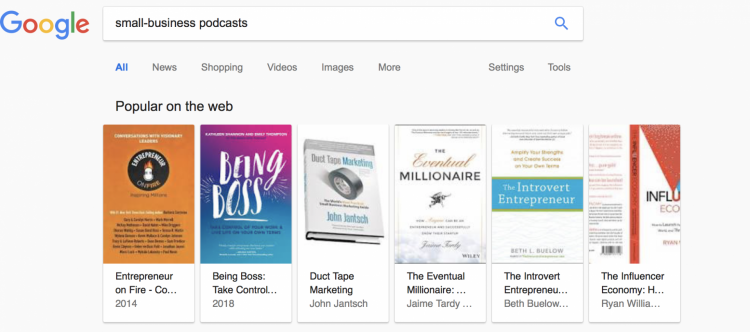
    And the easiest way to find these podcasts is by Googling something like “real estate investing podcasts” or “small-business entrepreneurship podcast.”

    Remember, the smaller the podcast, the easier it will be get accepted as a guest. The more prestigious the podcast, the more difficult it’ll be.

    Then, find an email on their website or a “Contact Us” form and use this template to pitch your idea (or have a VA do it for you).


    Subject: Quick idea…

    Hey [name of person or business]!

    My name is [name] and I’m a real estate [investor/agent] in [location]. My business has [build credibility with revenue numbers, media mentions, or a testimonial from a past customer]. And I’d LOVE to be a guest on your podcast to discuss [pitch a relevant topic you’d be comfortable discussing].

    What do you think? Is that something we could set up?

    Let me know! I’d be happy to get it on the calendar. 🙂

    Cheers,

    [Name]


    4. Testimonial Offers

    One final way to build your backlink portfolio in very little time (but with a big impact) is to offer testimonials for online businesses where you’re a customer.

    All online businesses are looking for testimonials from their customers. And most of them won’t bat an eyelid at your request for a backlink in return.

    Just make a list of all the online tools you use and love. Then send those businesses an email with your testimonial, asking for a backlink in return. Here’s your swipe-able template for that.


    Subject: I LOVE your company…

    Hey [name of business or person you’re pitching]!

    My name is [name] and I’m a real estate [investor/agent] in [location]. I’ve been using your service for [length of time] and it’s completely changed the way that I do business. I love it so much that I wanted to send over a testimonial that you can use if you feel so inclined. 🙂

    “[Testimonial].”

    I hope you can use that testimonial to encourage others to use your [service/tool/product]. It’s been absolutely amazing.

    Thanks for building something so genuinely helpful.

    And if you do decide to use the testimonial, it would be awesome if you’d include a link to [your website] when quoting me.

    Either way, keep up the good work. 🙂

    Cheers,

    [name]


    Conclusion

    So, how many backlinks does it take to start ranking your real estate website on Google?

    The honest but terrible answer is…

    It depends.

    Fortunately, building backlinks do help your rankings. The trick is to build as many high-quality backlinks as you can and watch how those links improve your rankings. And with the time-saving (even outsource-able) strategies above, you can increase your domain authority without guest blogging.

    So go get started. And don’t stop until you’ve beaten the competition.


    Not a Carrot member? Climb through the rankings faster with less work by signing up today!


  • SEO vs PPC For Real Estate Investors – Which Is Best? [Infographic]

    The age-old question for real estate investors and agents… SEO or PPC for real estate investing leads?

    Which one do I start first, and which is right for me? Well, we whipped up a handy infographic to walk you through some of the most important things to consider when looking at SEO or PPC to help attract leads online for motivated house sellers, rent-to-own tenants, buyers, and any other type of lead.

    At first glance, you may be thinking…

    “But both SEO and PPC are basically going after the same people searching the same phrases… shouldn’t I just do both?”

    Choosing how to drive traffic to your real estate investing website and how to ramp things up is a pretty darn important decision. Yes, both are ways to get you in front of the motivated house sellers, cash buyers, tenants, rent-to-own tenants, note sellers… yadda yadda yadda… but both are fundamentally different, and they each have massive pros and cons that you should consider.

    For instance, as you’ll see below, the amount of time and money you have to invest in your online marketing will dictate whether SEO or PPC is best for you right now.

    One gets leads more quickly but requires a money budget to launch. In contrast, the other one takes longer to get results but can yield the highest ROI (return on investment) of any online marketing strategy we use.

    Learn more about the differences between SEO and PPC marketing as a real estate investor in the infographic below, and if you enjoy it, share it online!

    SEO vs PPC For Real Estate Investors

    seo vs ppc for real estate investing leads carrot
    document.addEventListener(‘DOMContentLoaded’, function() { jQuery(window).scroll(function() { if ( jQuery(document).scrollTop() > $(‘#carrotToast’).offset().top && jQuery(“.carrot-toast”).attr(“displayed”) === “false”) { jQuery(‘.carrot-toast’).toast(‘show’); jQuery(“.carrot-toast”).attr(“displayed”, “true”); } }); });

    Share This “SEO vs. PPC” Infographic


    Let’s Sum It Up For You…

    When looking at SEO and PPC to attract real estate investing leads like motivated sellers, cash buyers, tenant-buyers, etc., here are a few things to consider.

    How SEO Can Help You As A Real Estate Investor Or Agent

    Any solid SEO strategy aims to get your real estate investor site to show up at the top of search engine results pages. And, even more importantly, in the top spots of Google, specifically. If you aren’t one of the sites that are on top, you won’t be getting the sort of traffic you need.

    SEO can also build trust in the eyes of the potential lead. Search trends have shown that 85% of clicks go to organic SEO.

    The #1 lead generation source was “Organic Search,” a month-over-month occurrence. In a snapshot, Organic leads accounted for 36.4% of all leads. For reference, PPC accounted for 12.3%.

    Organic Search Leads Accounted for 10,547 leads from the 28,947 Carrot Members obtained in July 2018
    Organic Search Leads Accounted for 36.4% of All Carrot Member Leads in July 2018

    SEO is about building authority, demonstrating relevance, and matching your site to the right search keywords. It can be a long-term process, but one that is essential to your website’s performance. Once you have the building blocks to achieve high rankings in search engines, the sky’s the limit!

    SEO (Organic) Search Engine Results

    organic search results

    Benefits of SEO and Evergreen Marketing

    1. It’s free if you do it yourself

    A clear SEO benefit is that it’s free to do. Unlike PPC, you don’t have to pay for it. You just need to invest time in implementing the best practices across your site.

    But with that comes a whole checklist of ‘best practices, including making sure its search engine spider is accessible, responsive, has unique content, targeted keywords, and optimized metadata – just to name a few.

    Need a little guidance? Check Out: A beginners guide to SEO for real estate investors.

    2. It’s more likely to drive more consistent traffic in the long run (if you implement a solid SEO plan)

    That’s because people tend to be more attracted to SEO (organic) results because they trust them much more than a paid sponsored link.

    3. It will drive better ROI long-term

    The great thing about SEO is that once you’ve implemented the best practices onto your site, the only way is up. Make your way to the top, your brand is automatically perceived as reputable, and your ROI will continue to rise. In the long run, your investment and work into building those rankings go down as your traffic climbs… meaning a lower cost per lead.

    4. Not just for blog posts… try it on your YouTube videos for faster results

    YouTube is the second largest search engine in the world. Grab a little bit more of the search engine results page via video. Video is big now, and YouTube is hugely important to search results. Optimize your YouTube videos and descriptions with keywords that search engines like.

    First Page of Search Engine Results for We Buy Houses Pittsburgh

    first-page-search-engine-results-for-we-buy-houses-pittsburgh

    How PPC Marketing Can Help You As A Real Estate Investor Or Agent

    If you want the potential for immediate results or your website is in the process of ranking high but just isn’t there yet. PPC might be the way to go. If you have the budget, it’s possible to get an ad in the top four spots on the search results page reasonably quickly, but it might cost you.

    But…utilizing effective PPC techniques such as long-tail keywords and location targeting, you can build highly targeted campaigns. So, you can place ads in front of the right searcher at the right time.

    Overall, you must make sure you take the time to develop a strong PPC marketing strategy.

    PPC Benefits

    1. It offers instant results

    The most significant benefit to PPC is that you don’t have to wait around for that traffic to come. Set up an Adwords campaign, and you’ll start to see the results instantly – which is particularly helpful for investors just starting up.

    Here are 20 tips to get your Google Ads PPC marketing up and running.

    2. It’s highly targeted

    PPC offers the edge on conversions, with paid results more likely to convert. The great thing about PPC is that it is highly targeted to the customer, whereas organic traffic can be slightly unpredictable.

    Although you need to bid on keywords, Google also uses a quality score metric to decide how relevant your ad is to that user. So, you can be sure that when a person clicks on your ad, they will genuinely be interested in what you’re selling.

    3. It’s protected from the “intimidating” algorithm updates

    There’s nothing more frustrating for an SEO marketer than an algorithm update. The good news is that PPC is protected from algorithm updates, so you’ll still continue to see traffic heading to your site no matter what changes are made.

    Actual Stats On A Motivated Seller PPC Campaign
    motivated seller adwords account


    You Don’t Have To Decide On One Or The Other. Leverage Both SEO and PPC Together For Even Greater Results

    We usually start SEO and PPC in conjunction with each other. We start a PPC campaign to get leads in the short term and SEO to build up over the long term. You can amplify your overall results by using SEO and PPC together.

    Generate more exposure – An obvious benefit of combining SEO and PPC efforts is added visibility on the search engine results pages (SERPs). Dominating the SEO search results will significantly increase traffic and give the impression that you’re an established presence in the real estate investor market.

    Increase intent keywords – Simultaneously running SEO and PPC campaigns allows you to double the keyword data to analyze. Determine which SEO and PPC keywords have the highest conversion rates and use that information to optimize your strategy.

    Use high-performing ad copy and SEO content – If it works for PPC, it also often works for SEO. By determining which PPC ads result in the most lead conversions, you’ll know how to create title tags, meta descriptions, and page content for the real estate investor blog posts you write. The benefit is allowing you to potentially rank higher in organic search results. Using PPC, you’ll also quickly know what works and doesn’t. While completely testing titles and meta tags, strictly organic, can take a long time.

    Test keywords utilizing PPC before committing to SEO content – PPC ads are a great way to improve your SEO keyword strategy. As your long-term SEO keyword strategy develops, test the conversion rate of the keywords you want to rank for with PPC ads. You’ll get immediate feedback on the effectiveness of the SEO keywords you’re after and can tailor your investment strategy.

    Share This Infographic With Others And Get To Work!

    Driving traffic to a high-converting lead generation website is important. You can achieve high ROI using SEO, PPC, or in combination. This is why you might need to work with a search marketing team. If you need help, get in touch with us today. We can take on SEO and/or PPC marketing for you.

    If you’re already a Carrot Member, join us on the weekly Coaching Calls when we cover a wide range of strategy topics, including SEO and PPC.

    Not a Carrot Member yet? Take a demo of our online marketing software for real estate professionals. Be sure to hit us up with questions!

  • Unlock Success: 14 Advanced Real Estate Facebook Ads in 2025

    The real estate marketing world changed in 2024 with increased enforcement of the Telephone Consumer Protection Act or the Application-to-Person 10-Digit Long Code (A2P 10DLC) regulations introduced to enhance transparency and reduce spam.

    In 2025, Facebook Ads for real estate will remain a powerful tool for grabbing attention and leaving a lasting impact on potential clients.

    This blog post dives into 14 examples of inspiring real estate Facebook Ads examples for 2024, spotlighting the latest trends and creative approaches that confidently set the industry standard.

    document.addEventListener(‘DOMContentLoaded’, function() { jQuery(window).scroll(function() { if ( jQuery(document).scrollTop() > $(‘#carrotToast’).offset().top && jQuery(“.carrot-toast”).attr(“displayed”) === “false”) { jQuery(‘.carrot-toast’).toast(‘show’); jQuery(“.carrot-toast”).attr(“displayed”, “true”); } }); });

    Learn The TRUTH About How Any Real Estate Investor Can Find Leads Online And Avoid Wasting Thousands Of Dollars

    14 Advanced Real Estate Facebook Ads in 2025

    Jump to each ad example:

    Real Estate Facebook Ads – Personalized Dynamic Ads:

    The concept of Personalized Dynamic Ads goes beyond traditional static advertisements, offering a dynamic and tailored experience for potential buyers by showcasing content uniquely relevant to each individual.

    Personalized Dynamic Ads leverage user data and behavior to deliver content that resonates with each viewer personally. This is achieved through real-time customization of ad elements, ensuring that the right properties are showcased to the right audience at the right time.

    Dynamic Ad Components:

    • Property Recommendations: Tailoring the ad content to showcase properties that align with the viewer’s preferences, previous interactions, and search history.
    • Pricing and Offers: Displaying real-time pricing updates, special offers, or personalized discounts based on user behavior and engagement.
    • Location-Based Information: Incorporating local amenities, schools, and attractions specific to the viewer’s location or the location of their previous property searches.
    • Call-to-Action Variations: Customizing the call-to-action (CTA) based on the user’s stage in the buyer’s journey, whether scheduling a tour, requesting more information, or making an offer.

    Benefits for Real Estate Agents and Investors:

    Unlike static ads, personalized dynamic ads can feature a variety of dynamic components, including:

    • Increased Relevance and Engagement: Personalized dynamic ads significantly increase relevance by tailoring ad content to individual preferences. This, in turn, boosts user engagement as viewers are more likely to interact with content that aligns with their specific interests.
    • Higher Conversion Rates: The dynamic nature of these ads allows real estate professionals to showcase a variety of properties or highlight specific features based on what is most likely to resonate with each viewer. This targeted approach contributes to higher conversion rates.
    • Enhanced User Experience: Personalized dynamic ads create a more seamless and enjoyable user experience. Potential buyers feel that the content is curated specifically for them, enhancing their perception of the brand and increasing the likelihood of positive interactions.

    Implementation Tips:

    • Utilize advanced analytics for marketing tools to gather and analyze user data effectively.
    • Collaborate with digital marketing experts to implement dynamic ad strategies across various platforms.
    • A/B tests different dynamic components to fine-tune ad performance and maximize results.

    Real Estate Facebook Ads – Emotive Storytelling Through Cinemagraphs:

    In the world of digital storytelling, real estate marketers are turning to an enchanting visual medium: cinemagraphs. Combining the dynamism of video with the subtlety of photography, cinemagraphs are captivating and emotive, making them an increasingly popular choice for conveying the unique stories behind real estate properties.

    Why Cinemagraphs Matter:

    • Extended Engagement: Unlike static images, cinemagraphs encourage prolonged engagement as viewers are captivated by the subtle, mesmerizing movements. This extended interaction provides more time for the property’s unique features to leave a lasting impression.
    • Differentiation in a Crowded Market: Standing out is essential in a saturated real estate market. Cinemagraphs offer a visually distinct and innovative way to showcase properties, differentiating your brand and listings from the competition.

    Strategic Implementation:

    • Highlight Unique Features: Use cinemagraphs to draw attention to the distinctive features of a property. Whether it’s a cozy fireplace, panoramic views, or a tranquil backyard, cinemagraphs can emphasize these elements in a visually compelling manner.
    • Create Atmosphere: Cinemagraphs excel at creating a specific atmosphere or mood. Whether you want to convey a sense of luxury, relaxation, or excitement, the subtle movements in cinemagraphs can evoke the desired emotional response.
    • Storytelling Narratives: Craft visual narratives for your properties. Cinemagraphs allow you to tell a story, guiding viewers through different spaces and creating a cohesive narrative showcasing a home’s flow and character.

    Benefits for Real Estate Agents and Investors:

    • Memorable Impressions: Cinemagraphs leave a lasting impression on viewers. The combination of motion and stillness creates a memorable visual experience that can influence perceptions and decisions.
    • Increased Social Media Engagement: On social media platforms where visual content reigns supreme, cinemagraphs stand out in crowded feeds. The engaging nature of cinemagraphs can boost social media engagement and encourage users to share your content.
    • Versatility Across Platforms: Cinemagraphs can be incorporated into various marketing channels, including websites, social media, email campaigns, and digital advertisements. Their versatility makes them a valuable asset in a comprehensive marketing strategy.

    Implementation Tips:

    • Collaborate with professional photographers and videographers experienced in cinemagraph creation. Focus on subtle, natural movements that enhance the property’s ambiance without distracting from its key features. A/B test different cinemagraphs to gauge audience preferences and optimize engagement.

    Real Estate Facebook Ads – AI-Powered Chatbots for Instant Engagement:

    In an era where instant communication is the norm, real estate marketers increasingly turn to AI-powered chatbots to facilitate immediate engagement and enhance customer interactions. These intelligent bots are reshaping how real estate professionals connect with potential clients by providing instant responses, valuable information, and a personalized experience.

    AI-powered chatbots leverage natural language processing (NLP) and machine learning algorithms to understand and respond to user queries in real time. This technology revolutionizes customer interactions in the real estate industry by offering instantaneous engagement, 24/7 availability, and valuable insights.

    Key Features and Benefits:

    • Instant Response: One of the primary advantages of AI-powered chatbots is their ability to respond immediately to user inquiries. This ensures that potential clients receive timely information, fostering a positive user experience and reducing the risk of losing leads due to delayed responses.
    • 24/7 Availability: Unlike human agents, chatbots don’t need breaks or sleep. They offer round-the-clock availability, catering to users’ needs in different time zones or those browsing properties outside regular business hours.
    • Personalized Interactions: Advanced AI algorithms enable chatbots to personalize interactions based on user data. Chatbots can offer tailored recommendations, property suggestions, and relevant information by analyzing previous interactions, browsing history, and preferences, creating a more engaging and personalized experience.
    • Lead Qualification: Chatbots can efficiently qualify leads by asking relevant questions and gathering essential information. This streamlines the lead qualification process and helps human agents focus on high-priority leads, ultimately improving conversion rates.
    • Appointment Scheduling: Some AI-powered chatbots are equipped with the capability to schedule property viewings, consultations, or virtual tours. This seamless integration simplifies the process for potential buyers, enhancing convenience and efficiency.

    Strategic Implementation:

    • Integration with Platforms: Integrate chatbots into your website, social media platforms, and messaging apps to meet potential clients where they are most active. This omnichannel approach ensures a consistent and accessible user experience.
    • Natural Language Understanding: Enhance chatbot capabilities by investing in natural language understanding technology. This allows chatbots to comprehend user inquiries, even if they are phrased in various ways, improving the overall user experience.
    • Data Security Measures: Implement robust data security measures to protect sensitive information shared through the chatbot. Building trust with users is crucial for the success of AI-powered chatbots in real estate.

    Implementation Tips:

    • Regularly update the chatbot’s knowledge base to keep information current and relevant.
    • Monitor user interactions to identify areas for improvement and refine the chatbot’s responses over time.
    • When more complex queries arise, provide a seamless transition from the chatbot to human agents.

    Real Estate Facebook Ads – Virtual Property Tours:

    As technology advances, virtual tours have become a powerful tool in the real estate industry, revolutionizing how potential buyers explore and experience properties. Virtual property tours provide an immersive and interactive experience, allowing users to enter a property virtually, examine its features, and envision their future living space.

    Key Features and Benefits:

    • Immersive Exploration: Virtual property tours provide an immersive experience beyond traditional images or videos. Potential buyers can virtually explore every nook and cranny of a property, gaining a realistic sense of its layout, design, and overall ambiance.
    • Remote Property Viewing: Virtual property tours revolutionize remote property viewing, which is especially beneficial for out-of-town buyers or those unable to attend physical showings. This innovation in a globalized market empowers individuals to explore and evaluate properties from the comfort of their current location.
    • Enhanced Engagement: Virtual tours provide a higher engagement level than traditional media. Users actively participate in the exploration, deciding where to go and what features to focus on, leading to a more memorable and impactful experience.
    • Time and Cost Savings: Virtual property tours can save time and resources for real estate professionals and potential buyers. Instead of traveling to multiple properties, users can narrow their choices through virtual tours, making the property selection process more efficient.

    Strategic Implementation:

    • Professional Virtual Content Creation: Engage virtual content creators or agencies specializing in real estate virtual tours to ensure high-quality, immersive experiences. Professional content can significantly enhance the visual appeal and effectiveness of virtual tours.
    • Cross-Platform Accessibility: Ensure that your virtual tours are accessible across various platforms, including using VR headsets, smartphones, and desktops. This ensures a broader reach and accommodates users with different devices.
    • Integration with Online Platforms: Embed virtual tours into your website, property listings, and social media platforms to maximize exposure. Seamless integration allows potential buyers to access virtual tours effortlessly and enhances the overall online presence of your listings.

    Implementation Tips:

    • Provide clear instructions for users on how to access and navigate virtual tours.
    • Regularly update virtual content to reflect any changes in the property, ensuring accuracy for potential buyers.

    Real Estate Facebook Ads – Neighborhood Guide Ads:

    Adapt to the evolving needs of your audience, ensuring that the information provided remains relevant and valuable.

    Strategic Implementation:

    • Highlight Key Features: Strategically showcase the key features of each neighborhood, emphasizing factors like schools, parks, safety, and local culture.
    • Targeted Audience: Use real estate Facebook ads targeting features to reach potential buyers specifically interested in certain neighborhoods, ensuring your guides reach the most relevant audience.

    Implementation Tips:

    • Interactive Elements: Incorporate interactive elements such as maps, videos, and quizzes to make your guides more engaging and memorable.
    • Community Involvement: Collaborate with local businesses and residents to enhance the authenticity and credibility of your neighborhood guides.

    GIF-based Teasers for Property Launches:

    GIF-based teasers have emerged as a creative and attention-grabbing strategy, particularly for generating excitement around property launches. This innovative approach leverages the engaging nature of GIFs to provide a sneak peek into a new property, creating anticipation and sparking interest among potential buyers.

    Key Features and Benefits:

    • Visual Appeal and Engagement: GIFs are inherently attention-grabbing due to their dynamic nature. GIF-based teasers capitalize on this visual appeal to quickly capture the audience’s attention and keep them engaged during the brief animation.
    • Storytelling in Motion: GIFs enable real estate marketers to tell a concise visual story. Whether highlighting the exterior aesthetics, interior design elements, or the property’s surroundings, these short animations provide a narrative in a format that is easy to consume and share.
    • Creating Buzz for Property Launches: GIF-based teasers are particularly effective in building anticipation for upcoming property launches. By offering tantalizing glimpses of what’s to come, these teasers create a sense of excitement and encourage potential buyers to stay tuned for the full property reveal.
    • Social Media Shareability: GIFs are highly shareable on social media platforms. Their short and captivating format makes them ideal for sharing across various channels, amplifying the reach of property teasers and increasing the likelihood of virality within online communities.

    Strategic Implementation:

    • Highlight Unique Features: Use GIF-based teasers to showcase the distinctive features of a property. This could include panoramic views, state-of-the-art amenities, or architectural details that set the property apart from others in the market.
    • Countdown to Launch: Incorporate GIF teasers into a countdown campaign before the property launch. Each teaser can reveal a different aspect of the property, creating a sense of anticipation and encouraging potential buyers to mark their calendars for the official unveiling.
    • Cross-Platform Promotion: Share GIF-based teasers across various platforms, including social media, email newsletters, and property listing websites. Consistent cross-platform promotion ensures maximum visibility and engagement.

    Implementation Tips:

    • Keep GIFs short and snappy, focusing on key selling points.
    • Ensure that GIFs align with the overall branding and messaging for the property.
    • Monitor engagement metrics to gauge the effectiveness of GIF-based teasers.

    Real Estate Facebook Ads – Time-Limited Offers:

    The incorporation of Time-Limited Offers has proven to be a potent strategy for driving urgency and motivating potential buyers to take swift action. This real estate Facebook Ads approach involves presenting limited-time opportunities, incentives, or exclusive deals to create a sense of scarcity and prompt quicker decision-making among prospective property investors or homebuyers.

    Key Features and Benefits:

    • Urgency and Scarcity: The primary benefit of time-limited offers is their ability to instill a sense of urgency and scarcity. By setting a deadline, real estate marketers create a compelling reason for potential buyers to act promptly to secure exclusive benefits or savings.
    • Faster Decision-Making: The time constraint associated with exclusive offers accelerates decision-making. Prospective buyers are more likely to expedite their evaluations, negotiations, and ultimately, their purchasing decisions to take advantage of the limited-time benefits.
    • Enhanced Perceived Value: Limited-time offers contribute to the perceived value of a property. Buyers recognize that these exclusive deals are time-sensitive and may not be available in the future, adding a layer of exclusivity and attractiveness to the investment opportunity.
    • Lead Generation and Conversion: The sense of urgency generated by time-limited offers can stimulate increased lead generation and higher conversion rates. Potential buyers who might have been on the fence may be more inclined to act decisively to secure the exclusive benefits.

    Strategic Implementation:

    • Clear Communication: Communicate the terms and benefits of the time-limited offer. Transparency is key to building trust and ensuring that potential buyers fully understand the value they stand to gain within the specified timeframe.
    • Multi-Channel Promotion: Promote time-limited offers across various marketing channels. This includes leveraging social media, email marketing, website banners, and property listings to reach a broader audience and maximize visibility.
    • Align with Property Features: Ensure the exclusive offer aligns with the property’s unique features and selling points. This creates a cohesive marketing message and reinforces the value proposition for potential buyers.

    Implementation Tips:

    • Use compelling and visually appealing graphics to highlight the exclusivity and limited duration of the offer.
    • Provide a clear and easily accessible call-to-action, guiding potential buyers on how to take advantage of the exclusive offer.
    • Monitor and analyze the performance of the time-limited offer to inform future marketing strategies.

    Real Estate Facebook Ads – Testimonials:

    Testimonials have acted as a compelling and authentic strategy to build trust, showcase client satisfaction, and humanize the buying or selling experience. This approach captures satisfied clients’ heartfelt stories and positive experiences through written or video testimonials, providing potential buyers with genuine insights into the real estate journey.

    Key Features and Benefits:

    • Authenticity and Trust-Building: Testimonials convey authenticity and sincerity that written testimonials may not fully capture. Seeing and hearing real clients share their positive experiences builds trust and credibility, as potential buyers can connect emotionally with the stories.
    • Humanizing the Experience: Testimonials humanize the real estate experience by putting a face and voice to the client’s stories. This personal touch helps potential buyers relate to the experiences of others, making the prospect of working with the showcased real estate professional more relatable and appealing.
    • Showcasing Diverse Experiences: A testimonial can showcase diverse client experiences. From first-time homebuyers to property investors, each testimonial can highlight different aspects of the real estate journey, resonating with a broader audience and addressing various concerns or considerations.
    • Differentiating Your Brand: In a competitive market, a testimonial can differentiate your brand by allowing satisfied clients to become advocates for your services. Positive client stories serve as powerful endorsements, setting your real estate agency apart and attracting potential clients who value the experiences of their peers.

    Strategic Implementation:

    • Varied Client Profiles: Include diverse clients in your testimonial to appeal to a broad audience. This could encompass different demographics, property types, and real estate needs to demonstrate the versatility and expertise of your services.
    • Compelling Storytelling: Encourage clients to share their satisfaction and journey with your real estate agency. Compelling storytelling enhances the emotional impact of the videos, making them more memorable and relatable.
    • Professional Production: When using video, invest in professional video production to ensure high-quality visuals, clear audio, and a polished presentation. Well-produced testimonial videos reflect positively on your brand and contribute to a more impactful viewing experience.

    Implementation Tips:

    • Obtain consent from clients before featuring their stories in testimonials.
    • Use snippets or highlights from the testimonial across various marketing channels for increased visibility.
    • Regularly update your testimonials with new client stories to keep the content fresh and relevant.

    Real Estate Facebook Ads – Offering a Free Home Valuation:

    Real estate Facebook Ads are a potent tool for investors and agents. Among the myriad strategies available, one that consistently proves impactful is the “Offer a Free Home Valuation” Ads. In this segment, we explore the significance of leveraging this approach to enhance your real estate advertising efforts.

    facebook ads for real estate - home value report

    Key Features and Benefits:

    • Client Engagement: Initiate meaningful conversations with homeowners by offering them a valuable service – a complimentary assessment of their home’s market value.
    • Lead Generation: Capture leads effortlessly as interested homeowners willingly provide their details in exchange for the free home valuation.

    Strategic Implementation:

    • Clear Call-to-Action: Ensure your Ads have a clear and compelling call-to-action, guiding homeowners on how to avail of the free home valuation and encouraging immediate interaction.
    • Targeted Audience: Use Facebook’s targeting features to focus on homeowners within specific demographics or geographic locations, optimizing your reach and relevance.

    Implementation Tips:

    • Provide Transparency: Communicate the process of the free home valuation to build trust and encourage more homeowners to take advantage of the offer.
    • Follow-Up: Develop a follow-up strategy to nurture leads generated through these Ads, converting them into potential clients over time.

    Real Estate Facebook Ads – Localized Hyper-Targeting:

    Adopting Localized Hyper-Targeting allows professionals to refine their outreach efforts and connect with potential clients at a hyper-local level. This approach leverages advanced data analytics and geotargeting technologies to tailor marketing campaigns precisely, ensuring that messages resonate with specific audiences in localized areas.

    Key Features and Benefits:

    • Precision in Audience Segmentation: Localized Hyper-Targeting allows real estate professionals to segment their target audience precisely. By considering factors such as neighborhood demographics, income levels, and property preferences, marketers can tailor messages to specific subsets of potential clients.
    • Personalized Content: Tailoring content to the unique characteristics of a local area ensures that marketing messages resonate with the intended audience. From highlighting nearby amenities to addressing community-specific interests, personalized content enhances engagement and establishes a more meaningful connection with potential buyers.
    • Enhanced Relevance and Engagement: Hyper-targeting ensures that marketing messages are relevant and timely. By addressing individuals’ specific needs and interests in a localized context, real estate professionals can significantly boost engagement and capture the attention of potential clients more effectively.
    • Optimized Ad Spend: Localized Hyper-Targeting optimizes advertising budgets by focusing resources on specific geographic areas with higher conversion potential. This ensures that marketing efforts are directed towards audiences more likely to be interested in the featured properties, maximizing the return on investment.

    Strategic Implementation:

    • Utilize Geotargeting Technologies: Leverage tools to pinpoint specific locations and tailor marketing messages accordingly. This includes utilizing GPS data, IP addresses, and other location-based technologies to identify and target potential clients in real time.
    • Data Integration: Integrate local market data, demographics, and property information to understand the target area comprehensively. The more data available, the more precise the hyper-targeting strategy can be in addressing the unique needs of a particular locality.
    • Adapt Campaigns to Local Nuances: Consider the unique characteristics of each neighborhood or community when crafting marketing campaigns. Whether emphasizing school quality, nearby parks, or cultural attractions, adapting campaigns to local nuances enhances their effectiveness.

    Implementation Tips:

    • Regularly update and refine localized targeting parameters based on changing market dynamics.
    • Utilize analytics tools to measure the performance of localized hyper-targeted campaigns and adjust strategies accordingly.
    • Stay informed about local events, developments, and trends to continuously align marketing efforts with the evolving needs of specific neighborhoods.

    Real Estate Facebook Ads – Behind-the-Scenes Sneak Peeks:

    Incorporating behind-the-scenes sneak peeks in your real estate Facebook Ads allows professionals to provide an insider’s view into the intricacies of property listings and the real estate process. This innovative approach goes beyond traditional marketing by offering potential buyers a glimpse behind the curtain, fostering transparency, and creating a more engaging and personal connection.

    Key Features and Benefits:

    • Transparency and Authenticity: Behind-the-scenes sneak peeks foster transparency by allowing potential buyers to see the effort and care invested in presenting a property. This authenticity builds trust and credibility, which is vital to establishing positive client relationships.
    • Engagement Through Storytelling: Sharing behind-the-scenes content allows real estate professionals to tell compelling stories. From the initial stages of property preparation to the final touches before a listing goes live, each step becomes a narrative that engages potential buyers and piques their curiosity.
    • Showcasing Expertise: Behind-the-scenes sneak peeks allow real estate professionals to showcase their expertise. From discussing design choices to explaining market trends, these peeks can highlight the knowledge and skills that set a real estate professional apart.
    • Building Anticipation: Offering a behind-the-scenes look builds anticipation among potential buyers. It creates a sense of exclusivity and involvement, encouraging individuals to stay engaged with the property listing and follow its journey from preparation to market debut.

    Strategic Implementation:

    • Capture Key Moments: Document critical moments in the property preparation process, from staging and photography sessions to discussions with clients or property owners. These moments humanize the experience and provide valuable insights into the investment in presenting a property.
    • Utilize Video Content: Video is a powerful medium for behind-the-scenes content. Visual storytelling enhances the impact of behind-the-scenes peeks, whether through short clips on social media or more extended videos on property listings.
    • Engage with Your Audience: Encourage interaction and engagement by inviting potential buyers to ask questions or share their thoughts during behind-the-scenes content releases. This two-way communication builds a sense of community and involvement.

    Implementation Tips:

    • Be consistent in sharing behind-the-scenes content to maintain audience interest.
    • Use behind-the-scenes peeks to highlight the unique features of a property and its distinct selling points.
    • Monitor audience feedback and adjust behind-the-scenes content based on what resonates most with your target demographic.

    Real Estate Facebook Ads – Market Insights:

    Market Insights have emerged as a strategic and engaging approach, enabling professionals to gather valuable market insights while fostering interaction with their audience.

    Key Features and Benefits:

    • Audience Engagement: Market insights involve the audience in the real estate conversation. Real estate professionals can build community by encouraging participation and interaction, keeping potential buyers and sellers engaged with their brand.
    • Real-Time Feedback: Unlike traditional market research methods, interactive polls provide real-time feedback. This immediacy allows real estate professionals to stay agile and responsive to changing market dynamics, adapting their strategies based on the most up-to-date insights.
    • Enhanced Personalization: Market insights enable real estate professionals to personalize their approach. By knowing the preferences of their audience, professionals can offer more relevant content, property suggestions, and services, enhancing the overall customer experience.

    Strategic Implementation:

    • Define Clear Objectives: Whether gauging interest in specific property features or understanding market sentiment, having a clear goal ensures that the market insights are meaningful and actionable.
    • Promote Across Channels: Promote market insights across various channels, including social media, email newsletters, and your website. Utilize the reach of different platforms to maximize participation and gather insights from a diverse audience.

    Implementation Tips:

    • Keep market insights and easy participation to encourage higher engagement.
    • Share insights from polls with your audience, demonstrating transparency and creating a feedback loop.
    • Review and update topics to align with market dynamics and audience interests.

    Real Estate Facebook Ads – Ephemeral Stories for Property Highlights:

    Ephemeral stories involve sharing multimedia content—such as images and videos—accessible for a limited time, typically 24 hours. When applied to real estate marketing, Ephemeral Stories provides a platform for professionals to showcase key features, behind-the-scenes footage, and other property highlights in a visually appealing and temporary format.

    Key Features and Benefits:

    • Foster a Sense of Urgency: The temporary nature of Ephemeral Stories creates a sense of urgency among viewers. Potential buyers are motivated to engage with the content promptly, ensuring they don’t miss out on exclusive property highlights or time-sensitive information.
    • Visual Appeal: Ephemeral Stories capitalize on the visual appeal of images and videos to convey property highlights in a captivating way. The dynamic nature of stories allows for a more immersive and interactive experience, enhancing the overall impact of the showcased content.
    • Highlight Unique Features: Ephemeral Stories are ideal for spotlighting specific features of a property, whether it’s a breathtaking view, a luxurious amenity, or a unique architectural detail. The temporary nature of the content makes these features stand out, encouraging potential buyers to take notice.
    • Encourage Engagement: Viewers can actively engage with Ephemeral Stories through reactions, comments, and direct messages. This interactive element fosters engagement and allows real estate professionals to directly communicate with potential buyers, answering questions or providing additional information in real time.

    Strategic Implementation:

    • Curate Compelling Visuals: Invest time in curating visually appealing images and videos that showcase a property’s most attractive and unique aspects. High-quality visuals contribute to the overall allure of Ephemeral Stories.
    • Create a Story Narrative: Develop a narrative for each Ephemeral Story to guide viewers through the property highlights. This could include a virtual tour, highlighting specific rooms, or providing insights into the lifestyle associated with the property.
    • Utilize Story Features: Leverage the features available within ephemeral story platforms, such as polls, quizzes, or swipe-up links for additional information. These features enhance interactivity and allow potential buyers to engage with the content actively.

    Implementation Tips:

    • Promote Ephemeral Stories across multiple platforms, including social media and messaging apps, to maximize visibility.
    • Use captions and overlays to provide context and additional information about the property highlights.
    • Monitor engagement metrics to assess the effectiveness of Ephemeral Stories and refine future content accordingly.

    Real Estate Facebook Ads – Highlight Recently Sold Listings

    One particularly impactful approach is the “Highlight recently sold listings” real estate Facebook Ads, a powerful narrative that encapsulates success and fosters trust among potential clients.

    Recently sold listings Ads go beyond showcasing properties—they tell a story of triumph, illustrating the dedication and proficiency of real estate professionals. These Ads serve as a visual testament to success, showcasing recently closed deals that exemplify expertise in the industry.

    Key Features and Benefits:

    • Visual Storytelling: Leverage the storytelling power of visuals to engage your audience emotionally and convey the diversity of your successful transactions.
    • Trust and Credibility: Establish trust by presenting a transparent track record of recently sold properties, reinforcing your credibility as a reliable and successful real estate professional.

    Strategic Implementation:

    • Diversity in Showcase: Strategically showcase various properties to cater to different preferences and demographics, expanding your reach and relevance.
    • Targeted Placement: Place your Ads strategically on Facebook to reach the right audience. Utilize the platform’s targeting features to maximize visibility and engagement.

    Implementation Tips:

    • Stay Current: Regularly update the recently sold listings showcased in your ads to reflect the dynamic nature of the market.
    • Encourage Engagement: Foster community by encouraging audience interaction through comments and inquiries, building trust and credibility.

    Conclusion:

    As we venture further into 2025, the real estate landscape continues to evolve, and these 14 inspiring Facebook Ad examples showcase the innovative and creative approaches defining the industry.

    By incorporating the latest technologies, embracing inclusivity, and staying attuned to market trends, real estate professionals can leverage Facebook ads to engage their audience, drive conversions, and stand out in a competitive market.

    Stay inspired, stay adaptive, and watch as your real estate Facebook ads significantly impact the year ahead.

  • Use the Carrot Credibility Bar to Build Trust and Increase Conversions

    Do we ever sleep?

    Not when it comes to optimizing your websites for conversion. 😉

    Constantly, we’re on the look-out for new ways to improve your (our member’s) website conversion rate. But we don’t just want to increase your conversion rate, we want to make it dead simple for you to make those conversion rate improvements.

    In other words, we want to help you convert more visitors in less time.

    The Carrot Credibility Bar

    Here’s a look at what this credibility bar might end up looking like on your website. This is a version with a testimonial.

    And here’s a version with logos.

    If that ain’t enough for you, then we even have a custom version where you can add your own text and images to your heart’s desire – like we did with this block quote…

    Or video…

    Pretty awesome, right?

    But this new feature isn’t just remarkable because the dev team here at Carrot did an amazing job designing it and making it easy for our members to use.

    No. The feature is amazing for another, more important, reason.

    It’s going to help you build more credibility on your website, instantly. But you don’t have to take my word for it.

    ConversionXL ran an in-depth test to determine which type of social proof on a credibility bar is the most effective. They used testimonials with and without photos, logos, social sharing buttons, and a whole slew of other types of social proof.

    Here’s one example.

    Then, they had a control version that ran without any credibility bar.

    In the end, one thing was for sure: every single variation of the page with some type of social proof performed better than the control.

    And the reason is simple: when people arrive on your website for the first time, they have no reason to trust you. You have to show them that you’re trustworthy. Of course, you want to do that as quickly as possible to avoid them bouncing from your website.

    This is why a front-and-center, top-of-the-page, no-scrolling-required credibility bar is so damn effective at building that necessary trust.

    People see it the moment they arrive on your website and it confirms for the visitor that they can, indeed, trust you.

    Just consider massive organizations like Opendoor, insurance.com, or ourselves ( 😀 ) that count on a credibility bar for building trust with visitors.

    So, you’re probably wondering by now, What should I put on MY website’s credibility bar? 

    For that, there are a few different options.

    Consider…

    1. Displaying a compelling testimonial from a happy customer.
    2. Displaying a series of logos from publications your business has been mentioned in.
    3. Displaying a series of logos from other companies you’ve worked with.
    4. Displaying awards your business has won.

    The way you to choose to use this feature will depend on how you want to build credibility with website visitors and the kind of credibility builders you have access to.

    But, to help you make an informed decision, here are the types of social proof that ConversionXL found (from the study I mentioned earlier) had the highest recall rate among participants, and thus (this part is conjecture) the highest impact.

    As it turns out, testimonials were the most effective at generating website visitor recall. 

    Whatever type of social proof you choose, every single Carrot member should be able to make use of this feature – whether it’s through a testimonial or a series of company logos. This feature worked with our real estate agent websites as well!

    Plus, a credibility bar can help you stand out from other websites online (i.e. the competition), giving you the extra edge you need in your market.

    If you still don’t want to use the credibility bar, though, no worries. This feature is completely optional, so you can just leave your website as it is now if you’d rather.

    For the rest of you, go here to learn about how to add the credibility bar to your Carrot-powered website.

    Using A Credibility Bar To Boost Online Conversion Rate with Carrot

    And hit us with any questions you have in the comments. 🙂

    Want access to this awesome feature and loads of others? Become a Carrot member today 🙂

  • [New Feature] Use This Hero Customizer To Differentiate your Website and Increase Conversions

    We get this question from our members quite a lot: “My website is converting phenomenally, but how can I make it look different from other Carrot websites?”

    Sure. We have several different high-converting website templates. Still, though, many of you want to be able to differentiate your website even further from other Carrot members.

    So, in an effort to give you more customization freedom on your Carrot website without sacrificing ease of use and the highest conversion rates in the industry, we’ve officially launched our new Hero customizer…

    Your New Hero Customizer

    Let’s take a quick look at the new feature. You now have three options when customizing your website’s hero section…

    Columns (the traditional Carrot style)…

    Stacked…

    And Inline…

    Not bad, huh?

    So why did we decide to give you these optional customizations on your website? Why not just give you a single option that converts better than the rest? Three reasons.

    1. Choosing one of these options will help you differentiate your website from other Carrot members – something many of our clients have asked for.
    2. These changes allow us, here at Carrot, to continue testing your websites and iterating based on what we find. With different people using different fields, we can continue to test and increase your website’s conversion rate through iteration.
    3. We also want you to be able to test different form fields on your website. We’ve run lots of tests on these forms (more on that in a minute) and one overarching thing has revealed itself: different forms perform better in different markets. 

    Depending on the demographics, sophistication, population, and other market factors, one of these three forms will likely win the day. To help further, though, let’s chat about some of the data we collected before launching this feature.

    Our Hero Customizer Experiment

    Our test analyzed seven different Carrot websites. On each control version, the hero form was either stacked…

    Or columned…

    The variation for each website, on the other hand, was an inline form…

    As you might have already guessed, we wanted to see what kind of impact an inline, single-field form would have on conversions. The results?

    Ultimately, what we found was inconclusive. Some of the websites experienced as much as a 49% lift in conversion rate. Others saw a slight lift, between 10% and 20%. And one of the websites actually experienced a 25% decrease in conversions.

    Here’s the cold, hard data.

    Similarly, we’ve tested our traditional columned form and found it increase conversions significantly up against other real estate website creators (it’s our traditional form-type for a reason). And yet again, we’ve found the stacked form version to outperform the traditional version on some real estate investor websites.

    So, what does all of this testing mean?

    It means two things:

    1. Regardless of which form you choose, you’re in good hands. Here at Carrot, we don’t publish a form-type unless it’ll drive a conversion rate that’s higher than the industry standard.
    2. Ideally, you’ll do some testing of your own. Like I mentioned earlier, different forms work better in different markets. Play around, A/B test each different hero field, and see which one has the highest conversion rate for your market.

    Maybe the best part about this new feature, though, is how easy the dev team has made it to adjust your hero field. I swear, we have the best nerds in the industry.

    Literally, just a few clicks to make the change…

    [New Feature] Use This Hero Customizer To Differentiate your Website and Increase Conversions

    And if you want more details on how to adjust your hero field with just a few clicks, you can go here.

    Happy customizing! And let us know what you think of this new feature in the comments!

    Want access to this and other amazing Carrot-exclusive features? Become a Carrot member today.

  • We Donated over 150,000 Pounds of Carrots to Local Food Banks

    At Carrot, we passionately believe a few things.

    We believe that people who take initiative can make the world a better place.

    And in an effort to make the world just a little bit brighter, we recently kicked off an official Carrot Giving program where we’re committing at least 1% of our gross revenue to causes that embody our Core Values and are that beacon of positivity and possibility.

    Each quarter our Carrot Culture Team (a rotating team each quarter) has a chance to deliver a check to their local food bank for 1/2 of that quarter’s donation pool… and our leadership team chooses a worthy cause for the other half.

    This quarter we had a chance to donate over $13,000 to local causes that matter.

    In this post we want to inspire you by sharing how our team served at our local food banks in several different cities and states, impacting hundreds of lives.

    Dan Morris, one of our Customer Success Heroes, gave a $2,041 check to his local food bank on behalf of Carrot (which is equal to 10,205 meals or 68,000 pounds of Carrots).

    Then, Dan toured their facility and helped sort cereal from a bulk delivery.

    But it wasn’t just Dan that went on a servant-hearted adventure to his local food bank — Danni, Shaun, and Chris did as well.

    Here’s Danni carrying the heaviest box of Carrots that the team bought (according to Chris).

    Here’s Shaun carrying the second-heaviest bag of Carrots.

    And here’s Chris carrying the third-heaviest bag of carrots (but with one hand, sooooooo….) 

    Then, Jen — our Minister of Magic for Random Tasks — took her kids to their local food bank to learn, donate, and serve.

    All of this donating turned into more than 150,000 pounds of carrots to help feed people in unfortunate situations.

    After their experiences, Dan said,

    “That was a really cool experience. I got a full tour of the facilities, got to help sort cereal from a bulk delivery, talked to the Marketing Director and Donations Director. Filled out a giant check (how cool is that) !!! We just bought 10,000 meals for Spokane residents.”

    And Jen said,

    “Just wrapped up at the food pantry. It was a really cool experience and I think my kids got a lot out of it and learned a bunch. Especially Oliver. Really excited Carrot has given us this opportunity to do this in our communities it’s going to be so amazing long term. With all the different places we are gonna be able to touch, you guys. They were so thankful for the donation and it was just so cool to see how they are using the resources they have already and to hear that our donation will be put to such awesome uses.”

    At Carrot, you — we — are part of something bigger. Yes, we design great websites. Yes, we help real estate entrepreneurs create the businesses of their dreams. Yes, we have a world-class support team that helps our customers.

    What really matters, in the end, though, is that each of us is making the world just a little bit brighter with our donation — whether it be food, service, kindness, or Carrots. 🙂

  • Announcing Free SSL for Carrot Sites

    Carrot now automatically includes SSL with every site!
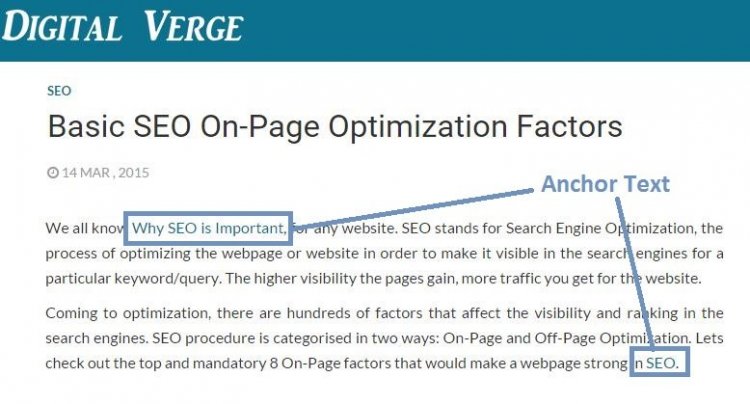
    Supporting SSL https:// for our Carrot member’s sites has been on our radar for a while… it’s definitely one of those items on the todo list when building your own website.

    Typically this means heading back to your domain registrar, paying for a certificate, doing some complicated verification steps on your hosting account, some more complicated server stuff, fixing things when they go wrong… then heading back to your registrar each year to pay them some more money and do the process over again for a renewal.

    All in all… usually a 1 hour + time commitment and $50+ a year for a solid SSL cert.

    At Carrot, Your SSL Cert Is Now FREE!
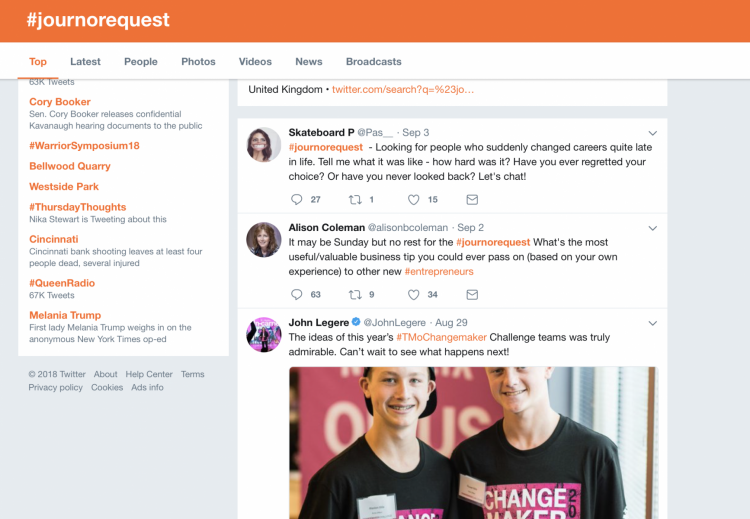
    What is SSL? It stands for “Secure Socket Layer”, and that’s a fancy way to say a website is accessed with https:// instead of http:// and the connection is encrypted between your browser and company serving the website. Read on for more info!
    is ssl important for seo real estate

    For the thousands of Carrot member sites (and the thousands more we knew would be launched this next year) sending all of our members out there to purchase an SSL certificate to maintain and renew ($$) each year was not the “Carrot way” to do it.

    Why We’re Rolling SSL Out Now

    Payments, sensitive personal info, and passwords have always been important things that should be encrypted with SSL, but recently there have been another set of benefits for SSL as well.

    The first and most important reason is…

    Security

    SSL exists to make the connection between you and a website private. Without this, the data you send over the network could potentially be spied on by someone else on your network. This is something web visitors, your web browser, and even Google are looking for more and more and we wanted to get you ahead of the curve.

    SEO

    Google is now using SSL as a minor potential ranking factor. There have been reports over the last 6 months of their “fear” that having SSL was required to rank well today and convert a visitor into a lead at a high rate. Our focus has always been on data and performance so we’ve been tracking the trends and just haven’t seen Google rewarding SSL sites over a well optimized Carrot site in the search rankings… YET.

    In fact, we’ve seen an uptick in Carrot member websites rankings (often times over an SSL encrypted site). So over the past 4 months we’ve focused our efforts on rolling out other big updates to our platform that speed up your websites even more which Google has been weighting more heavily than SSL for quite some time. At the end of the day, we follow the data vs. the hype and ensure we’re putting you ahead of the curve when it comes to SEO and performance.

    SSL will increasingly become a factor Google looks at and we want to continue to see Carrot members at the top of the search results for their terms that matter, we want to give you every edge possible with rankings!

    How Adding SSL Can Impact Current SEO Rankings

    We make changing your URL from a non-SSL url to an SSL url extremely simple and quick; however, don’t discount the complexity of things going on behind the scenes with this change. There’s a lot that goes on and this is a decently big change in Googles eyes, because you’re changing the URL structure of your website that Google looks at for it’s rankings.

    There are many things one would need to do to ensure an SSL is added correctly (we automate all of that for you) but there are still negative impacts that could be had in the short-term with your Google rankings after adding on SSL.

    It’s not uncommon to see a website ranking drop after changing the URL structure from “http:” to “https:” and in some cases you may lose a small percentage of “link juice” from your existing backlinks if they link to the non-SSL version of your URL.

    But over the long-term we see Google placing more and more importance on SSL in their search rankings and the Chrome Browser security alerts to it’s users that it’s worth the potential short-term hit for the long-term gain.

    If your website drops rankings after making the SSL switch try to get your existing backlinks updated to the “https:” version of your URL (if you can’t, no sweat), build new backlinks with the full “https:” URL, and make sure all pages that link to other pages on your site (internal links) use the full “https:” version not your old “http:” version. And last, have patience and just know that you are ahead of the curve and won’t have to deal with it later when Google is really forcing the issue with SSL on websites.

    Speed

    SSL creates a different type of connection on the web that allows for some new technology that can speed up page loading. Future proofing Carrot websites and allowing for more performance in the browser is always a win for us on the tech team. This equals less work, less expense, less hassle, and increased performance for you. Oh, and all of that means peace of mind.

    Making It Happen for Carrot Members

    So, we’ve been biding our time and working toward a solution that fits our criteria for supporting SSL:

    1. Minimize cost for our members
    2. Reduce complexity for setup and renewal
    3. Automation so we can support SSL for all Carrot sites

    And we have done that! SSL is now automatic for all new sites Carrot members launch starting Monday this week, and existing member websites can toggle SSL on with just a click from your domain settings.

    Have An Existing Carrot Site? Add SSL In Less Than 60 Seconds

    Carrot SSL Settings

    Behind the scenes we are working with new technology from the open certificate authority letsencrypt.org, as well as new Carrot systems for automation and background tasks.

    Our new systems watch for a new domain on your site, request and validate a new SSL certificate, and then automate the renewal process to make sure your site stays secure and accessible via https.

    Great stuff and a technology we have been looking forward to supporting for a long time, with the help of Jason on our development team.

    Get SSL On Your Carrot Site Today

    As of this week, new sites launched will automatically have SSL configured and enabled by default. We will handle all the renewals and the process is totally seamless on your end!

    Already have a Carrot site to transition to SSL? We’ve made it just a click away. Simply head to your site’s domain settings, toggle SSL “on” and hit save. Typically within a few minutes, your site will automatically redirect from http to https URLs.

    View SSL Tutorial →

    That’s it! Give it a try today and hit us up on the support team with any questions!