Author: alex

  • How To Build An HVAC Website

    hvac website

    Imagine a potential customer searching online for “air conditioning repair near me.” If your HVAC business doesn’t have a website, you’re missing out on a crucial opportunity to connect with them. In today’s digital age, a strong online presence is essential for any HVAC business that wants to thrive.

    document.addEventListener(‘DOMContentLoaded’, function() { jQuery(window).scroll(function() { if ( jQuery(document).scrollTop() > $(‘#carrotToast’).offset().top && jQuery(“.carrot-toast”).attr(“displayed”) === “false”) { jQuery(‘.carrot-toast’).toast(‘show’); jQuery(“.carrot-toast”).attr(“displayed”, “true”); } }); });
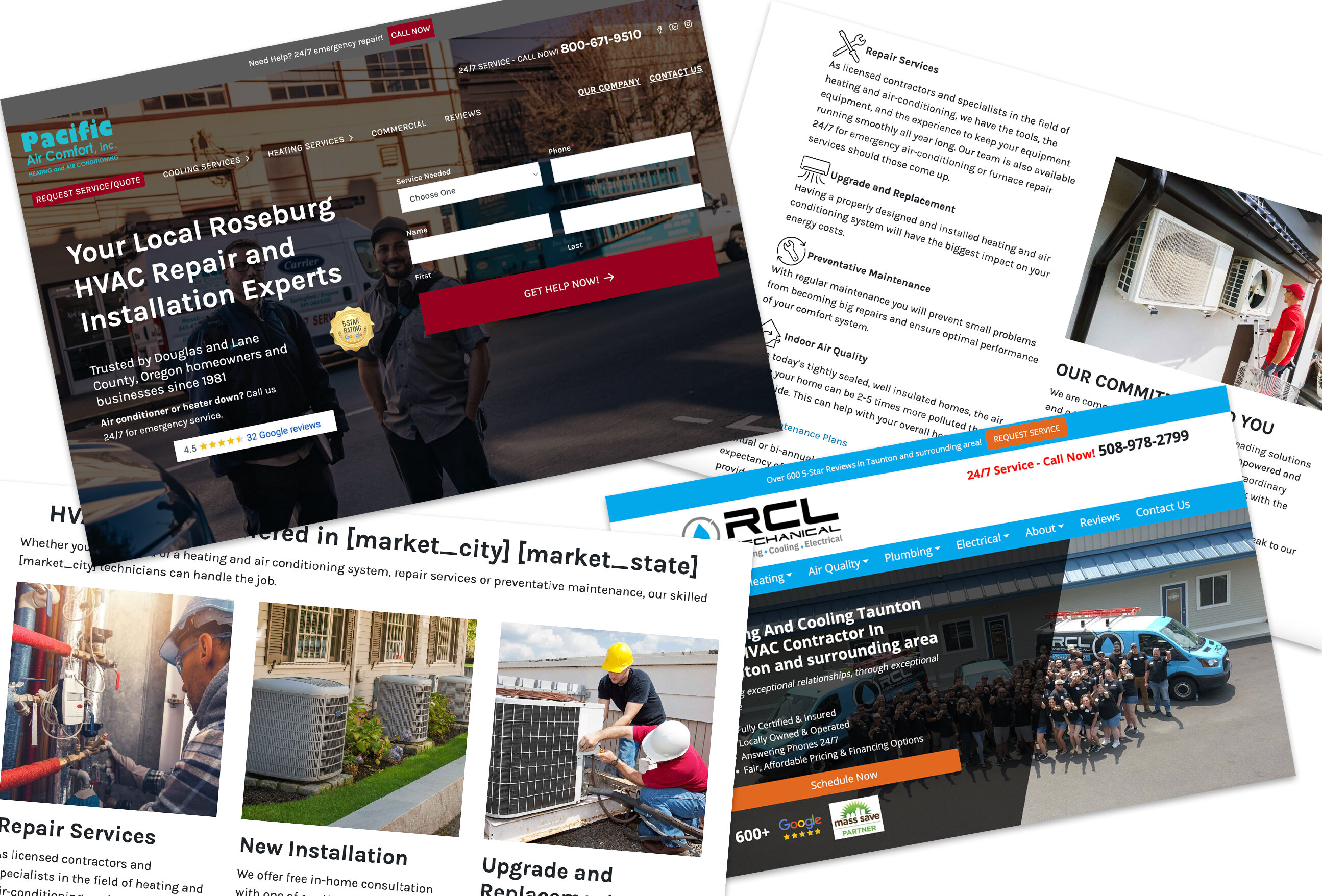
    Why is a website so important? Here are just a few reasons:

    • Increased Visibility: A website acts as your digital storefront, open 24/7 for potential customers to learn about your services, location, and contact information. The more visible you are online, the more likely you are to attract new clients.
    • Lead Generation: Your website can be a powerful lead generation tool. By including clear calls to action (e.g., “Schedule an Appointment Today”) and online forms, you can make it easy for potential customers to contact you for service.
    • Improved Brand Reputation: A professional and informative website shows potential customers that you’re a legitimate and trustworthy business. Positive online reviews and testimonials on your website can further strengthen your brand reputation.

    Building a website doesn’t have to be overwhelming. There are two main options to consider:

    • DIY HVAC Website Builders: These platforms offer user-friendly tools to create your own website, often at a lower cost.
    • Professional Website Design: Hiring a professional web design company gives you a custom-built website that perfectly reflects your brand and optimizes your online presence for maximum impact.

    This blog post will explore both options in more detail to help you decide how to build an HVAC website.

    Laying the Foundation: Planning Your HVAC Website

    Before diving into building your website, taking some time to plan will ensure it effectively meets your business needs. Let’s explore some key considerations:

    1. Define Your Goals:

    • What do you want your website to achieve?
      • Do you want to generate leads and convert website visitors into paying customers?
      • Is your primary goal to showcase your services and establish expertise in your area?
      • Perhaps you want to provide online appointment scheduling or offer customer support resources.
      • Having clear goals will guide the content and features you incorporate into your website.
    • Who is your ideal customer?
      • Understanding your target audience allows you to tailor your website’s messaging and design to resonate with them.
      • Are you targeting homeowners, businesses, or both?
      • What are their pain points, and how can your services address them?

    2. Content Planning:

    • What information should your website include?
      • Your website should be a comprehensive resource for potential customers.
      • Essential content includes:
        • Clear descriptions of your HVAC services: Explain what services you offer, including details like heating and cooling system installations, repairs, maintenance plans, etc.
        • Up-to-date contact information: Make it easy for potential customers to reach you by phone, email, or contact form.
        • Your company story: Showcase your expertise and build trust by sharing your company’s history, mission statement, and team member profiles.
        • Customer testimonials: Positive reviews and testimonials are powerful tools for convincing potential customers that your business is reliable and trustworthy.
      • Consider adding additional sections such as frequently asked questions (FAQs), a blog with helpful HVAC tips, or a gallery showcasing your previous work.
    • Search Engine Optimization (SEO): Consider the search terms potential customers might use to find HVAC services in your area. Optimizing your website content with relevant keywords can improve your search engine ranking and increase organic website traffic.

    3. Design Considerations:

    • User-Friendly and Mobile-Responsive: In today’s mobile-first world, your website needs to be accessible and easy to navigate on any device (desktop, smartphone, tablet). A user-friendly interface with clear menus and intuitive navigation will keep visitors engaged.
    • Visually Appealing and Brand Reflective: First impressions matter! Your website’s design should be visually appealing and reflect your brand identity. Use high-quality images, consistent colors and fonts, and a layout that is easy on the eyes.

    By planning your website’s content and design with these considerations in mind, you’ll be well on your way to creating a valuable online presence that attracts new customers and helps your HVAC business thrive.

    Improve Your HVAC Website Results

    3.3 million leads and counting: now for HVAC companies! Our track record speaks for itself. Get ahead with exclusive early access!

    hvac website

    Building Your HVAC Website: DIY vs. Professional Design

    Now that you’ve laid the groundwork with your website plan, it’s time to choose the right platform to build it on. Here, we’ll explore two main options:

    Option 1: DIY Website Builders

    Do-it-yourself (DIY) HVAC website builders are user-friendly platforms that allow you to create your website without extensive coding knowledge. Popular options include Carrot, Squarespace, and Weebly.

    Pros:

    • Affordability: DIY website builders offer a cost-effective way to build a website, with plans starting at a low monthly fee. This can be a good option for businesses with a tight budget.
    • Ease of Use: These platforms are designed with beginners in mind. They offer drag-and-drop tools and pre-built HVAC website templates for creating a website yourself. You don’t need coding experience to get started.
    • Flexibility: Many DIY builders offer a variety of features and templates, allowing you to customize your website to some extent.

    Cons:

    • Limited Customization: While offering some flexibility, DIY builders often have limitations compared to a custom-designed website. You might be restricted by pre-built templates and may not be able to achieve the exact look and feel you desire.
    • SEO Optimization: DIY platforms may not offer advanced SEO features to optimize your website for search engines. This can make it harder for potential customers to find your business online.
    • Limited Support: While some support is offered, DIY builders may not provide the same level of ongoing technical support as a professional web design company.

    Option 2: Professional Website Design

    Hiring a professional web design company offers a more comprehensive solution for building your HVAC website.

    Pros:

    • Custom Design: A professional web designer can create a website that is unique, visually appealing, and perfectly reflects your brand identity. This gives you complete control over the look and feel of your website.
    • SEO Optimization: A professional web design company can optimize your website for search engines, increasing your chances of ranking higher in search results and attracting more organic traffic.
    • Ongoing Maintenance: Many web design companies offer ongoing maintenance plans to ensure your website stays up-to-date, secure, and functioning smoothly. This allows you to focus on running your business.

    Cons:

    • Cost: Professional web design services typically cost more than DIY website builders. However, the return on investment can be significant in terms of increased leads and brand recognition.
    • Time Commitment: While the web design company will handle the technical aspects, you may need to invest some time in providing initial input and feedback on the design process.

    Choosing a Reputable Web Design Company:

    • Portfolio Review: Look for a company with a strong portfolio of websites relevant to the HVAC industry.
    • Client Testimonials: Read reviews and testimonials from past clients to get a sense of their experience with the company.
    • Services Offered: Ensure the company offers services that align with your needs, such as custom design, SEO optimization, and mobile responsiveness.
    • Communication Style: Choose a company that communicates openly and effectively, ensuring you’re comfortable asking questions and providing feedback throughout the design process.

    The decision between DIY website builders and professional web design depends on your budget, technical expertise, and desired level of customization. Weighing the pros and cons of each option will help you choose the right approach for your HVAC business.

    Building Trust and Conversions: Essential Pages for Your HVAC Website

    Your HVAC website serves as your digital storefront, open 24/7 to convert visitors into paying customers. You can build trust and encourage potential customers to choose your business by including essential pages with clear, informative content. Here’s a breakdown of the key pages your HVAC website should include:

    1. Homepage:
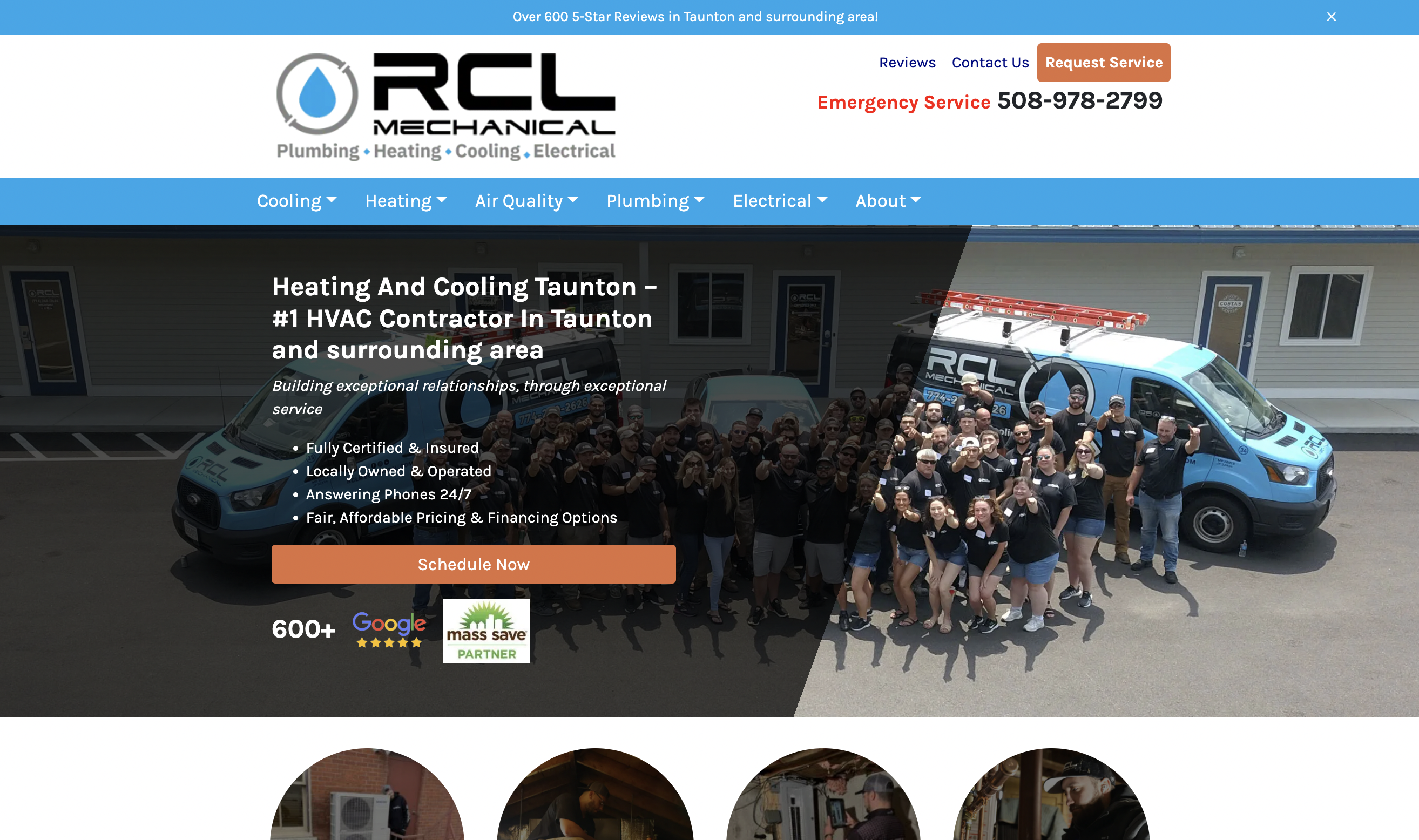
    HVAC website homepage

    This is your website’s first impression, so make it count! Here’s what to focus on:

    • Showcase Your Services: Use clear and concise language to highlight your HVAC services. Consider including visuals like icons or images to enhance understanding.
    • Highlight Your USP (Unique Selling Proposition): What sets you apart from the competition? Do you specialize in energy-efficient systems? Offer 24/7 emergency repairs? Emphasize your unique strengths to grab attention.
    • Clear Call to Action: Tell visitors what you want them to do next. Whether it’s “Schedule an Appointment Today” or “Get a Free Quote,” make it easy for potential customers to take the next step.

    2. Services Page:
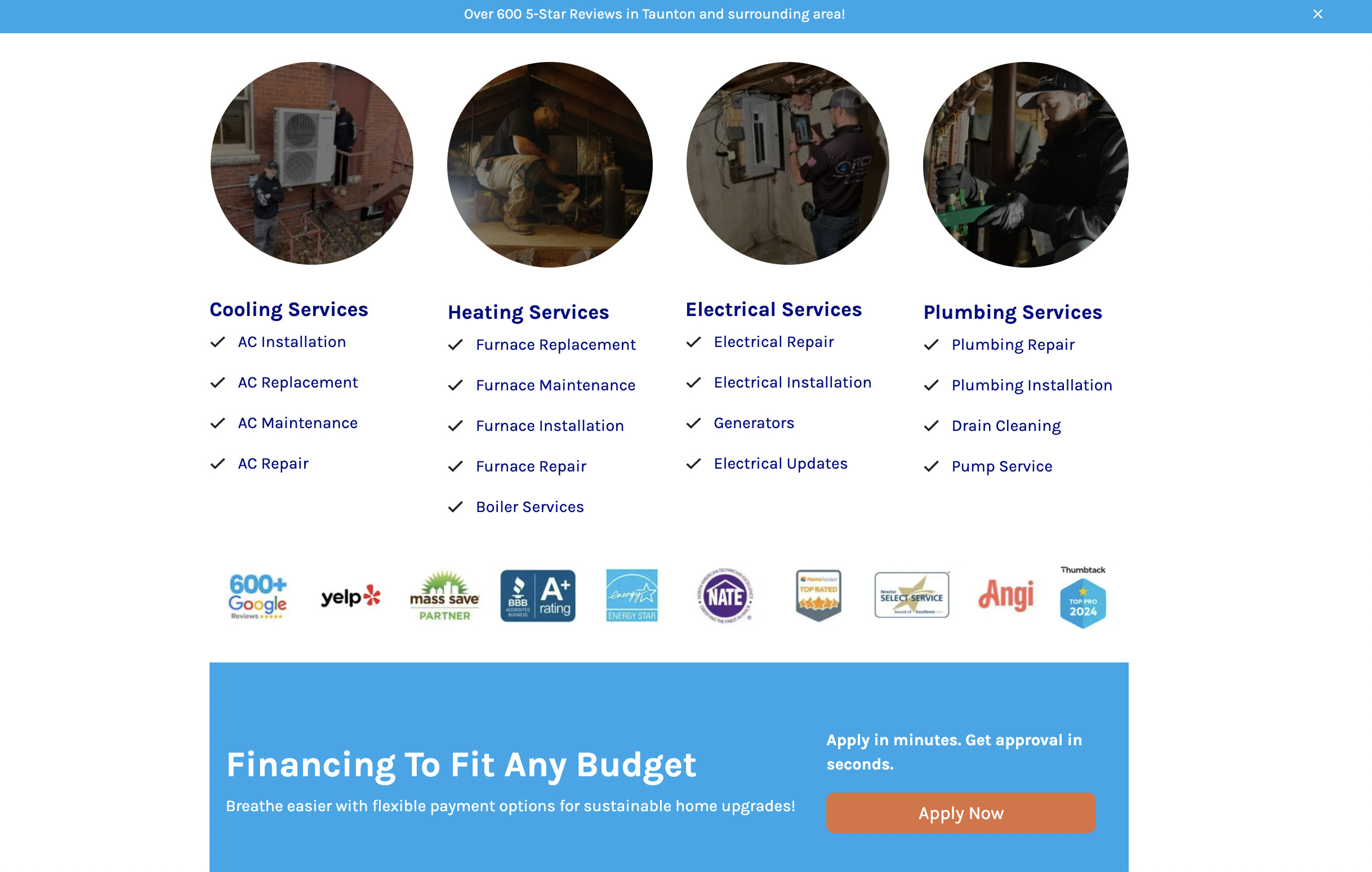
    HVAC Services Pages

    This page provides a deeper dive into your specific HVAC services.

    • Detailed Service Descriptions: Explain each service you offer in detail. This could include information on heating and cooling system installation, repairs, maintenance plans, emergency services (if offered), etc. Consider using bullet points to improve readability.
    • Pricing Information (Optional): While not all businesses choose to display pricing upfront, including estimated costs or service tiers can be helpful for some customers.
    • Visual Appeal: Incorporate high-quality images or videos showcasing your technicians in action or the types of systems you service.

    3. About Us Page:
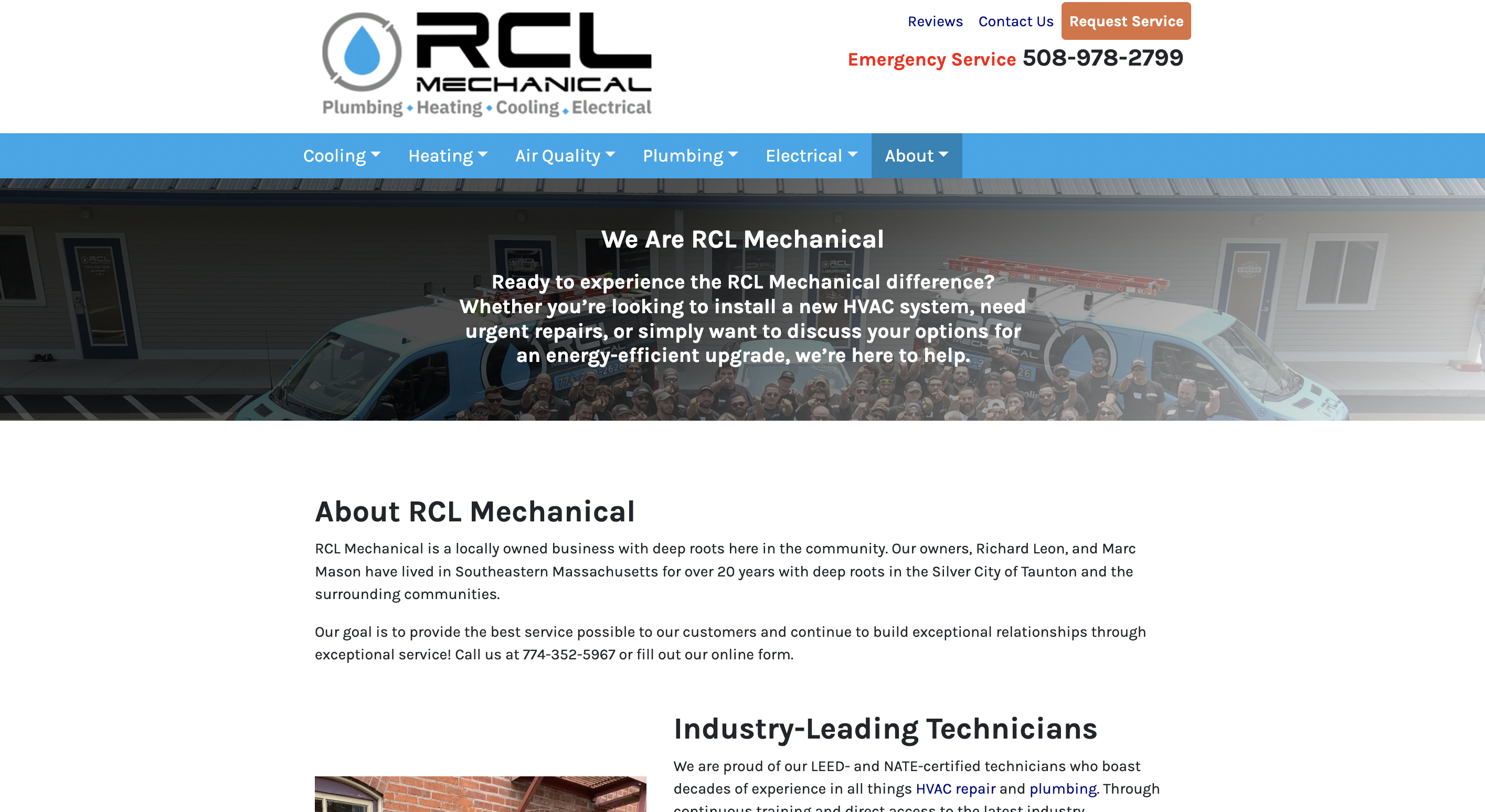
    HVAC About Page

    Build trust and transparency by introducing your company and team members.

    • Company Story: Share your company’s history, mission statement, and values. Let potential customers understand what your business stands for.
    • Meet the Team: Include profiles with photos, qualifications, and experience to showcase your team members’ expertise. This helps build rapport and portrays your company as professional and reliable.

    4. Contact Us Page:

    Make it easy for potential customers to reach you. This page should include:

    • Clear Contact Information: List your phone number, email address, and physical address (if applicable). Consider including a map for easy location reference.
    • Contact Form: Provide a user-friendly contact form for visitors to submit inquiries or request service quotes.

    5. Testimonials Page:
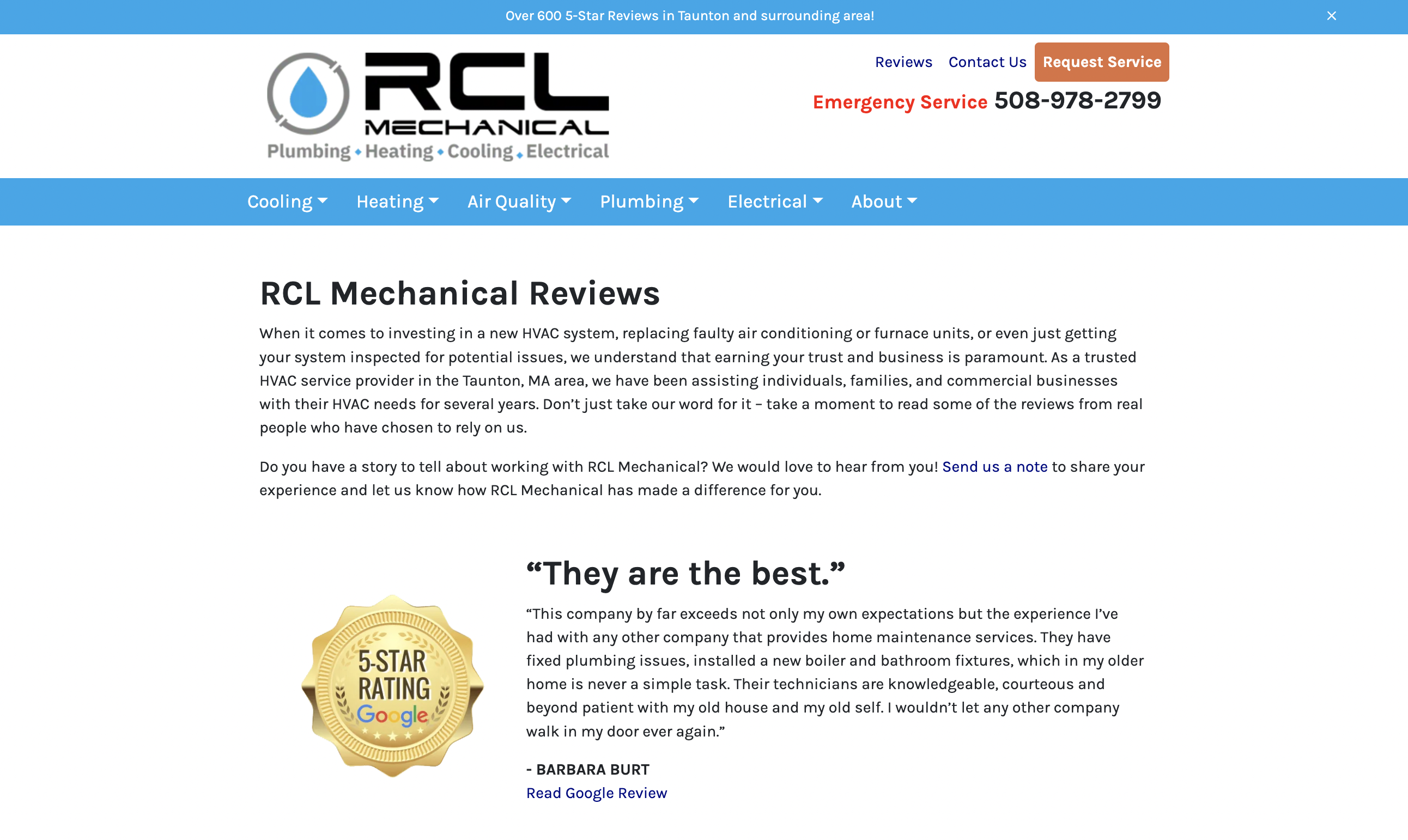
    HVAC Testimonials Page

    Positive customer reviews and testimonials are powerful trust builders.

    • Showcase Testimonials: Feature positive feedback from satisfied customers. If possible, include quotes, star ratings, or video testimonials.
    • Social Proof: Consider integrating social media reviews or customer stories to demonstrate your trustworthiness further.

    By incorporating these essential pages and keeping your content fresh and informative, your HVAC website will become a valuable tool for attracting new customers and growing your business.

    Improve Your HVAC Website Results

    3.3 million leads and counting: now for HVAC companies! Our track record speaks for itself. Get ahead with exclusive early access!

    hvac website

    Keeping Your Website Thriving: Launch, Maintenance, and Beyond

    Your HVAC website is launched, congratulations! But the work doesn’t stop there. Here’s how to ensure your website continues to attract potential customers and drive business growth:
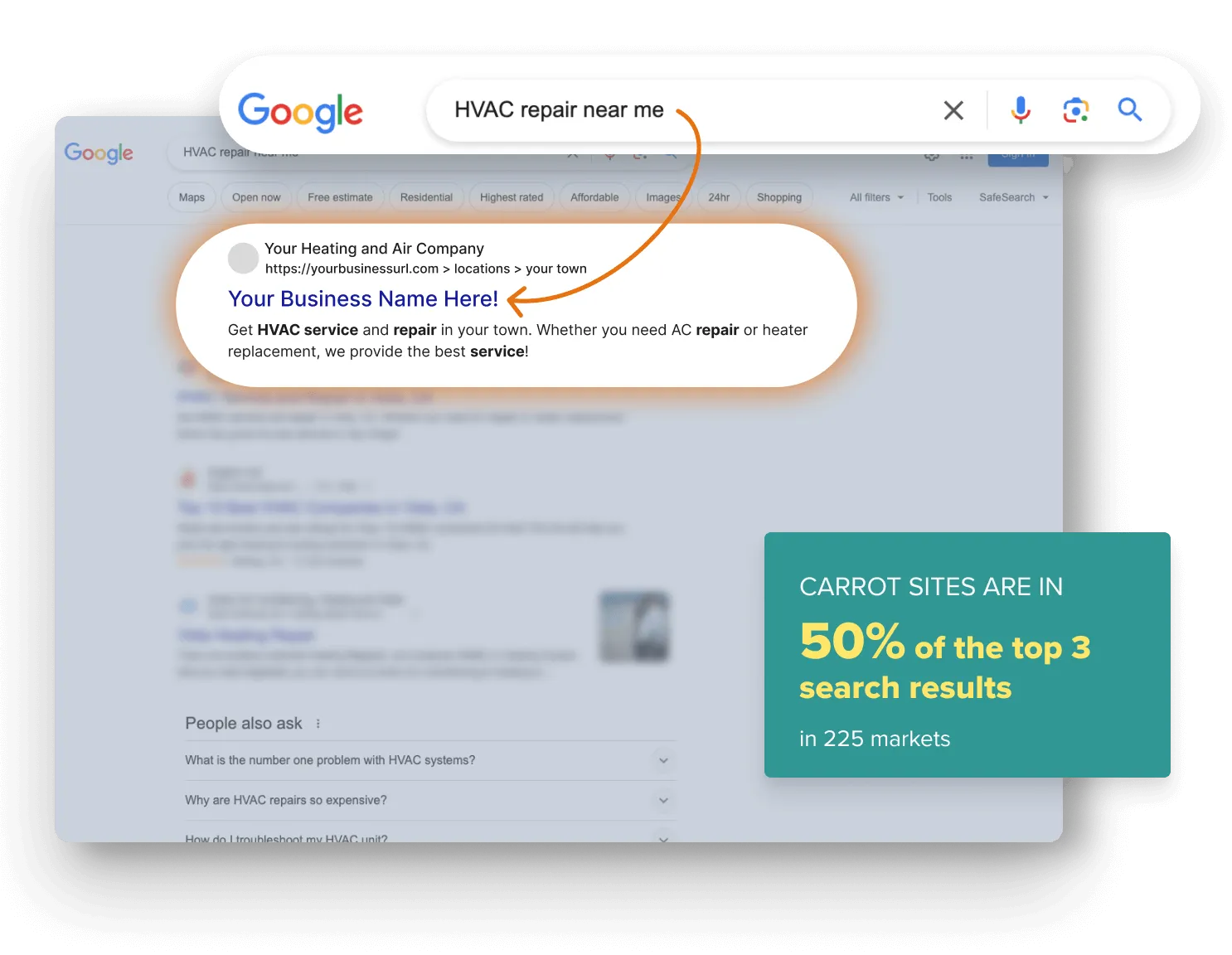
    HVAC website Google Rankings

    1. The Power of Search Engine Optimization (SEO):

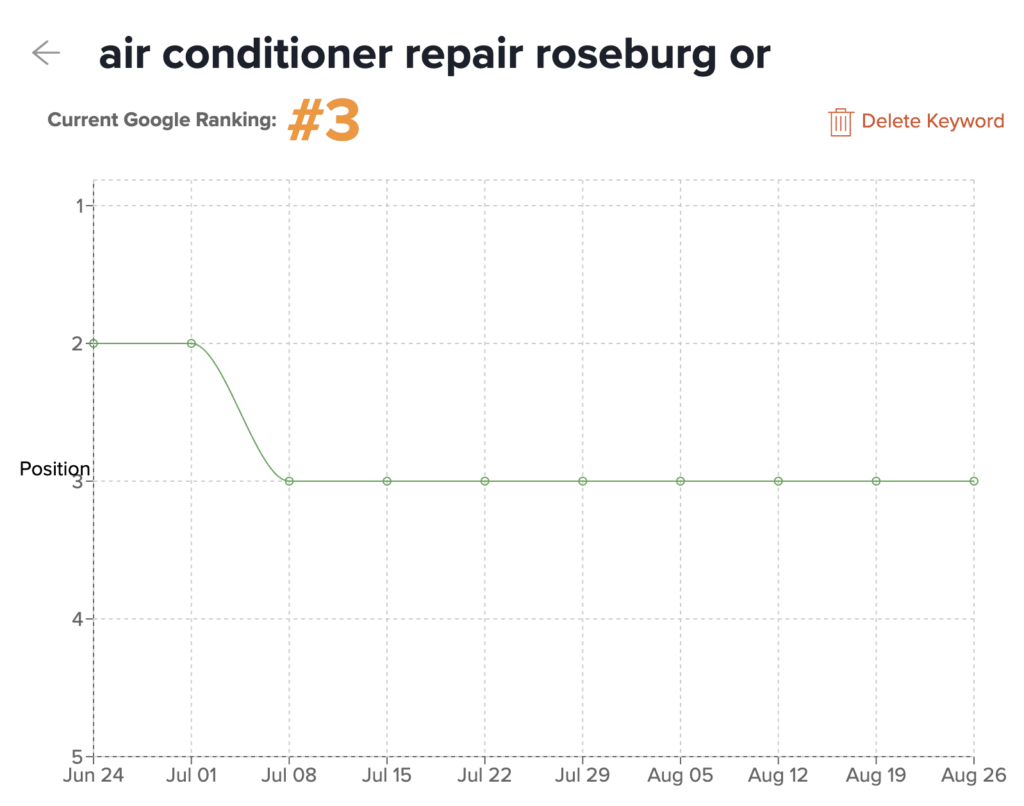
    Imagine your website buried deep in search engine results, invisible to potential customers. SEO helps your website rank higher in search engine results pages (SERPs) for relevant keywords like “furnace repair near me” or “AC installation [your city].” This increases website traffic and helps you reach your target audience organically.

    • Keyword Research: Identify relevant keywords that potential customers might use to find HVAC services in your area. Tools like Google Keyword Planner can help with research.
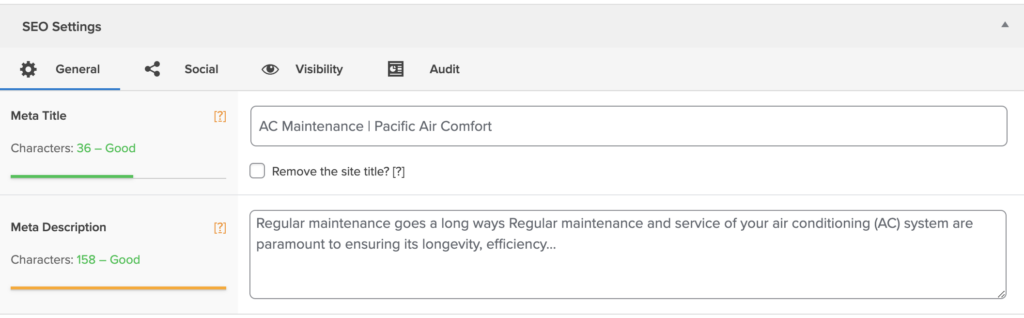
    • Content Optimization: Integrate these keywords naturally throughout your website content, including page titles, meta descriptions, and service descriptions.
    • Local SEO: Optimize your website for local searches by claiming your Google My Business listing and ensuring your NAP (Name, Address, Phone number) is consistent across the web.

    2. Content Marketing Strategies:

    Regularly updated content keeps your website fresh and engaging for visitors while also improving your SEO. Here are some content marketing strategies to attract potential customers:

    • Blog: Establish yourself as an HVAC expert by sharing informative blog posts on seasonal maintenance tips, energy-saving solutions, or common heating and cooling problems.
    • Customer Education: Create helpful guides or FAQs to address common customer concerns about HVAC systems.
    • Seasonal Promotions: Highlight special offers or discounts on seasonal services like pre-season tune-ups or winterization packages.

    3. Website Maintenance:

    Your website needs ongoing maintenance to ensure it functions smoothly and stays secure.

    • Content Updates: Regularly update your website content with fresh blog posts, news, and promotions. This keeps visitors engaged and demonstrates your commitment to providing valuable information.
    • Security Measures: Implement strong security measures, such as SSL certificates, to protect your website and visitor data. Also, regularly update website plugins and software to address security vulnerabilities.
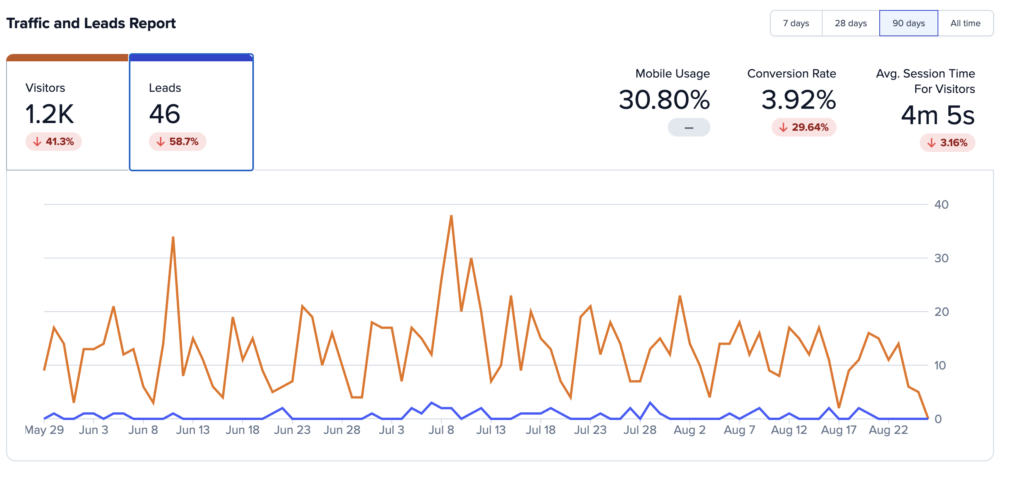
    • Analytics Tracking: Use website analytics tools to track website traffic, user behavior, and lead generation. This data can help you understand how visitors interact with your website and identify areas for improvement.

    By implementing these strategies, you’ll ensure your HVAC website remains a valuable asset for your business. Remember, your website is a dynamic tool, not a static brochure. Keeping it updated, optimized, and engaging will attract more customers and keep your HVAC business thriving.

    Conclusion: Building Your Online Presence, Building Your Business

    In today’s digital world, a strong website is no longer a luxury for HVAC businesses – it’s a necessity. Your website acts as your 24/7 salesperson, showcasing your services, building trust with potential customers, and generating valuable leads.

    By following the steps outlined in this blog post, you can take control of your online presence and create an HVAC website that effectively attracts new customers and drives business growth.

    Ready to take action? Here are your options:

    • Explore DIY Website Builders: If you’re comfortable with some basic tech skills and have a budget in mind, DIY website builders offer a user-friendly platform to get started. Before diving in, weigh the pros and cons of limited customization options.
    • Partner with a Professional Web Design Company: For a more comprehensive solution with custom design, SEO optimization, and ongoing maintenance, consider partnering with a reputable web design company. Their expertise can help you create a website that perfectly reflects your brand and achieves your marketing goals.

    Looking for more resources?

    Here are some helpful links to get you started:

    Remember, a successful website is an ongoing journey. By keeping your content fresh, website secure, and SEO strategy up-to-date, you’ll ensure your HVAC website remains a powerful tool for attracting new customers and growing your business for years.

    Improve Your HVAC Website Results

    3.3 million leads and counting: now for HVAC companies! Our track record speaks for itself. Get ahead with exclusive early access!
    hvac website
  • Are HVAC Lead Generation Companies Worth It?

    You’re looking to scale your HVAC business so you can keep your service techs busy and add more headcount to your operation.

    Naturally, you need more leads to book service calls and installations. It’s easy to fire up Google and look for HVAC lead generation services. But be careful, there is certainly a right and wrong way to go about selecting a lead generation company for your HVAC business.

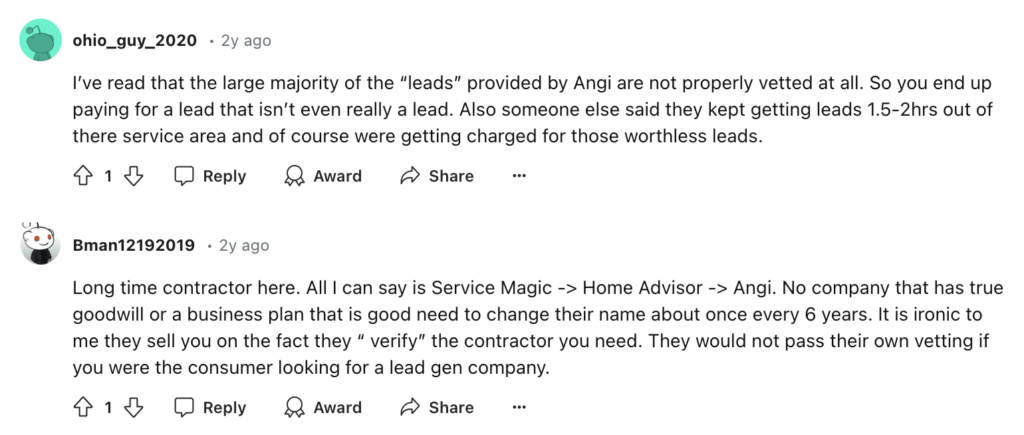
    Services like Thumbtack or Angi are written about a lot in forums and reddit.com

    If you’ve ever felt like you’re spinning your wheels, chasing after customers who aren’t really looking for your HVAC services, you’re not alone. Many HVAC business owners share your frustration.

    But here’s the good news: there’s a better way. The HVAC industry is shifting, and the businesses that thrive are the ones that take control of their lead generation.

    This isn’t about buying more leads; it’s about generating your own.

    With Carrot, you have the tools to attract motivated, high-quality leads who are ready to take action. It’s time to rethink how you grow your HVAC business.

    The Truth Behind HVAC Lead Generation Companies

    When you think of lead generation, services like Thumbtack and Angi probably come to mind. They promise to connect you with a large database of potential customers, making it easy to get your HVAC’s business out there. And sure, that sounds appealing—who wouldn’t want a steady stream of leads delivered right to their CRM and invoicing system?

    But here’s the reality: those leads aren’t always what they seem.

    Many HVAC business owners have found that the leads they buy from these services are often unmotivated, outdated, or just plain uninterested. You’re left competing with a dozen other businesses for the attention of someone who might not even remember filling out a form. It’s frustrating, and it’s not a sustainable way to grow your business.

    The Need for a Paradigm Shift in HVAC Lead Generation

    So, why are these traditional lead generation methods falling short? It all comes down to control—or rather, the lack of it. When you rely on third-party companies to provide leads, you’re at their mercy. You don’t control the quality of the leads, the timing of their delivery, or even the accuracy of their information.

    And let’s be honest: not all leads are created equal.

    There’s a world of difference between a motivated homeowner actively seeking HVAC services and someone who filled out a form months ago on a whim. The former is ready to take action, while the latter is more likely to leave you on read.

    That’s why it’s time for a shift—a paradigm shift where you take control of your lead generation.

    By generating your own leads, you ensure they’re high-quality, motivated, and genuinely interested in your services. This isn’t just about saving money; it’s about building a sustainable, growth-oriented business.

    How Carrot Is Redefining HVAC Lead Generation

    Enter Carrot—a different kind of lead generation company. We’re not here to sell you lists of leads and wish you luck. We’re here to give you the tools you need to attract and convert your own leads, organically. With Carrot, you’re in control.

    Our approach is rooted in inbound marketing strategies—specifically, SEO and content marketing. Here’s how it works:

    SEO & Content Tools

    We help your HVAC website rank higher on search engines for the keywords that matter most to your business. When potential customers search for HVAC services in your area, your website is front and center.

    Here is a 5 step process to rank more keywords using Carrot’s SEO Tools

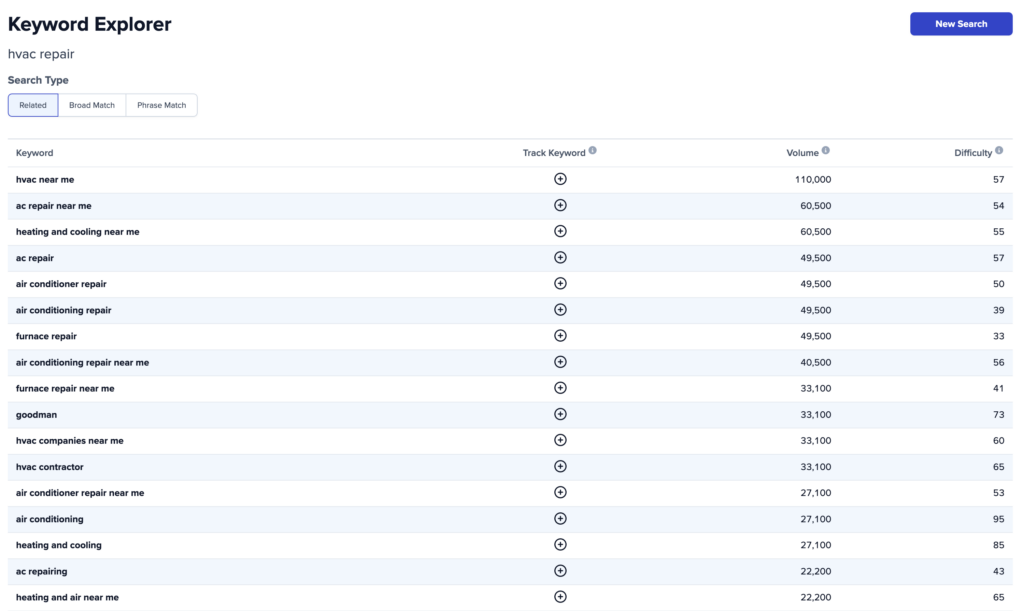
    Step #1 Keyword Research

    Use Carrot’s Keyword Explorer to find keywords in your market that will help you rank and drive traffic to your website.

    Carrot’s Keyword Explorer Tool

    Step #2 – Add content to your website targeting that keyword

    For most HVAC business owners – they are too busy scheduling jobs, invoicing or in the field to spend time making content for their website. Carrot understands and has several options for automating your content creation.

    Creating the content is important but Carrot also gives you tools to help you make sure it can be found by Google and will track your rankings over time so you the content you are producing is helping you generate leads.

    Step #3 – Make sure your website is high-performing

    Our websites are built to perform. They’re fast-loading, mobile-optimized, and designed with one goal in mind: conversion. We focus on getting you results, not just clicks.

    And this isn’t just theory—our approach works. HVAC businesses using Carrot’s tools have seen real, measurable growth. We’re talking about more leads, better conversion rates, and a healthier bottom line.

    The Benefits of Choosing Carrot Over Traditional Lead Generation Companies

    So, why choose Carrot over traditional lead generation companies? It comes down to quality, control, and long-term growth.

    • Quality Over Quantity: With Carrot, you’re not just getting more leads—you’re getting better leads. Our tools ensure that the leads you attract are motivated and ready to take action, not just names on a list.
    • Cost Efficiency: Over time, generating your own leads is more cost-effective than constantly buying them. You’re investing in a system that consistently delivers, rather than playing the numbers game with purchased leads.
    • Sustainable Business Growth: When you generate your own leads, you’re building a foundation for long-term success. You’re not just chasing short-term wins; you’re creating a reliable, steady stream of high-quality leads that will help your business grow year after year.

    Conclusion

    The HVAC industry is changing, and it’s time to change with it. Relying on traditional lead generation companies is no longer enough. To truly succeed, you need to take control of your lead generation and ensure that the leads you attract are motivated, high-quality, and ready to take action.

    Carrot is here to help you make that shift. With our tools and strategies, you can generate your own leads, build a stronger online presence, and grow your business sustainably. Ready to take the next step? Let’s get started—your future customers are out there, and they’re waiting for you.

  • ChatGPT For Real Estate Investors | 10 AI Prompts To Try

    Discover the ultimate advantage: ChatGPT for real estate investors that can revolutionize your content creation!

    document.addEventListener(‘DOMContentLoaded’, function() { jQuery(window).scroll(function() { if ( jQuery(document).scrollTop() > $(‘#carrotToast’).offset().top && jQuery(“.carrot-toast”).attr(“displayed”) === “false”) { jQuery(‘.carrot-toast’).toast(‘show’); jQuery(“.carrot-toast”).attr(“displayed”, “true”); } }); });

    In the highly competitive real estate market, leveraging cutting-edge tools and strategies is essential for success. Artificial intelligence (AI) has emerged as a transformative force, providing real estate investors with powerful capabilities to attract and engage motivated house buyers and sellers. Among these AI innovations, ChatGPT stands out, offering remarkable advantages for savvy investors looking to gain an edge.

    Leverage The Power Of AI In Your Content Marketing

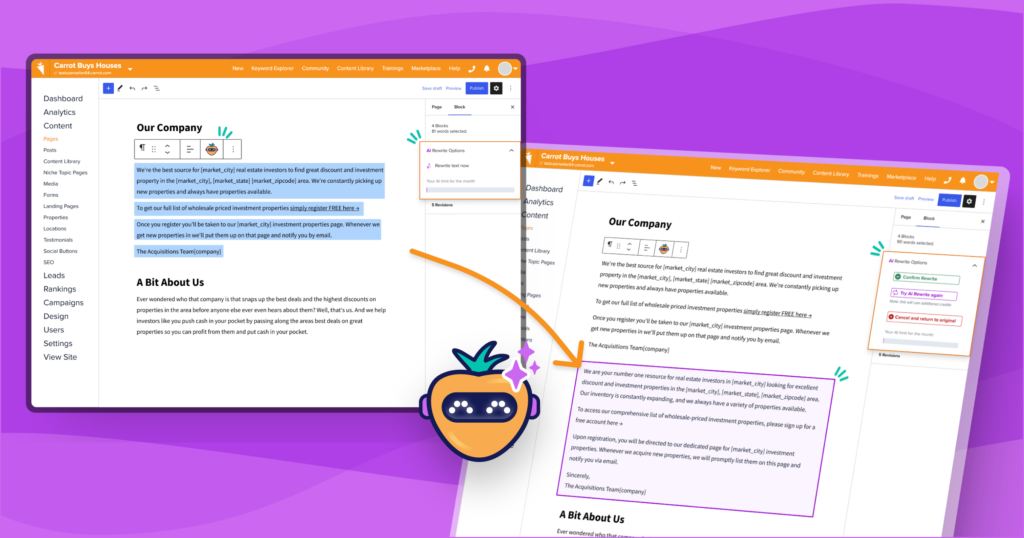
    Save time rewriting your website’s content with Carrot’s AI rewrite tool

    Ai Rewrite Illustration

    Why is AI important for real estate investors? AI, particularly ChatGPT, can revolutionize how you interact with potential clients, streamline your operations, and provide valuable market insights. By leveraging AI, you can save time, enhance customer interactions, and generate more high-quality leads.

    What are the benefits of using ChatGPT for real estate investors?

    • Time-saving: Automate responses to common inquiries, freeing up your time for more critical tasks.
    • Enhanced customer interaction: Provide personalized, instant responses to potential buyers and sellers.
    • Improved lead generation: Use tailored prompts to attract and convert leads more effectively.
    • Better market insights: Stay updated with the latest trends and data to make informed decisions.

    In this blog post, we’ll explore the power of ChatGPT in the real estate industry. We’ll cover the top 10 ChatGPT prompts every real estate investor should try in 2025. These prompts will help you identify motivated sellers, craft engaging property listings, respond to buyer inquiries, analyze market trends, nurture leads, and much more. By the end of this post, you’ll have practical tools and insights to integrate ChatGPT into your real estate business and boost your lead generation efforts.

    Table of Contents

    The Power of ChatGPT in Real Estate

    Understanding ChatGPT

    ChatGPT, developed by OpenAI, is a state-of-the-art language model that uses artificial intelligence to understand and generate human-like text. By processing and analyzing vast amounts of data, ChatGPT can engage in conversations, answer questions, and provide information in a natural, conversational manner. For real estate investors, this means having an intelligent virtual assistant that can handle a variety of tasks, from responding to inquiries to generating market insights.

    Benefits for Real Estate Investors

    1. Time-saving: Time is one of the most valuable resources for real estate investors. ChatGPT can automate routine tasks, such as answering frequently asked questions, scheduling appointments, and providing property details. This automation frees up your time, allowing you to focus on more strategic aspects of your business, such as closing deals and expanding your portfolio.

    2. Enhanced customer interaction: Engaging with potential buyers and sellers promptly and effectively is crucial for converting leads. ChatGPT can provide instant, personalized responses to inquiries, ensuring that prospects receive the information they need when they need it. This level of responsiveness not only improves customer satisfaction but also increases the likelihood of converting leads into clients.

    3. Improved lead generation: Effective lead generation is the cornerstone of a successful real estate business. ChatGPT can help you craft compelling content, such as property listings and marketing materials, tailored to attract motivated buyers and sellers. By using specific prompts, ChatGPT can generate engaging and SEO-optimized content that draws more traffic to your website and boosts your lead generation efforts.

    4. Better market insights: Staying informed about market trends and changes is essential for making sound investment decisions. ChatGPT can analyze market data and provide insights into current trends, property values, and buyer behavior. This information can help you make informed decisions, identify new opportunities, and stay ahead of the competition.

    By integrating ChatGPT into your real estate operations, you can streamline your processes, enhance customer interactions, and gain valuable market insights, ultimately leading to increased efficiency and profitability.

    How ChatGPT Can Help Attract Motivated Buyers and Sellers

    Generating Leads

    One of the most significant challenges for real estate investors is consistently generating high-quality leads. ChatGPT can streamline this process by leveraging its advanced language capabilities to create compelling and SEO-optimized content. This includes writing engaging property listings, crafting persuasive marketing emails, and generating attention-grabbing social media posts. By producing content that resonates with potential buyers and sellers, ChatGPT can drive more traffic to your website, increase engagement, and ultimately generate more leads. Additionally, ChatGPT can assist in creating lead magnets, such as informative eBooks or market reports, that entice prospects to share their contact information.

    Personalized Responses

    In the real estate industry, timely and personalized communication is key to converting leads into clients. ChatGPT excels in this area by providing instant, customized responses to inquiries from potential buyers and sellers. Whether a prospect is asking about the details of a specific property, seeking advice on the home-buying process, or inquiring about market conditions, ChatGPT can deliver accurate and relevant information tailored to their needs. This level of personalized interaction not only enhances the user experience but also builds trust and rapport, making prospects more likely to choose you as their real estate advisor.

    Market Trends Analysis

    Staying ahead of market trends is crucial for real estate investors looking to make informed decisions and capitalize on opportunities. ChatGPT can help you stay updated with the latest market trends by analyzing data from various sources and providing insightful summaries. Whether you need information on emerging neighborhoods, changes in property values, or shifts in buyer behavior, ChatGPT can deliver timely and accurate market analyses. By integrating these insights into your investment strategy, you can make data-driven decisions that enhance your competitive edge and position you as a knowledgeable and trustworthy expert in the eyes of potential clients.

    By utilizing ChatGPT for lead generation, personalized communication, and market trend analysis, you can attract more motivated buyers and sellers, streamline your operations, and ultimately grow your real estate business.

    Top 10 ChatGPT Prompts for Real Estate Investors

    Leveraging ChatGPT can greatly enhance your ability to attract and engage motivated house buyers and sellers. Here are the top 10 ChatGPT prompts specifically tailored to help you identify and connect with motivated sellers:

    1. Prompt for Identifying Motivated Sellers:

    “What are some effective strategies for identifying motivated sellers in ?” Using this prompt, ChatGPT can provide you with tailored strategies to spot motivated sellers in your specific market. This might include tips on recognizing distress signals in property listings, understanding life events that lead to selling, and leveraging local market data.

    2. Prompt for Crafting Engaging Property Listings:

    “How can I create a compelling property listing for a 3-bedroom house in ?” ChatGPT can help you craft engaging and persuasive property listings that highlight key features and appeal to potential buyers, making your listings stand out in a competitive market.

    3. Prompt for Responding to Seller Inquiries:

    “What’s the best way to respond to a motivated seller who wants to know how quickly their property can sell?” ChatGPT can generate reassuring and informative responses to sellers who are eager to know about the timeline of selling their property, helping to set realistic expectations and build trust.

    4. Prompt for Market Analysis:

    “Can you provide a market analysis for residential properties in for 2025?” Stay ahead of the competition with up-to-date market analyses. ChatGPT can summarize recent trends, price changes, and demand indicators in your local market, giving you the insights needed to make informed investment decisions.

    5. Prompt for Lead Nurturing:

    “What are some tips for nurturing leads through email marketing in real estate?” Effective lead nurturing is crucial for maintaining interest and converting prospects. ChatGPT can offer advice on crafting engaging email campaigns, timing your communications, and personalizing content to keep leads warm and moving through your sales funnel.

    6. Prompt for Understanding Seller Behavior:

    “What are current trends in seller behavior in the real estate market?” Understanding seller behavior can help you tailor your marketing strategies. ChatGPT can provide insights into what sellers in your market are looking for, including preferred sale timelines, common concerns, and effective negotiation tactics.

    7. Prompt for Social Media Marketing:

    “How can I use social media to attract more motivated sellers in ?” Social media is a powerful tool for reaching motivated sellers. ChatGPT can suggest effective social media strategies, including content ideas, posting schedules, and engagement tactics to help you connect with potential sellers in your area.

    8. Prompt for SEO Optimization:

    “What are the best SEO strategies for a real estate website in 2025?” Enhance your online presence with strong SEO practices. ChatGPT can recommend the latest SEO strategies, such as keyword optimization, content creation, and technical SEO improvements, to boost your website’s visibility and attract more organic traffic.

    9. Prompt for Client Follow-Up:

    “What’s an effective follow-up message for a seller who attended a property appraisal?” Timely and thoughtful follow-up is key to converting interested sellers into clients. ChatGPT can help you draft personalized follow-up messages that reinforce interest, address any remaining questions, and prompt the next steps.

    10. Prompt for Investment Opportunities:

    “What are the most promising investment opportunities in real estate for 2025?” Identifying the best investment opportunities requires current and comprehensive market knowledge. ChatGPT can provide you with insights into emerging areas, high-demand property types, and potential return on investment in your target market.

    By using these ChatGPT prompts, real estate investors can streamline their processes, enhance their marketing efforts, and stay informed about market trends, ultimately leading to greater success in attracting and converting motivated sellers.

    Bonus prompts from the original “virtual wholesaling” pioneer, Cris Chico

    Wholesaling Is Now on Easy Mode Using AI | Cris Chico's Prompts for Comps, Dispos and Ads!

    Implementing ChatGPT in Your Real Estate Business

    Integrating ChatGPT into Daily Operations

    Practical steps to start using ChatGPT:

    1. Identify Key Areas: Determine which areas of your business can benefit most from ChatGPT. Common applications include customer support, lead generation, market analysis, and content creation.
    2. Choose the Right Platform: Select a ChatGPT platform or API that fits your needs. Options like OpenAI’s GPT-4 API can be integrated into your website, CRM, or other business tools.
    3. Set Up Automated Responses: Create automated responses for frequently asked questions from buyers and sellers. This can include property details, financing options, and market trends.
    4. Develop Customized Prompts: Tailor ChatGPT prompts to your specific business needs. For example, create prompts for generating property listings, analyzing market trends, and crafting follow-up messages.
    5. Monitor and Optimize: Regularly review the interactions ChatGPT has with clients to ensure accuracy and effectiveness. Make adjustments to prompts and responses as needed to improve performance.

    Training Your Team

    Ensuring your team understands how to use ChatGPT effectively:

    1. Provide Comprehensive Training: Conduct training sessions to educate your team on how ChatGPT works and its capabilities. This should include how to input prompts, interpret responses, and integrate AI insights into their daily tasks.
    2. Create User Guides: Develop detailed user guides and FAQs to help team members navigate ChatGPT’s features. Include best practices for using the tool in various scenarios.
    3. Assign Roles: Designate specific team members to oversee ChatGPT implementation and usage. These individuals can provide support and ensure consistency in how the tool is used across the business.
    4. Encourage Experimentation: Allow team members to experiment with different prompts and applications of ChatGPT. Encourage them to share successful strategies and insights with the rest of the team.
    5. Gather Feedback: Regularly solicit feedback from your team on their experience with ChatGPT. Use this feedback to make improvements and ensure the tool is meeting their needs.

    Measuring Success

    Metrics to track the effectiveness of ChatGPT prompts:

    1. Lead Generation Metrics: Track the number of leads generated through ChatGPT interactions. This includes inquiries, sign-ups, and contact form submissions.
    2. Conversion Rates: Measure the conversion rates of leads generated by ChatGPT compared to other sources. This can include metrics such as appointment bookings, property viewings, and closed deals.
    3. Response Time: Monitor the average response time for ChatGPT to handle client inquiries. Faster response times typically lead to higher client satisfaction.
    4. Client Satisfaction: Gather client feedback on their experience interacting with ChatGPT. Use surveys or follow-up emails to assess satisfaction levels and identify areas for improvement.
    5. Content Engagement: Analyze the performance of content created with the help of ChatGPT, such as blog posts, property listings, and social media posts. Track metrics like page views, click-through rates, and social media engagement.
    6. ROI Analysis: Calculate the return on investment (ROI) for implementing ChatGPT by comparing the costs of the tool to the revenue generated from leads and conversions.

    By integrating ChatGPT into your daily operations, training your team effectively, and measuring the success of your efforts, you can fully leverage the power of AI to enhance your real estate business. This will lead to improved efficiency, better client interactions, and increased profitability.

    Conclusion

    In this post, we’ve explored the transformative potential of ChatGPT for real estate investors, particularly in attracting motivated house buyers and sellers. We began by understanding the power of ChatGPT and its numerous benefits, such as saving time, enhancing customer interactions, improving lead generation, and providing better market insights. We then delved into how ChatGPT can streamline the lead generation process, offer personalized responses, and keep you updated with the latest market trends.

    We provided ten specific ChatGPT prompts tailored to real estate investors, designed to help identify and connect with motivated sellers. Practical steps to integrate ChatGPT into your daily operations, train your team, and measure success were also covered, alongside real-life success stories that demonstrated the tangible benefits of using ChatGPT.

    Integrating ChatGPT into your real estate business can seem daunting, but the benefits far outweigh the initial learning curve. By trying out the provided prompts and implementing AI into your operations, you can streamline your processes, enhance your marketing efforts, and improve client satisfaction. Embrace the power of AI to stay ahead of the competition and make data-driven decisions that will take your business to the next level.

    We invite you to share your experiences with ChatGPT and any questions you may have in the comments section below. Your insights and queries will help build a community of forward-thinking real estate investors. Additionally, to support you on this journey, we are offering a free consultation to help you get started with ChatGPT. Take advantage of this opportunity to explore how AI can revolutionize your real estate business and position you for greater success in 2025 and beyond.

    Additional Resources:

    If you’re already a member, here are some resources to help you learn more about SEO:

    Other free SEO resources:

    Not a Carrot Member Yet?

    Experience the Exclusive Benefits for Real Estate Investors and Agents by Joining Today!

    The Carrot Community is where you can connect and collaborate with thousands of other Carrot members, share your knowledgeand learn best practices from top Carrot members and the Carrot team.

    Join the Community today!